



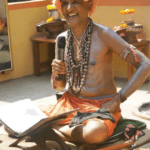
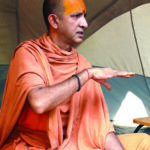
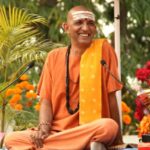
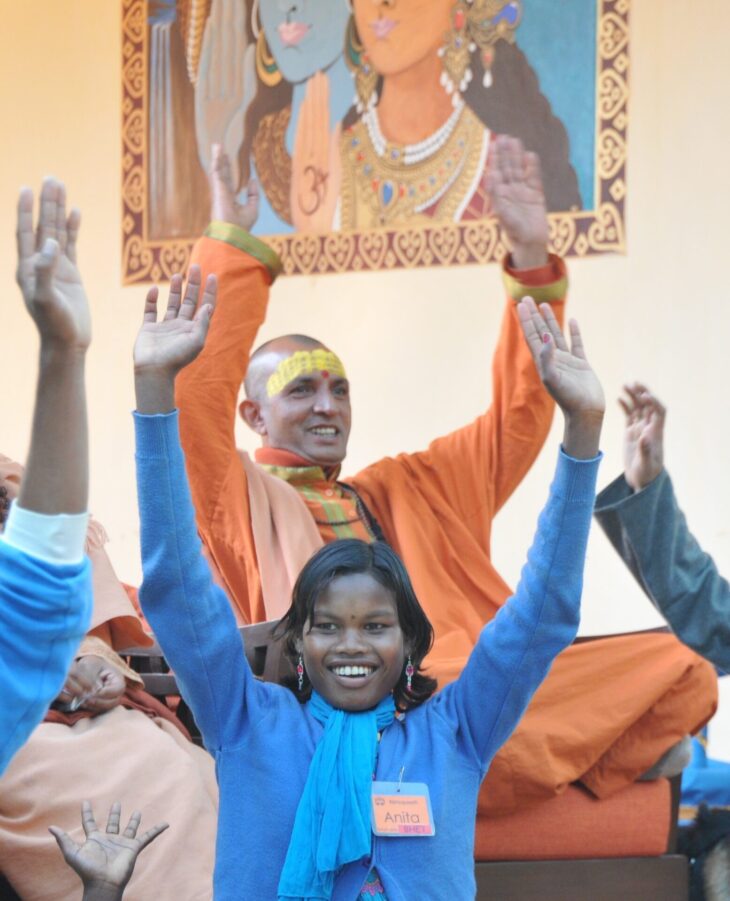

Ιn an ashram the tradition of the gurukul, the teacher’s family, is where there is an environment and a lifestyle conducive to spiritual growth; where the vision and spirit of the masters of a tradition is kept alive. It is an environment which is spiritual and where the vision of the guru can unfold.
Developing the whole personality
Yoga in the gurukul system involves integration and development of the entire human personality, not only the body or mind. In the gurukul system of education there has to be a balance between asanas, or physical postures, pranayama, breath control, pratyahara, relaxation, and dharana, concentration. Also one is given the task of experimenting with the yamas, or abstentions and niyamas, observances, to experience those attitudes and perceptions and their role in one’s life. Adherence to yamas and niyamas leads to an inner transformation. It helps you to connect with your own inner qualities and strengths. So the totality of raja yoga is lived by the student.
Synthesis of yogic experience
Swadhyaya, or self¬study, one of the observances, is also part of the gurukul system of education and is a part of jnana yoga. Bhakti yoga in the system gives one the chance to be exposed to different tools to channel, transcend and sublimate the gross emotions. Of course, the karma yoga experience of performing seva, selfless actions, is an important part of the ashram routine. The gurukul environment and the ashram lifestyle help one to experience yoga as it is meant to be experienced, to have a different understanding of yoga and a different understanding of life.

The mature mind
Yoga is a continuous process of development and cannot be learnt in a couple of years, but once you have practised, studied and understood yoga, you will find that your daily moments become filled with yogic awareness. Yoga is not only asana and pranayama, it is an attitude, an awareness of your interaction with life and the ability to ensure smooth passage through moments of difficulty. So, yoga is an ongoing process of education. Education is not just an intellectual process or achieve¬ment. Rather, education plays a very vital part in the maturing of the human mind and consciousness. Maturity of mind and consciousness is the aim of education and is reflected in the ability to apply in practice the knowledge that you have gained intellectually. Knowledge is one thing and application is another. Knowledge without application is merely an intellectual achievement, but when you begin to apply what you know, then the process of maturity of consciousness begins. When you are able to maintain your balance, harmony and peace in day ¬to-day situations, that is maturity of mind.
Swami Niranjanananda Saraswati, Yoga Education for Children , Vol 2