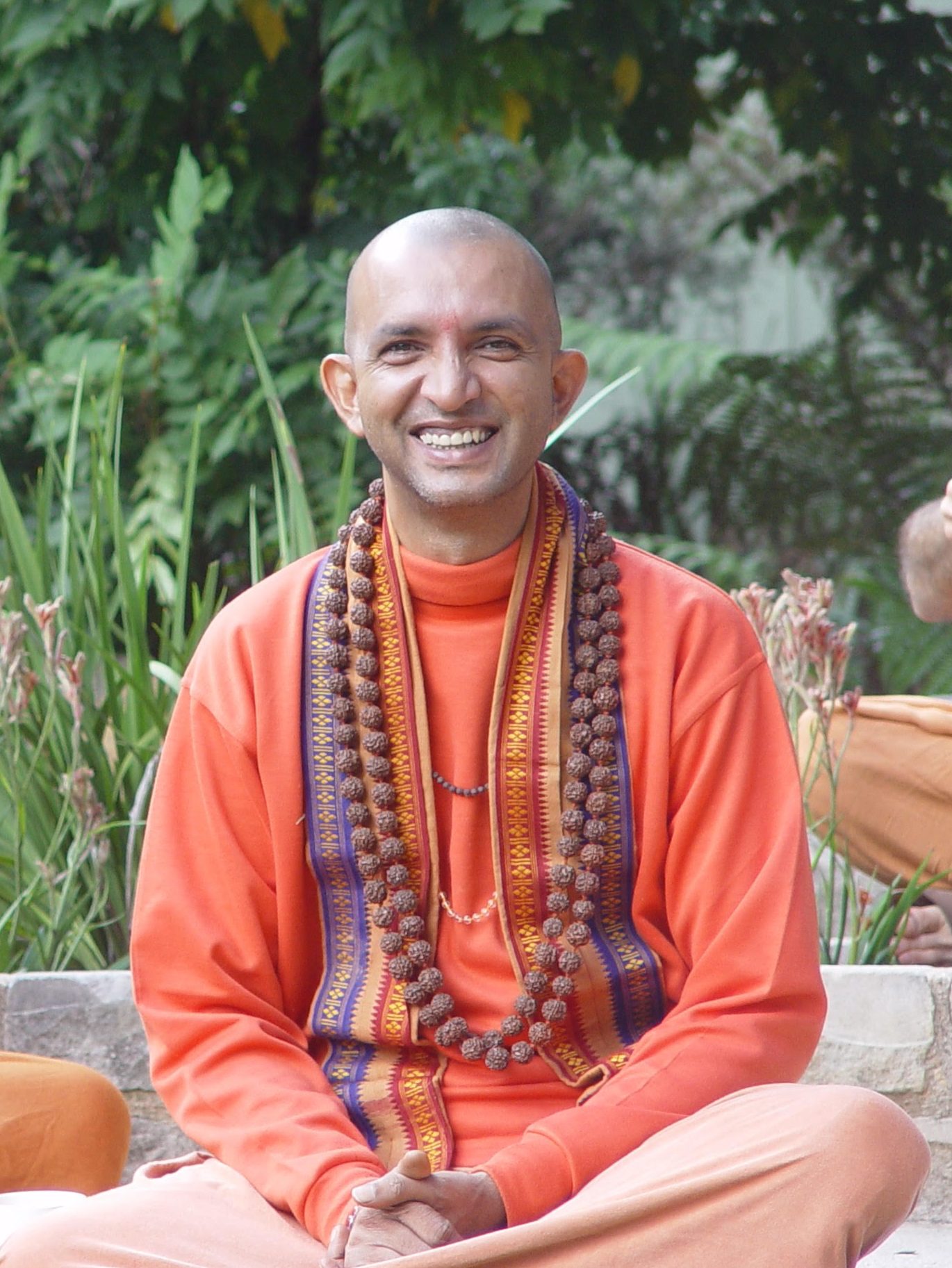
In 1983, Sri Swami Satyananda Saraswati left Munger after having completed his guru’s mission to “spread yoga from door to door and from shore to shore”. He entrusted the responsibilities and obligations of the organizations and the yogic movement he had created over the years to his spiritual successor, Swami Niranjanananda Saraswati.
Working relentlessly over the following years, Swami Niranjanananda ensured the continuation of both the yogic culture and the tradition of sannyasa. In 2010 Sannyasa Peeth was created to revive the sannyasa tradition and to train Sannyasins to meet the needs of modern times. In the same year, he entered into a higher sadhana and tirtha yatra.
In 2013, Swami Niranjanananda organised and supervised the World Yoga Convention to celebrate the Golden Jubilee of the Bihar School of Yoga with over 50,000 participants attending in person or through the internet. In the following year, the Bihar School of Yoga entered the second chapter, where Swami Niranjanananda revised and presented the Yoga Chakra, a profound and ground-breaking approach to understanding yoga and its purpose. A set of yogic yamas and niyamas was also introduced by Swami Niranjanananda to move the spiritual seeker towards positivity.
In 2018, at the Yoga Symposium for Teachers in Munger, he launched The Satyam Yoga Prasad for the Jnana Yajna whose prasad was yoga vidya. Here the momentous task of offering all the collected publications of Sri Swami Satyananda and Swami Niranjanananda in an online application to all was successfully accomplished.
Among the many other contributions to yoga that Swami Niranjanananda has made are the yogic capsules. Being aware of the great demands that today’s modern lifestyle brings, he devised a complete series of sadhana practices for the busy person to implement easily and effectively into their daily routine, known as the yogic capsule sadhana.
The many and on-going accomplishments of Swami Niranjananada are reflected in the prestigious awards he has received. In 2017, he was honoured with the Padma Bhushan award by the government of India for exceptional and distinguished service to yoga. Two years later, the Ministry of AYUSH announced the Bihar School of Yoga as one of the recipients of the 2019 Prime Minister’s Award for the outstanding contribution in the Promotion and Development of Yoga.
Applications of Yoga in Society
Under the guidance of Swami Niranjanananda, the Bihar School of Yoga devised innovative and creative programmes of yogic practices which can be applied to a wide range of groups in society. Ranging from yoga classes in the remote villages of Bihar, yoga for people with addictions, yoga classes for prisoners, yoga for the management of cancer, as well as yoga courses for professionals such as medical students and doctors, athletes, corporations and government bodies, the police force and the army, are just a few examples of the fields covered. Yoga for children and the integration of yoga into classical education has also been warmly received by Europe and highly acclaimed by UNESCO, which invited Swami Niranjanananda to speak twice on this topic in France.
Contribution to Yoga Practices
Ultimately, yoga is a lifestyle. It is not a practice. For, once the yogic principles are imbibed and become part of life, the attitudes, perceptions, interactions, the mind, actions and behaviours will improve. To meet the challenge of the second chapter, the expressive and the behavioural components of yoga, the antaranga and bahiranga aspects, have to come together. When head, heart and hands unite, an ordinary moment can become divine. An ordinary life can become a divine life.
Swami Niranjanananda Saraswati
Swami Niranjanananda has made a significant contribution to the practices of yoga, and in particular dharana and jnana . In his book Dharana Darshan , published in 1993, he clearly presents a collection of dharana practices from ancient yogic, tantric and Upanishadic texts whereby he systematizes these practices making them accessible for the first time to be practiced in stages for safe, stable and sequential progression. Amongst the numerous other significant books written by Swami Niranjanananda are Yoga Darshan, Sannyasa Darshan, Prana and Pranayama, Samkhya Darshan and Yoga Education for Children.
Yoga Capsule
‘The yoga capsule sadhana helps to incorporate yoga in our lifestyle and create a positive and uplifting environment at home. In this way we are able to live, we are able to love, we are able to laugh. Living, loving and laughing is the aim of yoga, not samadhi.’
Swami Niranjanananda Saraswati
In 2006, Swami Niranjanananda devised a specific sequence of sadhana – a series of simple to perform practices that can be easily integrated into one’s busy modern lifestyle which take only 10-20 minutes to complete. He humorously called the series the yogic capsule, referring to a pill one can take in order to attain effective results for a relatively small effort. Practiced regularly, the yogic capsule promotes health, wellbeing and upliftment.
The various yoga capsules are designed to suit a variety of needs including:
1. General well-being/ Total Well-being
2. Women’s health
3. Children from the age of 8-11 and 12-14
4. Teenagers from age 14
5. Senior citizens
6. Stress management
7. High blood pressure
8. Mucous, Bile and Wind
9. Obsessions and anxiety
10. Insomnia
Yoga drishti
In 2010, Swami Niranjanananda embarked on a series of Satsangs known as Yogadrishti where almost every month for three years he spoke on yoga, tantra, sannyasa, the philosophy and application of yoga, and practical spiritual life.
Sannyasa Peeth
On 6th December in 2010, Sannyasa Peeth was established in order to uphold the Sannyasa Parampara propounded by Sri Swami Sivananda and Sri Swami Satyananda. Swami Niranjananada was given the mandate to revive the eternal tradition of Sannyasa and make it applicable to the modern world by his guru in 2009. Sannyasa Peeth provides a unique opportunity for aspirants to experience an alternative spiritual lifestyle based on the principles and disciplines of sannyasa . There are numerous programmes, training sessions and events running throughout the year.
Yatra
In preparation for the 50-year jubilee celebrations of the Bihar School of Yoga in 2013, Swami Niranjanananda launched a six-month all-India yatra, (yoga tour), with a group of participants from the SannyasaTraining course. They conducted a great number of programmes reaching out to hundreds of thousands of people from all walks of life.
Yoga Chakra
In 2014, a series of talks commenced presenting the new direction of yoga, its scope and intent. Here, Swami Niranjanananda took the essence of Sri Swami Satyananda and Sri Swami Sivananda’s teachings and developed the Yoga Chakra. This system combines both bahiranga yoga (hatha, raja and kriya yoga) and antaranga yoga (jnana, bhakti and karma yoga). The purpose of the Yoga Chakra is to allow the practitioner to experience the wholeness and completeness of yoga.
Yamas and Niyamas
Swami Niranjanananda presented a set six uplifting traits of yamas and niyamas to be practiced and cultivated in one’s daily life for positivity.
Yoga Lifestyle Yamas Yoga Lifestyle Niyamas
Manahprasad (happiness) Japa (mantra repetition)
Kshama (forgiveness) Namaskara (salutations to another)
Danti (mental restraint) Indriya nigraha (sensorial restraint)
Adweshta (be without separation and Maitri (friendliness)
feeling of division)
Bhava shuddhi (pure intention) Titiksha (patience and endurance)
Shantata (serenity) Niyamitata (regularity expressed in lifestyle)
Courses
In 2015, Swami Niranjanananda began to create new courses in which he himself taught a great number of spiritual seekers. The Progressive Training Courses I, II and the Adhyatma Samskara Sadhana Satras to name but a few.
Yoga vidya
In 2015 Swami Niranjanananda revived the original teachings of Swami Satyananda by presenting the importance of yoga vidya or yogic knowledge. Throughout the Progressive Training Course, he expounded on how Sri Swami Satyananda first taught yoga in the 1960’s, and explained that his intention was not necessarily to train teachers, but rather to introduce participants to the subject of yoga through practice, and through deepening one’s experience of yoga, one would become most effective in transmitting the knowledge of yoga.
Swami Niranjanananda has travelled all over the world, following in his guru’s foot steps to help propagate yoga in Europe, Australia, North and South America since the age of 11. He has visited many tirthas (holy places) around India, and today is the spiritual guide of millions of devotees all around the world.