Satyananda Yoga System
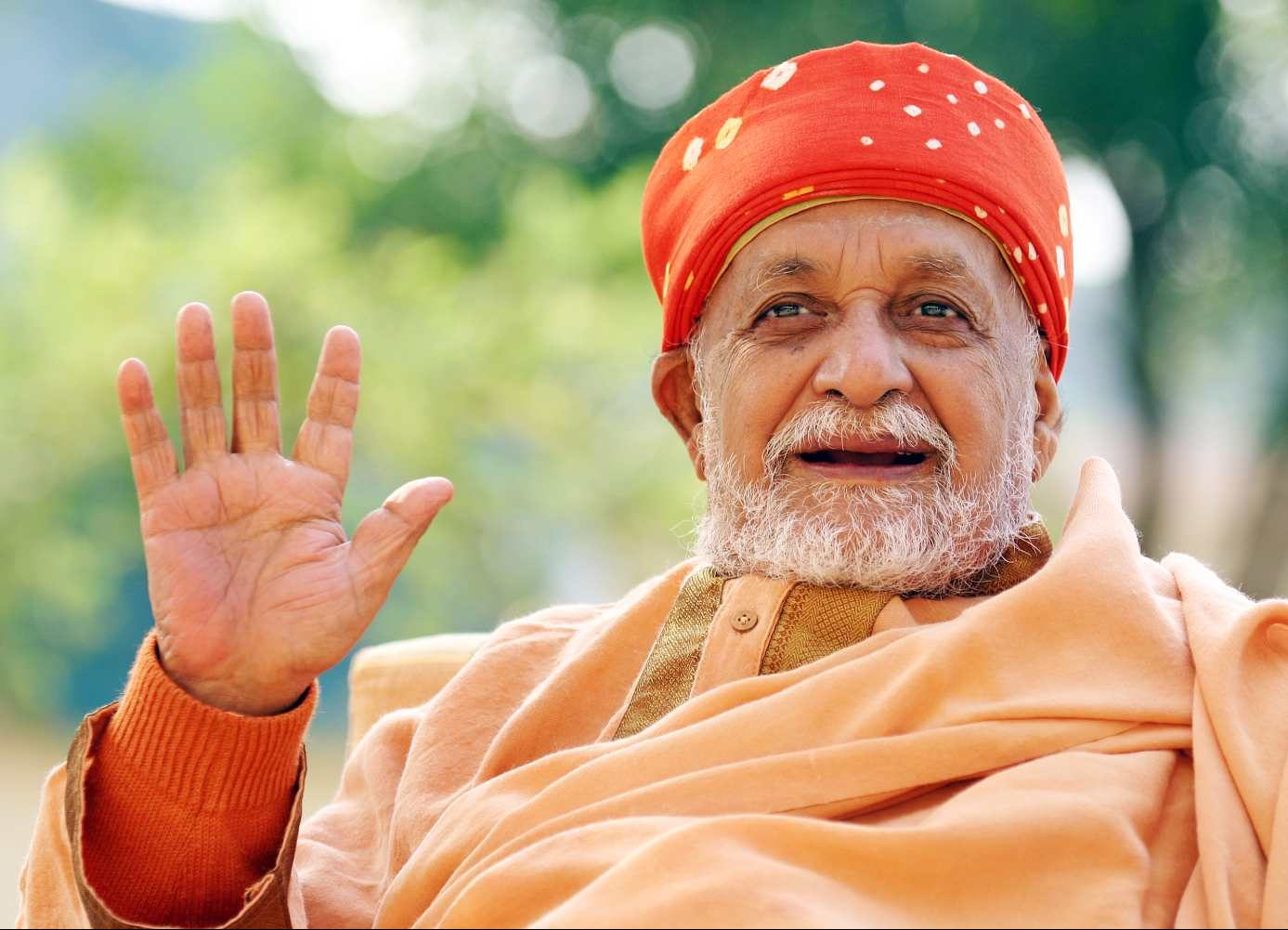
The Satyananda Yoga System, otherwise known as Bihar Yoga, was established by Sri Swami Satyananda Saraswati (1923-2009). Having been given a mandate by his guru, Sri Swami Sivananda Saraswati of Rishikesh, (1887-1963), to ‘spread yoga from door to door and from shore to shore’, he took the ‘yoga of synthesis’ and combined it with practices of Vedanta and Tantra along with ancient yogic techniques simplifying them for ordinary people to apply in their modern lives in a safe and effective way.
Satyananda Yoga integrates many branches of yoga in a systematic way, which enables the practitioner to achieve balance and wholeness. Hatha yoga, raja yoga, kriya yoga, karma yoga, bhakti yoga and jnana yoga lay the foundations for developing the faculties of head, heart and hands, which is part of the ancient tantric tradition. Kundalini yoga, mantra yoga, nada yoga, laya yoga, among others, are also included in Satyananda Yoga.
The Propagation of Yoga Worldwide
In 1956, Sri Swami Sivananda called his disciple, Sri Swami Satyananda, and gave him the mandate to propagate yoga worldwide. This became Sri Swami Satyananda’s mission, and during the years from 1963 until the mid-1980’s he taught the science of yoga, inspiring millions of people the world over and making yoga a household name.
International Yoga Fellowship Movement
In 1956, Sri Swami Satyananda founded the International Yoga Fellowship Movement (I.Y.F.M) with the aim of creating a global fraternity of yoga. Since then, hundreds of yoga centres have been set up in India and abroad. Publications of books with comprehensive yoga practices, guidance on yogic sadhana and lifestyle have been translated into dozens of languages. In 1963, the first publication of a yoga magazine that could be read in both English (Yoga) and Hindi (yogamag) was printed. Today these issues, as well as the entire publication of books, are accessible online, https://www.yogamag.net/
The Bihar School of Yoga
The Bihar School of Yoga (BSY) was established by Sri Swami Satyananda in the city of Munger, in the Indian state of Bihar in 1963. People from all over the world and from all walks of life have been going there to practice and experience yoga to this day. It is here where Sri Swamiji revived a great number of unknown practices and principles of the ancient yogic and tantric traditions, modifying and systematizing them; a veritable yogic renaissance. As a result, practitioners today are provided with a vast array of significant yogic tools ranging from asanas, pranayama, mudras and bandhas, to pratyahara, dharana and dhyana techniques.
He also stressed the importance of having an aim, a philosophy and a sadhana in life to assist in removing the limitations of one’s personality, awaken dormant potential and cultivate spiritual awareness, and that one’s philosophy, should be such, that it enables one to face the vicissitudes of life with equanimity and balance. Below is a small sample of the contributions that Sri Swamiji has offered to the science of yoga.
To Sri Swami Satyananda goes the credit for the the pawanmuktasana series:
• Pawanmuktasana Part 1 (anti-rheumatic)
• Pawanmuktasana Part 2 (anti-gastric)
• Pawanmuktasana Part 3 (shakti bandhas)
The series of pawanmuktasana can be performed by all ages, and when practiced regularly, give a profound and transformative experience.
The sequence in which the practices of pranayama are taught today by the majority of yoga schools was also given by him. The practice of mudras and the physiological and psychological effects of the bandhas are other different aspects of the yogic techniques which he systematized so that they could be easily understood and experienced.
As a tantric master and perfected yogi, he brought to light concepts from the tantric and vedic traditions to aid human growth and evolution. One of the greatest contributions is Satyananda Yoga Nidra, a steady and systematic method of deep relaxation and inner transformation. Sri Swami Satyananda incorporated components of tantric nyasa into the yogic system in the form of a pratyahara technique , in which the distractions of the mind are contained, and as a result the mind relaxes.
Satyananda Yoga Nidra has had a major impact on the world of yoga for over the last 60 years, transforming the lives of many practitioners. It was trademarked as Satyananda Yoga Nidra to differentiate between the different types of yoga nidra that appeared thereafter, which used the original technique developed by Sri Swamiji as a base.
Other techniques of pratyahara accredited to him include antar mouna and ajapa japa. Antar mouna deals with the activities of the conscious mind. In this practice there are various stages where first there is awareness of thoughts, and in later stages one creates, transforms and finally gains control over the thought process. Ajapa japa combines breath and mantra with psychic passages to enable one to further transform and gain control of the mind.
Ajapa Japa: An effective method of meditation and a complete sadhana in itself. This practice combines pranayama and continuous mantra repetition. The mantra may be the personal mantra given by a guru or the universal mantra of the breath, So Ham whose spontaneous repetition is the core of Ajapa Japa. Gradually one starts to explore the more subtle regions of the psychic body- the psychic centers (chakras) and the psychic passages.
Antar Mouna: This practice exhausts the mind’s interest in external stimuli received through the senses, which allows one’s awareness to internalize and observe one’s thoughts and counter thoughts and finally gain control over what is happening in the mind and finally gaining control over the thought processes, and mental activities. It is designed to bring one to a state of inner silence. It has six stages. Each stage is a separate technique. Through Antar Mouna, one learn to deepen one’s awareness and to remove deep rooted tensions, painful memories, fears and phobias from the mind. The practice enhances memory and decision making and re-shapes the personality, and one learns to accept and be-friend the mind.
Another contribution has been the discovery of tantric nyasa concentration and meditation techniques, which are explained in detail and presented in their basic form in the book, Meditations from the Tantras.
Swami Satyananda also brought forth the practices of kriya yoga from the yoga and tantra shastras which, as taught by the Satyananda Yoga System, are one of only two forms of kriya recognized the world over; the other being that of Paramahamsa Yogananda, of the Mahavatar Babaji tradition.
“Awareness is the alpha and omega of yoga”
Swami Satyananda Saraswati
Throughout his life Sri Swami Satyananda taught that the expansion and cultivation of awareness should be the aim of life, and that the means is yoga. Awareness lies at the heart of all Satyananda Yoga practices and its entire approach. Sri Swamiji emphasized the importance of bringing awareness into all dimensions of every yoga practice: the physical, mental, emotional, energetic, subtle and spiritual. This allows the awareness to gradually expand so that over time awareness can be brought into all the activities and aspects of life.
“Yoga will emerge as a mighty world culture and change the course of world events.”
Swami Satyananda Saraswati
Sri Swami Satyananda saw yoga as a process of continuous transformation of the total personality, which can be achieved in stages by regular and systematic practice, and by assimilating and making yoga a part of one’s daily life. He devised four stages in the aspirant’s development.
The yogic journey – The four levels of application
Despite initiating yoga training, Sri Swamiji was not a teacher of yoga; rather, he was the engineer of life and used yoga as a tool to enhance the qualities and faculties of life. In this context he also made it clear that yoga should be understood in the right perspective.
Swami Niranjanananda Saraswati
Sri Swamiji explained that the journey of yoga begins with abhyasa (practice), and in time evolves into sadhana (continuous effort), which in time evolves into a lifestyle, and finally emerges as a sanskriti (culture). The four levels of yoga application are: yoga practice, yoga sadhana, yogic lifestyle, and yogic culture.
This sequence of yoga which Sri Swami Satyananda defined as ‘progressive yoga’ was created keeping in mind the guidelines given by Sri Swami Sivananda that yoga should develop the human mind, the human heart, and the human creativity (i.e. head, heart and hands).
Through this process, Sri Swamiji showed that one can live as a yogi in the world without renouncing the world by developing awareness and connecting head-heart-hands; and ultimately creating a yogic world culture for the betterment of humanity.
Yoga Research Foundation
“The science of yoga has great physical and psychological potential. The effect of yoga techniques on human physiology is an inviting field for research for modern physiologists, and scientific investigations into yoga psychology are a challenge for modern psychologists.”
Swami Satyananda Saraswati
In the late 1970s, Sri Swami Satyananda initiated and inspired a range of yogic research projects. This research has provided society with further understanding of how yogic practices affect the human body, mind and emotions, and how these practices can awaken the hidden inner potential and enhance the quality of a person’s life.
In 1984, the Yoga Research Foundation was established to conduct scientific investigation of yoga practices. This on-going scientific research and experimentation has demonstrated how the various yogic practices and techniques can be used therapeutically to prevent, manage and treat a wide range of conditions, including asthma, hypertension, diabetes, cancer, and also pregnancy.
Sannyasa initiation
Sri Swami Satyananda also contributed to providing a different dimension to the concept of sannyasa . The Satyananda Yoga tradition incorporates aspects from the Vedic tradition in which sannyasa lifestyle is devoted to the study of the eternal principles governing life. The Vedic approach focuses more on providing the right samskaras, where one is free to follow their own vocation in life, but with a constructive samskara so there is no self-denial. Sri Swamiji revealed that the sannyasa lifestyle does not mean belonging to a particular denomination or sect, but preserving those human values through which it is possible to experience transformations leading to greater equilibrium and harmony.
Previously sannyasa initiation was confined to only the few who were inclined to follow the sannyasa path in life. For the first time, Sri Swami Satyananda himself accepted foreigners into sannyasa, and following in his guru’s footsteps, he also initiated women into sannyasa making sannyasa for women internationally acceptable. Despite the strong opposition at first, these changes rejuvenated the sannyasa tradition immensely. Karma sannyasa was given to all age groups, married and single people, and Sri Swamiji instructed his disciples to:
“Live life fully, participate in all events externally, but internally maintain an attitude of non-doership. Even while doing the actions natural to you, if you are unattached to those actions, you are truly the non-doer.”
He explained that the change that takes place in sannyasa is internal, but one’s external life goes on as it is, living with the family, going to work, or socializing. In this way the karma sannyasin implements the qualities of sannyasa into their marriage, their family and into their daily relationships. Rishi sannyasa has also been given to committed and dedicated sannyasins who want to live together as husband and wife, and who have been able to maintain their balance, harmony and clear vision. In this way, there has been a wider social acceptance of sannyasa as an alternative way of life, in which one learns to balance the material with the spiritual, the inner world with the external world.
The focus
The focus of Sri Swami Satyananda’s teachings and lifestyle has always been on the development of spiritual awareness, the inner personality, the inner nature, leading to ananda , bliss, fulfillment and contentment, and the ability to see the one in all and the all in one.