





What are the main chakras in the body and what are their meanings?
Chakra means a "wheel" or a "disc" in Sanskrit. Chakras are psychic centres of subtle energy which are found on our energy body (pranamayakosha), but which directly affect our physical body (anamayakosha) as well as our mental and emotional body (manomayakosha). In other words, we are not just this gross material body made of flesh and bones. But can we feel or measure chakras?
Dr. Hiroshi Motoyama (1925–2015) a Japanese scientist, philosopher, and spiritual teacher was one of the first to propose that prana — the vital life force described in Asian traditions — could be measured and studied scientifically using bioelectrical instruments. He went on to invent the AMI apparatus, also called the "Chakra Machine," that uses electrodes placed on chakra points to measure electrical conductivity, resistance, and other bio-energetic functions to evaluate the health of the meridians and associated organs. Although it is controversial in mainstream medicine, alternative medicine and integrative health view his device as an early attempt at quantifying subtle energy.
Sri Swami Satyanada goes into great depth when describing the chakras in his seminal book Kundalini Tantra, in which he draws from his own experiences and from the ancient texts. It is a must read. He tells us that in the Tantric tradition chakras are symbolized by lotus flowers, and explains that "we must all pass through three distinct stages in our spiritual life representing our existence on three different levels: ignorance, aspiration and endeavor, and finally illumination. The lotus flower represents this passage because it sprouts from the mud (ignorance), grows up through the water, in an effort to reach the surface, (endeavor and aspiration) to eventually reach the air and the direct light of the sun (illumination). [1]
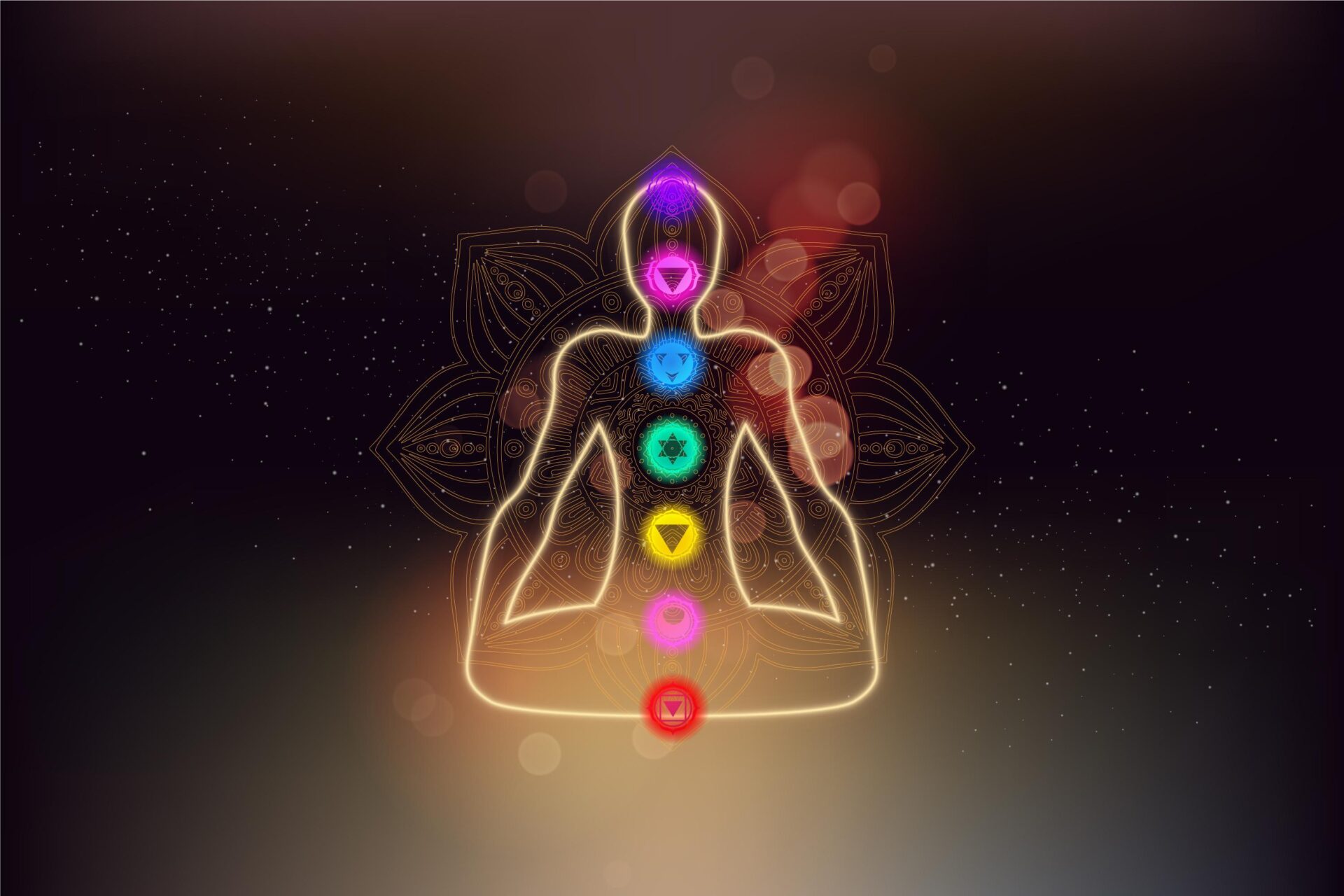
There are seven major chakras, aligned vertically along the spine :
- Mooladhara – at the base of the spine; 4 petalled deep red lotus; represents survival
- Swadhisthana – just below the navel; 6 petalled vermillion lotus; represents sexuality
- Manipura – upper abdomen;10 petalled bright yellow lotus; represents power
- Anahata – center of the chest; 12 petalled blue lotus; represents unconditional love
- Vishuddhi – throat; 16 petalled violet lotus; represents communication
- Ajna – behind forehead, between the eyebrows;2 petalled silver grey lotus; represents intuition
- Sahasrara – top of the head; 1000petalled multicoloured lotus; represents consciousness
How do blocked chakras affect your physical and emotional health?
Blocked or imbalanced chakras are commonly believed to affect physical and emotional health in a variety of ways. When a chakra is slow and sluggish, it can create a deficiency and when it is overworking, an excess is felt. For example, when there is a deficiency of energy in swadisthana chakra, the person may have a denial of pleasure whereas if there is excess, one may suffer a pleasure addiction.
One of the most comprehensive books written about the chakras, their blockages and how to overcome them is Eastern Body, Western Mind- Psychology and the Chakra System as a Path to the Self written by Anodea Judith. She provides great insight and associates various psychotherapy approaches as well as yoga practices and meditations to balance the chakras and heal the body and mind.
Let's look at some key features when the chakra is balanced and when there are blockages below:
Mooladhara balanced: Feel safety, grounded, stabile
Emotional blockage:
- Anxiety and insecurity
- Poor focus and discipline
- Financial or survival worries
- Fear of change
Physical blockage:
- Eating disorders
- Disorders of bowel, anus and large intestine
- Lower-body discomfort (legs, feet, lower back)
- Frequent illness
Swadhisthana balanced: Creativity, sexuality, enjoys pleasure, emotional flow
Emotional blockage :
- Difficulty expressing emotions
- Low creativity or passion
- Guilt or emotional numbness
- Denial of pleasure or pleasure addiction
Physical blockage:
- Tension in hips
- Reproductive or digestive discomfort
- Rigidity in body
- Sexual dysfunction: impotence, frigidity, nonorgasmic
Manipura balanced: Has confidence, willpower, identity
Emotional blockage:
- Low self-esteem or overly aggressive and controlling
- Constant self-doubt
- Feeling powerless or overwhelmed
Physical blockage:
- Digestive sluggishness and disorders, ulcers
- Abdominal tension
- Hyperactive or chronic fatigue
- Disorders of stomach, pancreas, gall bladder, liver
Anahata balanced: Expresses love, compassion, connection
Emotional blockage:
- Trouble giving/receiving love
- Grief, loneliness
- Difficulty forgiving, critical of self and others
- Lack of empathy and narcissism
Physical blockage:
- Disorders of heart, lungs, thymus, breasts, arms
- Poor stress resilience
- Immune system deficiency
- Circulation problems
Vishuddhi balanced : Good communication, speaks the truth, self-expression
Emotional blockage:
- Fear of speaking up
- Feeling misunderstood
- Difficulty expressing needs
- Over-talking and inability to listen
Physical blockage:
- Throat tightness
- Tone deaf
- Jaw or neck tension
- Toxicity in body
Ajna balanced : Intuition, insight, clarity
Emotional blockage:
- Confusion
- Difficulty focusing
- Overthinking
- Delusions and obsessions
Physical blockage:
- Headaches
- Eye strain and poor vision
- Poor memory
Sahasrara balanced : Spiritual connection, expanded awareness
Emotional blockage:
- Feeling disconnected from life
- Lack of purpose
- Cynicism or spiritual confusion
- Over-intellectualization
Physical blockage:
- General fatigue
- Mental fog
- Migraines
- Amnesia
[1] Swami Satyananda Saraswati, Kundalini Tantra, Bihar School of Yoga, Munger, 1984, pp. 102-103
What are the signs of blocked chakras in daily life?
Blocked or imbalanced chakras are thought to show up as patterns in thoughts, emotions, behaviors, and even physical sensations as well as body types. Here are some examples:
Mooladhara:
- Overspends or is stingy
- Difficulty with routines or commitment
- Legs can't support body, knees are locked
Swadhisthana:
- Low creativity or feeling uninspired
- Feeling stuck in repetitive patterns
- Body movements are jerky
Manipura:
- Difficulty making decisions
- Procrastination or lack of motivation
- Poor muscle tone
Anahata
- Holding grudges or emotional walls
- Feeling isolated even among others
- Tightness in chest or upper back
Vishuddhi
- Struggling to speak up or over-apologizing
- Habitual lying or hiding true feelings
- Throat tightness, voice issues
Ajna:
- Trouble concentrating
- Daydreaming rather than taking action
- Frequent headaches or eye strain
Sahasrara:
- Cynicism or close-mindedness
- Insomnia or restless thoughts
- Completely disassociated from body
How to unblock chakras through yoga postures and breathing?
The beauty of yoga practices is that there is a wide variety of practices that are gentle, practical, and suitable for daily use to help unblock and balance each chakra. In Sri Swami Satyananda's landmark publication of Asana, Pranayama, Mudra, Bandha each asana is accompanied by the chakra which is being worked on. Below are a specimen of asanas and breathing practices you can find in the book.
Mooladhara
Yoga postures:
- pawanmuktasana 1 (practices 1-10)/ pawanmuktasana 2 (1-3)/ pawanmuktasana 3 (8-10)
- Tadasana (palm tree pose)
- Bhadrasana (gracious pose)
- Brahmachariasana (celibate's pose)
Breathwork:
- Deep diaphragmatic breathing
- Bhramari pranayama (Humming Bee breath) to reduce anxiety
- Prana mudra (shanti mudra) awakens the prana shakti and distributes it throughout the body by moving it through the chakras from mooladhara to sahasrara.
Swadhisthana:
Yoga postures:
- Pawanmuktasana 3 (practices 2-7)
- Paschimottanasana ( back stretching pose)
- Marjari-asana(cat stretch pose)
- Shashankasana (moon pose) and Shashank Bhujangasana (striking cobra pose)
Breathwork:
- Cooling breath (Sheetali/Sheetkari) if emotions feel “heated”
Manipura
Yoga postures:
- Pawanmuktasana 2: strengthens the digestive system and the abdominal region
- Meru Wakrasana (spinal twist)
- Trikonasana (triangle pose)
- Dhanurasana (Bow Pose)
Breathwork:
- Kapalabhati pranayama (frontal brain cleansing) – energizing, fire-activating
- Bhastrika pranayama (bellows breath)
Anahata
Yoga postures:
- Skanda chakra (shoulder socket rotation)
- Dwikonasana (double angle pose)
- Utthan pristhasana (lizard pose)
- Samakonasana (right angle pose)
Breathwork:
- Thoracic breathing
- Nadi Shodhana (Alternate Nostril Breathing) – balances emotions
Vishuddhi
Yoga postures:
- Sarvangasana (Shoulder Stand)
- Matsyasana (Fish Pose)
- Simhagarjanasana(roaring lion pose)
Breathwork:
- Ujjayi pranayama – slight throat constriction
- Bhramari pranayama (Humming bee breath)
Ajna:
Yoga postures:
- Ardha matsyendrasana (half spinal twist)
- Gomukasana (cow's face pose)
- Eka pada padmottanasana (one leg raised to head pose)
Breathwork:
- Kumbhaka (breath retention) – clarity & awareness
- Nadi Shodhana (Alternate Nostril) for mental stillness
- Trikuti pranayama (Bhrumadhya-drishti breath)
Sahasrara
Yoga postures:
- Sirshasana (headstand)
- Shavasana (Corpse Pose)
- Padmasana (Seated Lotus Pose)
Breathwork:
- Soham mantra breathing
- Prana mudra
Which meditation techniques help in unblocking chakras effectively?
The Satyananda Yoga tradition has a vast array of meditation practices that go from beginner's level to advanced. Dozens of books and audios can be found for free on the Satyam Yoga Prasad website, one of the greatest legacies left to us by the Bihar School of Yoga [https://www.satyamyogaprasad.net/]
One particular meditation practice which purifies the psychic centres, opens and awakens them is Chakra Shuddhi. The entire practice can be found in Swami Niranjanananda Saraswati's book Dharana Dharshan along with a multitude of practices drawn from the Upanishad texts as well as Tantric and Yogic meditations.
What role does diet play in balancing the chakras in the body?
Sri Swami Satyananda had researched food and the chakras and expounds on this in Kundalini Tantra. He advises us not to overeat and there should be periods of fasting. Certain condiments are also recommended, such as coriander, cumin seeds, turmeric, aniseed, black pepper and cayenne aid in the body's digestion and conserve vital energy. He concludes that a combination of natural and macrobiotic foods are the best choice, and that food needs to be cooked.
How can sound and mantra healing support unblocking chakras?
Sound and mantra can be used to help balance and harmonize the chakras. For example, repetitive sounds such as chanting create steady vibrations that can help quiet mental chatter and deepen relaxation, thus unblocking chakras. Focusing on a chakra while chanting its associated beeja mantra (e.g., LAM for mooladhara chakra) gives the mind a single-pointed anchor, reducing stress and internal tension. Nada Yoga (the yogic path of sound) focuses on the power of vibration to unblock the chakras through mantra chanting, singing bowls, synchronization of breath and Om chanting at different chakra points.
How to maintain open chakras and long-term energy balance?
Attending your yoga class and also asking for your own personal sadhana (regular practice of certain yoga techniques to attain a specific goal, in this case open chakras), practicing kriya yoga, nada yoga or enjoying kirtan sessions are just a few effective methods to maintain balanced chakras. Also, being in a spiritual environment, visiting an ashram and staying there for a period of time, being in the company of positive people will all definitely contribute to long term energy balance.
Visit our website and see the different programs running throughout the year that might interest you .
https//satyanandayoga.carrottechlab.net/en/satyananda-yoga-bihar-yoga/