






Bhramari (humming bee breath) is a powerful tranquilizing pranayama technique that involves making a deep, low-pitched humming sound similar to the buzzing sound of a bee. It is especially beneficial for calming the mind, reducing stress, and improving both physical and mental health.
Common Mistakes to Avoid:
- Tightness in the jaw: The jaw should remain relaxed, with the lips gently closed and teeth slightly apart. A tense jaw can interfere with the smooth flow of the humming sound and its beneficial vibrations.
- Incorrect sound quality: Ensure the humming sound is deep and steady, like the buzzing of a bee. Avoid a high-pitched sound or inconsistency in the humming.
- Holding the breath too long: While it is important to breathe deeply and extend the breath, avoid holding your breath for too long, especially if you’re a beginner. Focus on smooth, controlled breaths.
- Poor posture: It is essential to sit in a comfortable, stable position, such as in a cross-legged posture or on a chair with an upright spine. A slouched posture can hinder the free flow of prana and reduce the effectiveness of the practice.
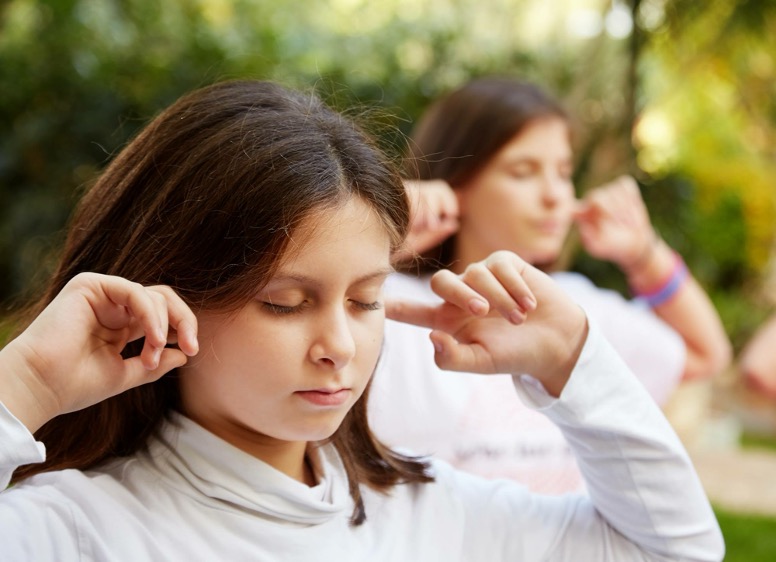
- Over-straining the neck: Some people express pain, discomfort or tightness in the back of the neck when they press their index finger on the flaps of their ears. One can either cover the ears with their palms and tilt the chin slightly towards the sternum or if this still causes discomfort, do the practice without covering the ears.
Benefits of Bhramari Pranayama:
- Stress reduction: The vibrations of the humming sound help calm the mind and reduce anxiety. Bhramari has been shown to lower blood pressure, decrease heart rate, and alleviate stress-related symptoms.
- Improved mental clarity: Regular practice can promote mental calmness and concentration enhancing focus and clarity.
- Reduces stress and anxiety: Bhramari pranayama helps in the reduction of mental stress, anxiety, and depression. The sound vibrations directly impact the brain’s neurochemistry, creating a calming effect. Research has shown that bhramari decreases the occurrence of anxiety and improves mood by stimulating the pineal and pituitary glands, which regulate hormones related to stress.
- Balances hormones: Bhramari stimulates the hypothalamus, pineal, and pituitary glands, contributing to balanced hormonal levels and improved emotional stability.
- Enhances sleep quality: As bhramari stimulates melatonin production through the pineal gland, it may promote better sleep and overall relaxation.
- Maintains physical health: Bhramari helps in improving respiratory function, reducing tension in the neck and shoulders, and stimulating blood circulation. It can improve oxygenation of the body and stimulate the immune system. It has also been shown to aid in faster healing after surgery and reduce pain.
Research studies on how bhramari improves health:
In a clinical research study conducted at Munger Hospital (India) in 1993, bhramari was practiced by 112 pregnant women and resulted in significantly improved outcomes compared to a control group.
Women practicing bhramari reported:
- Normal blood pressure for all, compared to 25% with high blood pressure in the control group.
- Lower miscarriage rates (2% vs. 8%).
- Fewer premature births (2.6% vs. 5%).
- Shorter labor times (25% faster).
- Reduced pain during labor.
- Fewer Caesarean sections (1% vs. 4%).
- Healthier newborns with greater average birth weight (3325g vs. 2850g).
These results suggest that bhramari helps in stress reduction, regulates hormone levels, and promotes better overall health during pregnancy.
Further research has also shown that bhramari helps surgical patients heal faster, reducing the need for anesthesia, shortening recovery times, and lowering the risk of infections.
Some of the numerous recent scientific research studies on the effects of bhramari pranayama on health can be read below:
-
Effect of Bhramari Pranayama intervention on stress, anxiety, depression and sleep quality among COVID 19 patients in home isolation
-
Exploring the health benefits of bhramari pranayama (humming bee breathing): A comprehensive literature review
-
Immediate Effect of Simple Bhramari Pranayama on Blood Pressure and Pulse Rate of Hypertensive and Normotensive Individuals . A Single-Arm Clinical Trial
-
Nitric Oxide, Humming and Bhramari Pranayama
https://indjst.org/articles/nitric-oxide-humming-and-bhramari-pranayama
Technique: Basic Method
- Posture: Sit comfortably in a meditation posture, with your hands resting on the knees in jnana or chin mudra. Keep the spine straight, the chin slightly tilted towards the earth, close your eyes and relax your entire body.
- Hand Position: Raise your arms sideways, bend your elbows, and bring your hands to your ears. Use your index fingers to close the flaps of your ears.
- Breathing in and humming out: Keeping the lips together and the teeth slightly apart, inhale slowly and deeply through the nose. As you exhale, make a deep, steady humming sound like the buzzing of a bee. Feel the vibrations within your head, particularly around the face and skull. Continue for 5–10 minutes.
- Focus: After finishing the rounds, remain with the ears still closed and bring your awareness to the center of the forehead, focusing on the ajna chakra.
Technique with Pranava (Mantra)
You can also practice bhramari with the Om mantra during exhalation. Inhale using ujjayi breath, focusing on the upward movement of prana through the spine from mooladhara (root chakra) to the ajna chakra at eyebrow centre.
As you exhale, chant Om, descending the prana from ajna to mooladhara, with an elongated “mmmmm” sound. Practice for 5–10 minutes, feeling the resonance of the sound in your body.
By incorporating bhramari into your daily routine, you can experience profound benefits for both mental clarity and physical health, creating a deep sense of calmness and well-being.
*Saraswati Niranjanananda, Swami Prana Pranayama, Yoga Publications Trust, Munger, 2009 p.142 , Ganga Darshan, Munger, India