





Do you spend hours hunched over a desk, or battling back pain that just won't quit? The ancient practice of yoga might hold the key to unlocking a healthier spine and a more vibrant life, starting with one powerful pose: bhujangasana, or cobra pose. As a foundational posture, bhujangasana harmonizes your mind, body, and spirit. In this article, we'll delve into the intricacies of this asana, exploring its many benefits, from enhancing physical flexibility to promoting mental well-being. Join us as we uncover how to practice cobra pose effectively, understand its contraindications, and discover how it reduces stress, engages key muscle groups, and fits within a broader yoga practice. Prepare to embark on a journey towards greater flexibility and vitality! Try this pose to see the immediate benefits it has on your flexibility and vitality.
Understanding bhujangasana
Bhujangasana, or cobra pose, is named for its resemblance to a cobra lifting its hood (expanded neck area). It primarily stretches the front of the body while strengthening the spine, offering a perfect balance of flexibility and strength essential for overall wellness.
The role of bhujangasana as a preparatory pose
Bhujangasana serves as an excellent preparatory posture for more advanced backward bends, such as ustrasana (camel pose) and dhanurasana (bow pose). By gently stretching the abdominal muscles, opening the chest, and strengthening the spinal muscles, cobra pose helps to develop the foundational flexibility, strength, and awareness needed for these deeper postures.
In ustrasana and dhanurasana, the body requires a higher degree of spinal extension and muscular engagement. Bhujangasana helps condition the spine and associated muscle groups, ensuring they are prepared for the more intense backward bends. Practicing cobra pose regularly creates the
groundwork for safely attempting these advanced asanas by improving spinal mobility and building the confidence needed for deeper movements.
Benefits of backward bending asanas
Backward bending asanas, like bhujangasana, are deeply transformative. They open the chest, stimulate inhalation, and create an attitude of embracing life. These postures are inherently dynamic, requiring strength and energy, and they work against gravity, promoting physical vitality and mental clarity.
Physically, backward bends stretch the abdominal muscles, tone the spine, and decompress the spinal nerves, which energizes the entire nervous system. They also improve blood circulation in the back, purify the blood in the abdomen and pelvis, and stimulate the digestive and reproductive organs. Regular practice helps correct postural imbalances, realign the spine, and prevent conditions such as back pain, spondylitis, and sciatica. Note if you have a medical condition like spondylitis, sciatica or back pain to ensure that the yoga poses are performed safely and effectively it's important to practice yoga under the guidance of a qualified instructor.
On a deeper level, backward bends release subconscious tensions held in the back muscles, promoting emotional and psychological release. As such, they are not only physically invigorating but also mentally uplifting.
How to perform bhujangasana
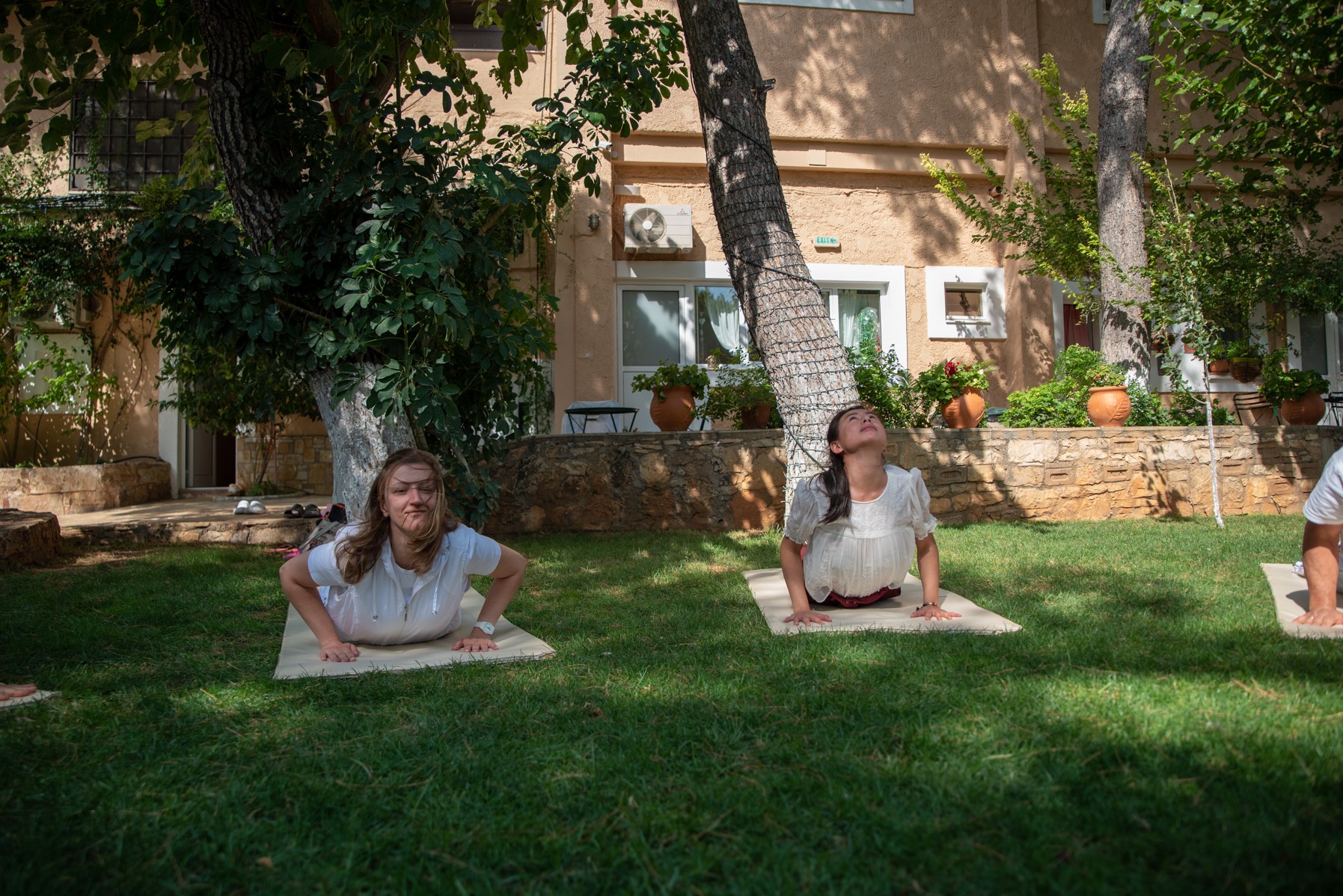
- Starting position: Lie flat on your stomach with your legs straight and feet together, soles facing upward.
- Hand placement: Place your palms flat on the floor beneath and slightly to the sides of your shoulders, fingers pointing forward.
- Relax and prepare: Rest your forehead on the ground, relax your body, and focus on releasing tension in your lower back.
- Lifting into cobra: Slowly raise your head and gently tilt it backward.
Lift your chest using your back muscles, and then press your palms to lift higher, creating a gentle arch in your spine.
- Position check: Ensure your pubic bone remains in contact with the mat to avoid overextension of the lower back.
- Breathing: Inhale deeply as you lift into the pose and exhale as you release back down.
- Repetition: Practice 3–5 rounds, gradually increasing the time spent in the pose with each round.
Physical Benefits of Bhujangasana
- Spinal health: Strengthens and stretches the spine, alleviating tension and preventing back pain.
- Improved breathing: Expands the chest and enhances lung capacity.
- Digestive stimulation: Stimulates abdominal organs, aiding digestion.
- Energy boost: Promotes blood circulation, leaving practitioners feeling energized.
Awareness at Swadhisthana Chakra in Bhujangasana
During bhujangasana, awareness is often directed to the swadhisthana Chakra, located in the lower abdomen at the base of the spine near the tailbone. This focus stimulates creativity, emotional balance, and vitality, fostering a deeper connection with one’s inner energy and flow. On a physical level, practitioners maintain awareness of the smooth flow between arching the back, stretching the spine, and synchronizing the breath with each movement.
Complementing Bhujangasana with Forward Bends
As with all backward bends, it is essential to complement bhujangasana with forward-bending asanas to create a balanced practice. Forward bends counteract the effects of backward bends by stretching the spine in the opposite direction, promoting muscular balance and relaxation.
Contraindications
While bhujangasana is generally safe, avoid practicing it if you have:
- Peptic ulcers, hernias, or recent abdominal surgeries.
- Severe back conditions such as herniated discs, spinal stenosis without professional guidance.
Variations and Preparatory Poses for Bhujangasana
For those who may find bhujangasana challenging, saral bhujangasana, or the easy cobra pose, serves as a gentle alternative. In this variation, the hands are placed further forward, and the elbows remain bent, allowing for a more accessible and less intense stretch in the spine and abdominal region.
This preparatory pose builds strength and flexibility in the back muscles while ensuring proper alignment and minimizing strain, making it an excellent starting point for beginners or individuals with limited mobility.
What does cobra pose with lift mean?
Cobra pose with lift involves a dynamic variation of the traditional cobra pose (bhujangasana), where you emphasize lifting your chest and shoulders off the ground while maintaining proper alignment and muscle
engagement. It involves lying on your stomach and using your back muscles to lift your chest and shoulders off the ground.
What is hands- free Cobra Pose?
Hands-free cobra pose is a variation of the traditional cobra pose (bhujangasana) where you lift your chest and shoulders off the ground without using your hands for support. This pose requires engaging your back muscles to lift your upper body, often with your hands hovering above the ground or placed lightly beside your body, which helps build core strength and improve spinal flexibility.
Practicing cobra pose with lift and hands-free cobra pose should be done under the guidance of a qualified yoga instructor, especially if you have any medical conditions or concerns, to ensure safe and effective practice.
Bhujangasana in Surya Namaskara
Bhujangasana is a key posture in the traditional Surya Namaskara (Sun Salutations) sequence, appearing as position 7 in the flow. It complements the dynamic nature of the series, strengthening the spine, and energizing the body, making it a vital component of this holistic practice.
What are the key muscle groups that bhujangasana uses?
Bhujangasana engages multiple muscle groups throughout the body to provide strength, flexibility, and stability. Key muscle groups used include:
- Spinal extensors: The erector spinae and other deep back muscles are primarily responsible for extending the spine and creating the arch in the back.
- Shoulders and arms: The triceps, deltoids, and muscles around the scapula (like the rhomboids) support the lifting motion and help stabilize the upper body.
- Core muscles: The rectus abdominis and transverse abdominis play a role in stabilizing the pelvis and spine during the pose.
- Chest and neck: The pectoral muscles (chest) and sternocleidomastoid (neck) are activated as the chest opens and the head lifts.
- Glutes and hamstrings: The gluteus maximus and hamstrings work to keep the pelvis grounded and provide stability to the lower body.
- Hip flexors: Muscles like the iliopsoas are gently stretched during the pose.
By activating and stretching these muscle groups, Cobra Pose helps build strength, improve flexibility, and promote proper alignment in the body
Common mistakes to avoid when practicing cobra pose (bhujangasana):
- Overarching the lower back: Relying too much on flexibility in the lower back can cause strain. Instead, engage your back muscles and distribute the arch evenly along the entire spine.
- Tensing the shoulders: Many practitioners hunch their shoulders toward their ears, which creates tension. Keep your shoulders relaxed and drawn down away from your ears.
- Straightening the arms fully: Forcing your arms to straighten, especially if your back is not flexible enough, can compress the lower spine. Focus on lifting your chest with your back muscles rather than pushing up with your arms.
- Lifting the pelvis off the floor: Allowing the pelvis to rise reduces the stretch in the abdominal muscles and increases strain on the lower back. Keep your pubic bone grounded on the mat.
- Holding the breath: Failing to synchronize your breath with the movement can reduce the pose's benefits. Inhale as you lift and exhale as you lower.
- Rushing the pose: Moving too quickly in or out of the posture can lead to misalignment and strain. Take your time to move mindfully and with control.
By avoiding these mistakes and practicing with awareness, you can safely and effectively experience the benefits of Cobra Pose.
How Can Bhujangasana Help Relieve Lower Back Pain?
- Strengthening the spinal muscles: The pose engages and strengthens the erector spinae and other back muscles, improving support for the spine and reducing strain on the lower back.
- Stretching the abdominal muscles: Bhujangasana stretches the abdominal region, counteracting tightness that can pull the pelvis forward and contribute to lower back pain.
- Decompressing the spine: By arching the back and lifting the chest, Cobra Pose gently decompresses the spinal discs, relieving tension and promoting proper spinal alignment.
- Improving circulation: The pose increases blood flow to the lower back region, nourishing tissues and aiding in the healing of chronic pain or stiffness.
- Releasing tension: Practicing Cobra Pose with awareness helps release subconscious tension and stiffness in the lower back, often a result of prolonged sitting or poor posture.
For individuals with lower back pain, it’s important to practice Cobra Pose gently, keeping the pelvis grounded and focusing on engaging the back muscles rather than overextending the spine.
How Can Bhujangasana Reduce Stress?
Opening the chest: The pose expands the chest, encouraging deep breathing and increasing oxygen intake. This stimulates the parasympathetic nervous system, promoting relaxation and reducing stress levels.
- Stimulating the heart and throat chakras: Cobra pose is known to activate anahata (heart) and vishuddha (throat) chakras, which help release emotional tension, encourage expression and a sense of openness. As mentioned previously the primary focus is opening swadisthana chakra (tailbone).
- Releasing physical tension: The gentle arch in the back helps release tension stored in the shoulders, neck, and spine, which are common areas where stress manifests physically.
- Energizing yet grounding: While stimulating and energizing the body, Cobra Pose also grounds the pelvis, creating a balance between invigoration and calmness.
- Practice with awareness: Practicing cobra pose with awareness and synchronized breathing helps calm the mind, bringing you into the present moment and reducing mental overactivity.
When practiced regularly and mindfully, Cobra Pose becomes a powerful tool for managing stress and generating a sense of emotional well-being.
Conclusion
Bhujangasana is not just a pose; it aids vitality, flexibility, and mental clarity. By integrating it into your practice, you not only reap its individual benefits but also prepare your body for more advanced asanas like ustrasana and dhanurasana. As a foundational backward bend, it builds strength, improves posture, and helps you embrace life with an open heart.
Incorporating cobra pose into your routine is a step toward a healthier spine, a calmer mind, and a more balanced life. Let bhujangasana inspire you to delve deeper into the world of yoga, one breath at a time.