




Looking for a yoga and meditation retreat? Discover how yoga retreats in Europe can boost your well-being, balance your mind, and restore your inner peace.  


What is a yoga and meditation retreat and how does it work?  

Surfing the net, you can find a myriad of yoga and meditation retreats all over Europe. Some maintain a more traditional structure while others provide you with a combination of yoga and hiking in the mountains or  yoga and horse therapy, others promote local activities such as reindeer feeding, or a more care-free summer beach holiday. Others still, are more therapeutic offering thermal baths or reconnecting with your partner.  

A yoga and meditation retreat is a short-term immersive experience, designed to help people step out of their daily routine and focus on physical, mental, and spiritual well-being. It can take place in a variety of settings from simple bungalows in a forest to a glamorous pool-side venue at a five-star hotel.  


Why is a yoga and meditation retreat so popular today?  

The increased popularity of yoga and meditation retreats is mainly because of the lives we lead, wherever in the world that may be. Most people spend long-hours at work, at a desk, in an artificial environment having to face mounting job expectations which create stress and anxiety. On top of this, we have fallen into the habit of an overdependence on technological devices and social media, and spend little, if any, time in nature.  A growing number of people also experience loneliness and feel disconnected, while others express fear and insecurity about the future. All this has led us to seek ways to bring back health, happiness, connectedness and harmony into our lives. And this is why we are attracted to yoga and meditation retreats.  

Depending on what you are looking for at the moment, there is probably a retreat that responds to your needs.  

Some of the most popular reasons why people choose a yoga and meditation retreat are to 

  • reduce stress  or manage burnout symptoms 
  • deepen their yoga or meditation practice  
  • detox from technology and daily pressures in a peaceful and natural environment 
  • reset habits and reconnect with oneself 
  • heal emotionally from a trauma 
  • for spiritual growth 
  • enjoy a holiday with a meaningful structure 


How can yoga retreats in Europe help you disconnect and recharge?  

Most retreats in Europe are of a very high quality and are set in a calm natural environment usually in pristine countryside, mountains, forests, remote islands, or traditional ashrams. If the retreat has chanting, kirtan, pooja (devotional ritual of honouring the divine) and havan (Vedic fire ceremony) it will be highly charged with positive frequencies having a beneficial impact on the participant and their surroundings.  


What are the main benefits of joining a yoga retreat?  

The main benefits are that you are giving time and space to yourself for self-reflection, self-exploration, self-acceptance and deepening your self-awareness. You are with like-minded people seeking similar experiences in a supportive environment.  

There is a community spirit where you all share the space, the meals and group activities allowing you to connect with others-which is a truly beautiful feeling.  


What can you expect during a yoga retreat?  

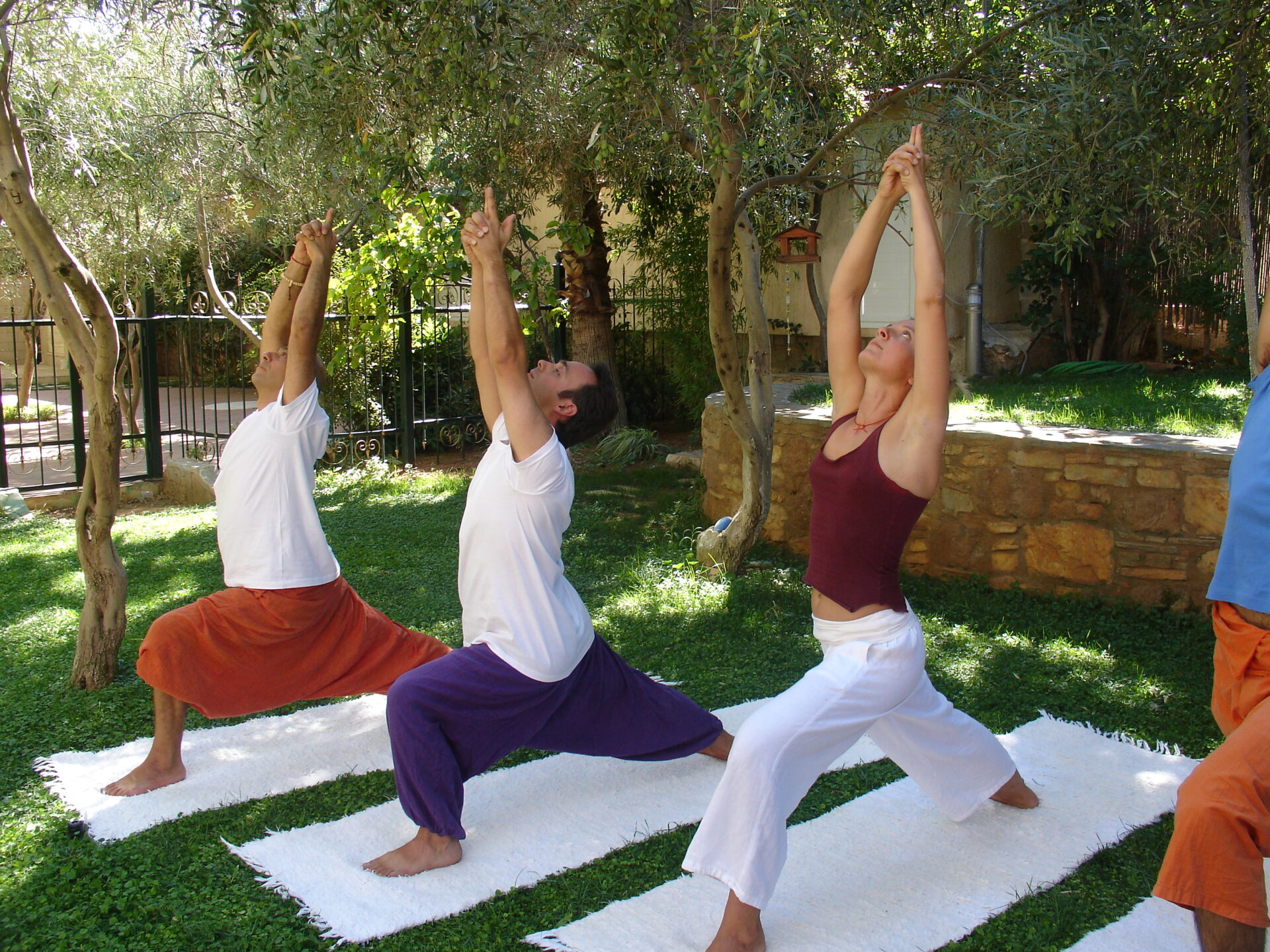
Most retreats are from a week to fourteen days long, and offer yoga classes whose styles may vary and include hatha, vinyasa, yin, restorative yoga poses, Kundalini, or tradition-specific practices. Meditation sessions may be guided and can include walking meditation or traditional seated practice. There might even be long periods of silence such as a Vipasana retreat. Depending on the focus and the place, the retreat could offer tours, nature walks, spa treatments, horse riding, scuba diving or other activities. Healthy food and diet are what you can expect with vegetarian/vegan meals being offered and some menus could be based on Ayurvedic principles. Workshops and inspiring talks are usually part of a retreat that might delve into a philosophy, a yogic practice or readings from ancient scriptures. Chanting, kirtan and sound healing are also very popular on retreats.  


What is a Satyananda Yoga and Meditation Retreat? 

Satyananda Yoga is a system of yoga founded by Sri Swami Satyananda Saraswati. It is known for being quite holistic: combining asana (postures), pranayama (breathing techniques), relaxation, meditation, yoga philosophy, mantra  and chanting, and generally integrative lifestyle guidance. 

The approach aims to make yoga accessible to modern seekers — from beginners to experienced practitioners — while retaining a traditional yogic foundation. A Satyananda Yoga retreat brings this system into a condensed, immersive format. 

In a Satyananda-style retreat you can expect a structured yet balanced program: 

  • Daily yoga asana sessions — gentle to moderate postures suited for many levels; emphasis is on safety, alignment, and inner awareness. 
  • Pranayama and breath work —  a large variety of guided breathing practices to balance energy, calm the nervous system, support relaxation and mental clarity. 
  • Deep relaxation  and Yoga Nidra — a highlight of  the retreat includes guided deep-relaxation sessions known as Satyananda Yoga Nidra, which help relieve stress, improve inner awareness, and support mental rest. 
  • Meditation practices — guided meditations from the Tantras, awareness techniques, and also chanting or mantra practices. 
  • Philosophy / Satsang / Talks — short teachings or group gatherings introducing yogic philosophy, lifestyle guidance, discussion, or Q&A sessions run by senior Swamis with over 40 years’ experience.  
  • Healthy/vegetarian food & lifestyle guidance — many retreats offer yogic or sattvic meals, promote simple lifestyle habits that synchronise with the biorhythms of nature.   
  • Time in nature / Silence / Detox from daily stress — retreats are often in quiet or natural settings (countryside, retreat-centres, quiet houses) to help disconnect from everyday pressures. 
  • Community and shared experience — small group practice and discussion, and communal meals create a sense of a spiritual community (sangha) even among strangers. 


Why People Choose a Satyananda Retreat — What It Offers 

Retreats based on Satyananda Yoga can be especially good when you want to: 

  • De-stress deeply — the combination of gentle yoga asanas, relaxation and meditation helps reset the nervous system. 
  • Learn foundational yoga and meditation properly — because the Satyananda method is holistic and beginner-friendly. 
  • Detox mentally and physically — a break from daily routine, often paired with a healthier diet and a simpler lifestyle. Shat karmas [bodily cleansing practices of Hatha Yoga ] might be offered. 
  • Deepen inner awareness or spiritual practice — even for people relatively new to yoga who are seeking greater insight into spirituality this kind of retreat will offer you the experience of a sense of connectedness. 


What should you consider before booking a yoga and meditation retreat?  

Before booking a yoga or meditation retreat, it’s worth taking a moment to look beyond the brochure-style descriptions and make sure the experience truly suits your needs, goals, and comfort level. Here are the key factors to consider: 

  1. Your Goals and Intentions
  • Are you seeking stress relief, physical practice, spiritual growth, or simply a break from routine? 
  • Do you want a gentle restorative retreat or a more intensive program? 
  1. Level of Experience Required
  • Is the retreat beginner-friendly, intermediate, or advanced? 
  • Check the daily schedule: is it physically demanding, or more balanced with rest periods? 
  1. Style of Yoga and Meditation
  • What school of Yoga is being practiced? Hatha, Vinyasa, Yin, Kundalini, Ashtanga, or a mix? 
  • What kind of meditation is being offered: Buddhist Tantric, Vipasana, transcendental or guided?  
  • Make sure the styles resonate with you. 
  1. Retreat Leader Qualifications
  • Look at the teachers’ backgrounds, training, and teaching styles. Also, see if they are connected to a tradition or do they work on their own. Read reviews or watch videos of their classes, if possible, before registering for a retreat 
  1. Schedule and Structure
  • How full or relaxed is the itinerary? Consider whether you want a highly structured environment or something more flexible.  
  1. Group Size and Setting
  • Smaller groups can offer more personal support and intimacy. 
  • Larger retreats may offer more community but less individual attention. 
  1. Location and Environment
  • Do you prefer mountains, beach, countryside, or an urban wellness center?  
  • Consider climate (too hot, too cold, too humid), travel time, safety, and cultural environment. 
  1. Accommodation and Amenities
  • Level of comfort: is it a dorm with six people, a shared room, or a private room? 
  • Food options: vegetarian, vegan, plant-based, or mixed? 
  • Are there spa services, pools, or nature access? 
  1. Budget and Overall Value
  • What’s included? (meals, classes, excursions, airport transfers, materials) 
  • Are there hidden costs—tips, add-ons, taxes, upgrades? 
  1. Duration and Timing
  • Retreats range from weekend escapes to even month-long immersions. 
  • Consider how much time you can commit and what fits your energy and lifestyle. 
  1. Silence, Detox, or Digital-Free Policies
  • Some retreats are silent or have limited speaking hours. 
  • Some restrict tech use or offer detox diets—make sure this suits your comfort level. 
  1. Health and Safety
  • Check cancellation policies, insurance requirements, and emergency plans. 
  • If you have any physical or mental health concerns, ensure the retreat can support your needs. 


Remember that a yoga and meditation retreat doesn’t guarantee “awakening” — the results depend a lot on your own openness, consistency and lifestyle. Also, be aware that emotional or mental issues might emerge (past stress, suppressed feelings, inner reflections) — common in any deep practice retreat. This is quite common, so be prepared and open to this.  

For any information contact: info@satyanandayoga.gr 


Explore upcoming retreats at Satyanandashram Greece 

See the links below for a stay at Satyanandashram in Greece: 

Christmas Festivities at the ashram 

https//satyanandayoga.carrottechlab.net/en/events/christmas-festivities-at-the-ashram/ 

Mantra Sadhana Week       

https//satyanandayoga.carrottechlab.net/en/events/mantra-sadhana-week/ 

Yogic Lifestyle Experience 

https//satyanandayoga.carrottechlab.net/en/events/yogic-lifestyle-experience/ 

Ashram Life 

https//satyanandayoga.carrottechlab.net/en/events/ashram-life/ 

Guru Bhakti Yoga Days 

https//satyanandayoga.carrottechlab.net/en/events/guru-bhakti-yoga-days/ 

satyananda yoga logo

Satyanandashram Hellas

Alithias 1, 19002 Paiania, Greece

PO Box 22, 19002 Paiania, Greece

+306947009660

info@satyanandayoga.gr

Paiania Meditation Center

Dimarchou Iona Vore (former Diadochou Konstantinou) 32, 19002 Paiania

+30 210 6641545, 695 6482415

sycp@satyanandayoga.gr

Athens Meditation Center

Simetelou 2, 115 28, Athens

210 3311178, 694 2974467

syca@satyanandayoga.gr

Thessaloniki Meditation Center

Proxenou Koromila 1, 54623 Thessaloniki

+30 2310 283109

sycs@satyanandayoga.gr

The trademark Satyanandashram Hellas CENTER OF YOGA® is a trademark owned by Satyanandashram Hellas, Greece and used with permission.
The term SATYANANDA YOGA® is a trademark owned by IYFM and used with permission.
Satyananda Yoga Nidra® is a registered trademark of IYFM used with permission.

How you can be part of this beautiful community of service

You are welcome to come and unite in our efforts to help us accomplish our aims and goals. Our association needs people who are ready to offer their hearts, their skills and ideas as well as monetary contributions, and to integrate their ‘head, heart and hands’ in service.

If you consider the needs of others, we need you.
If you have a generous heart, we need you.
Ιf you have large hands, we need you.
If you have bright ideas, we need you.

Your contributions allow us to reach out to more and more people. Your contributions enable us to support and work towards the fulfilment of the vision of Swami Satyananda, Swami Niranjanananda and their lineage  that of peace and prosperity for all humankind.

X

How Can Yoga And Meditation Retreats Improve Your Well-Being?

Looking for a yoga and meditation retreat? Discover how yoga retreats in Europe can boost your well-being, balance your mind, and restore your inner peace.  


What is a yoga and meditation retreat and how does it work?  

Surfing the net, you can find a myriad of yoga and meditation retreats all over Europe. Some maintain a more traditional structure while others provide you with a combination of yoga and hiking in the mountains or  yoga and horse therapy, others promote local activities such as reindeer feeding, or a more care-free summer beach holiday. Others still, are more therapeutic offering thermal baths or reconnecting with your partner.  

A yoga and meditation retreat is a short-term immersive experience, designed to help people step out of their daily routine and focus on physical, mental, and spiritual well-being. It can take place in a variety of settings from simple bungalows in a forest to a glamorous pool-side venue at a five-star hotel.  


Why is a yoga and meditation retreat so popular today?  

The increased popularity of yoga and meditation retreats is mainly because of the lives we lead, wherever in the world that may be. Most people spend long-hours at work, at a desk, in an artificial environment having to face mounting job expectations which create stress and anxiety. On top of this, we have fallen into the habit of an overdependence on technological devices and social media, and spend little, if any, time in nature.  A growing number of people also experience loneliness and feel disconnected, while others express fear and insecurity about the future. All this has led us to seek ways to bring back health, happiness, connectedness and harmony into our lives. And this is why we are attracted to yoga and meditation retreats.  

Depending on what you are looking for at the moment, there is probably a retreat that responds to your needs.  

Some of the most popular reasons why people choose a yoga and meditation retreat are to 

  • reduce stress  or manage burnout symptoms 
  • deepen their yoga or meditation practice  
  • detox from technology and daily pressures in a peaceful and natural environment 
  • reset habits and reconnect with oneself 
  • heal emotionally from a trauma 
  • for spiritual growth 
  • enjoy a holiday with a meaningful structure 


How can yoga retreats in Europe help you disconnect and recharge?  

Most retreats in Europe are of a very high quality and are set in a calm natural environment usually in pristine countryside, mountains, forests, remote islands, or traditional ashrams. If the retreat has chanting, kirtan, pooja (devotional ritual of honouring the divine) and havan (Vedic fire ceremony) it will be highly charged with positive frequencies having a beneficial impact on the participant and their surroundings.  


What are the main benefits of joining a yoga retreat?  

The main benefits are that you are giving time and space to yourself for self-reflection, self-exploration, self-acceptance and deepening your self-awareness. You are with like-minded people seeking similar experiences in a supportive environment.  

There is a community spirit where you all share the space, the meals and group activities allowing you to connect with others-which is a truly beautiful feeling.  


What can you expect during a yoga retreat?  

Most retreats are from a week to fourteen days long, and offer yoga classes whose styles may vary and include hatha, vinyasa, yin, restorative yoga poses, Kundalini, or tradition-specific practices. Meditation sessions may be guided and can include walking meditation or traditional seated practice. There might even be long periods of silence such as a Vipasana retreat. Depending on the focus and the place, the retreat could offer tours, nature walks, spa treatments, horse riding, scuba diving or other activities. Healthy food and diet are what you can expect with vegetarian/vegan meals being offered and some menus could be based on Ayurvedic principles. Workshops and inspiring talks are usually part of a retreat that might delve into a philosophy, a yogic practice or readings from ancient scriptures. Chanting, kirtan and sound healing are also very popular on retreats.  


What is a Satyananda Yoga and Meditation Retreat? 

Satyananda Yoga is a system of yoga founded by Sri Swami Satyananda Saraswati. It is known for being quite holistic: combining asana (postures), pranayama (breathing techniques), relaxation, meditation, yoga philosophy, mantra  and chanting, and generally integrative lifestyle guidance. 

The approach aims to make yoga accessible to modern seekers — from beginners to experienced practitioners — while retaining a traditional yogic foundation. A Satyananda Yoga retreat brings this system into a condensed, immersive format. 

In a Satyananda-style retreat you can expect a structured yet balanced program: 

  • Daily yoga asana sessions — gentle to moderate postures suited for many levels; emphasis is on safety, alignment, and inner awareness. 
  • Pranayama and breath work —  a large variety of guided breathing practices to balance energy, calm the nervous system, support relaxation and mental clarity. 
  • Deep relaxation  and Yoga Nidra — a highlight of  the retreat includes guided deep-relaxation sessions known as Satyananda Yoga Nidra, which help relieve stress, improve inner awareness, and support mental rest. 
  • Meditation practices — guided meditations from the Tantras, awareness techniques, and also chanting or mantra practices. 
  • Philosophy / Satsang / Talks — short teachings or group gatherings introducing yogic philosophy, lifestyle guidance, discussion, or Q&A sessions run by senior Swamis with over 40 years' experience.  
  • Healthy/vegetarian food & lifestyle guidance — many retreats offer yogic or sattvic meals, promote simple lifestyle habits that synchronise with the biorhythms of nature.   
  • Time in nature / Silence / Detox from daily stress — retreats are often in quiet or natural settings (countryside, retreat-centres, quiet houses) to help disconnect from everyday pressures. 
  • Community and shared experience — small group practice and discussion, and communal meals create a sense of a spiritual community (sangha) even among strangers. 


Why People Choose a Satyananda Retreat — What It Offers 

Retreats based on Satyananda Yoga can be especially good when you want to: 

  • De-stress deeply — the combination of gentle yoga asanas, relaxation and meditation helps reset the nervous system. 
  • Learn foundational yoga and meditation properly — because the Satyananda method is holistic and beginner-friendly. 
  • Detox mentally and physically — a break from daily routine, often paired with a healthier diet and a simpler lifestyle. Shat karmas [bodily cleansing practices of Hatha Yoga ] might be offered. 
  • Deepen inner awareness or spiritual practice — even for people relatively new to yoga who are seeking greater insight into spirituality this kind of retreat will offer you the experience of a sense of connectedness. 


What should you consider before booking a yoga and meditation retreat?  

Before booking a yoga or meditation retreat, it’s worth taking a moment to look beyond the brochure-style descriptions and make sure the experience truly suits your needs, goals, and comfort level. Here are the key factors to consider: 

  1. Your Goals and Intentions
  • Are you seeking stress relief, physical practice, spiritual growth, or simply a break from routine? 
  • Do you want a gentle restorative retreat or a more intensive program? 
  1. Level of Experience Required
  • Is the retreat beginner-friendly, intermediate, or advanced? 
  • Check the daily schedule: is it physically demanding, or more balanced with rest periods? 
  1. Style of Yoga and Meditation
  • What school of Yoga is being practiced? Hatha, Vinyasa, Yin, Kundalini, Ashtanga, or a mix? 
  • What kind of meditation is being offered: Buddhist Tantric, Vipasana, transcendental or guided?  
  • Make sure the styles resonate with you. 
  1. Retreat Leader Qualifications
  • Look at the teachers’ backgrounds, training, and teaching styles. Also, see if they are connected to a tradition or do they work on their own. Read reviews or watch videos of their classes, if possible, before registering for a retreat 
  1. Schedule and Structure
  • How full or relaxed is the itinerary? Consider whether you want a highly structured environment or something more flexible.  
  1. Group Size and Setting
  • Smaller groups can offer more personal support and intimacy. 
  • Larger retreats may offer more community but less individual attention. 
  1. Location and Environment
  • Do you prefer mountains, beach, countryside, or an urban wellness center?  
  • Consider climate (too hot, too cold, too humid), travel time, safety, and cultural environment. 
  1. Accommodation and Amenities
  • Level of comfort: is it a dorm with six people, a shared room, or a private room? 
  • Food options: vegetarian, vegan, plant-based, or mixed? 
  • Are there spa services, pools, or nature access? 
  1. Budget and Overall Value
  • What’s included? (meals, classes, excursions, airport transfers, materials) 
  • Are there hidden costs—tips, add-ons, taxes, upgrades? 
  1. Duration and Timing
  • Retreats range from weekend escapes to even month-long immersions. 
  • Consider how much time you can commit and what fits your energy and lifestyle. 
  1. Silence, Detox, or Digital-Free Policies
  • Some retreats are silent or have limited speaking hours. 
  • Some restrict tech use or offer detox diets—make sure this suits your comfort level. 
  1. Health and Safety
  • Check cancellation policies, insurance requirements, and emergency plans. 
  • If you have any physical or mental health concerns, ensure the retreat can support your needs. 


Remember that a yoga and meditation retreat doesn’t guarantee “awakening” — the results depend a lot on your own openness, consistency and lifestyle. Also, be aware that emotional or mental issues might emerge (past stress, suppressed feelings, inner reflections) — common in any deep practice retreat. This is quite common, so be prepared and open to this.  

For any information contact: info@satyanandayoga.gr 


Explore upcoming retreats at Satyanandashram Greece 

See the links below for a stay at Satyanandashram in Greece: 

Christmas Festivities at the ashram 

https//satyanandayoga.carrottechlab.net/en/events/christmas-festivities-at-the-ashram/ 

Mantra Sadhana Week       

https//satyanandayoga.carrottechlab.net/en/events/mantra-sadhana-week/ 

Yogic Lifestyle Experience 

https//satyanandayoga.carrottechlab.net/en/events/yogic-lifestyle-experience/ 

Ashram Life 

https//satyanandayoga.carrottechlab.net/en/events/ashram-life/ 

Guru Bhakti Yoga Days 

https//satyanandayoga.carrottechlab.net/en/events/guru-bhakti-yoga-days/