



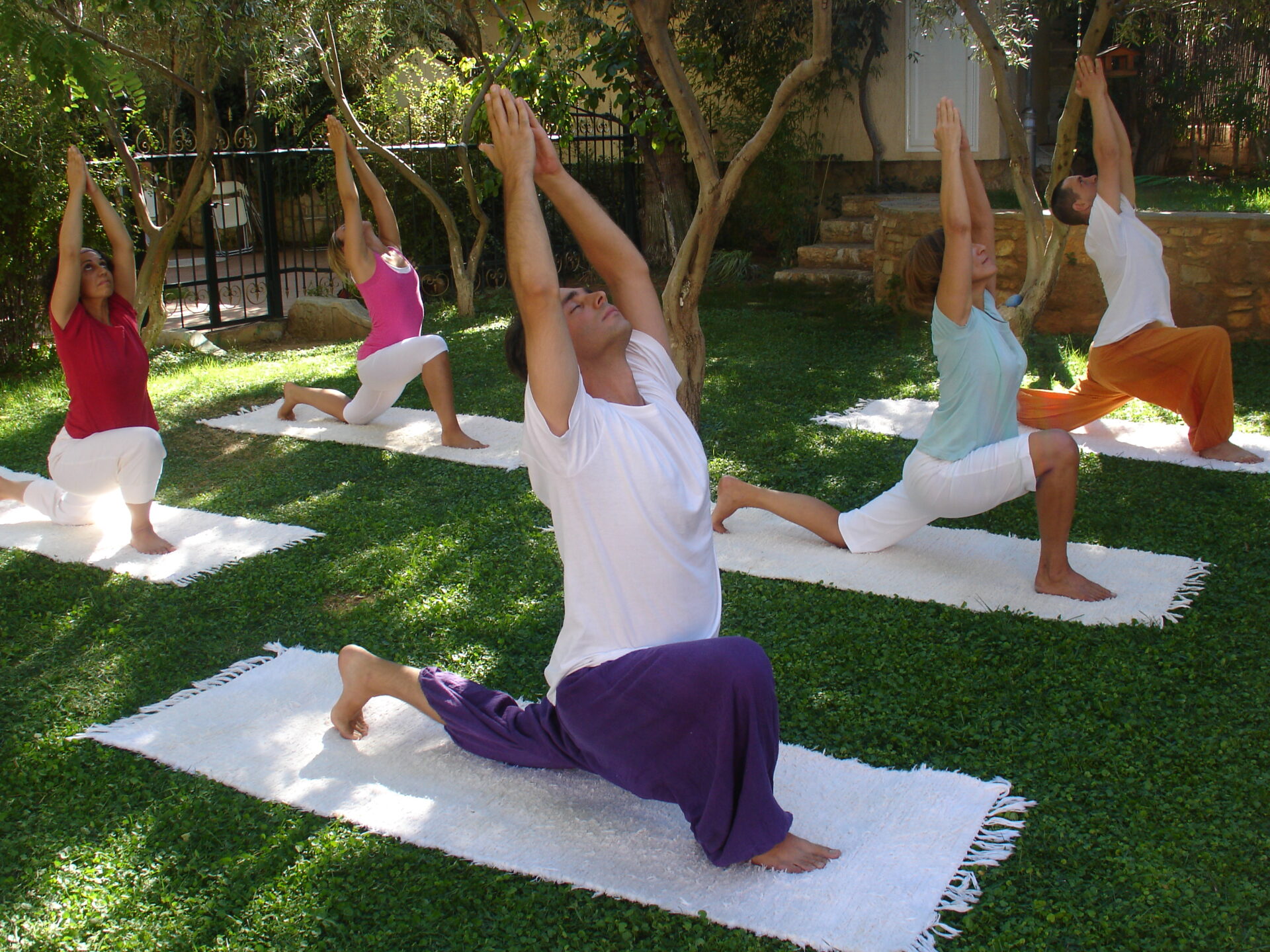
There are many reasons why people practice yoga. Often people wish to increase their flexibility, but what does that mean? 

Increased flexibility of the body means the muscles are able to relax and stretch to such an extent that the joints and body parts they are attached to have a greater range of movement. The muscles also need to be toned enough to maintain the stability of the base of the posture and safeguard the body from trauma. For example, when increasing ankle rotation flexibility, one attempts to maintain the rest of the leg steady without movement at the knee or hip. Also, a flexible ankle allows full range of movement but it is not a weak ankle that is susceptible to being twisted or sprained. 


The importance of yoga for flexibility  

Flexibility is a delicate balance of the different systems in the body. The initial approach to flexibility focuses on the physical body. In yoga, it is accepted that flexibility is a result of muscles and joints that are not stiff or contracted. However, flexibility is also a result of free energy flow and mental fluidity.  

Thus, yoga is one of the few systems that can achieve real flexibility, on the grosser and subtler levels of our being. Yoga practices work at a deeper level to release energy blockages, mental attachments and obsessions. 


What are the top intermediate yoga poses for flexibility?  

It is difficult to give a definitive list. Almost all yoga poses qualify for this list. Some key poses an instructor trained in the  Satyananda System of Yoga would include in a class specifically targeted towards increasing flexibility would be; rotation of the different joints, hip openers, the seven movements of the spine.  

One may think that these are beginner poses, not intermediate, however in Satyananda Yoga the progression is not in increasing the complexity or effort of the practice. It is an increasing of the awareness with which the posture is done; what one observes while holding the posture and the difference in the body, energy and mental state after releasing the posture. 


Pawan Muktasana 1 series  

This is a fabulous series of asanas developed by Sri Swami Satyananda that systematically goes through the joints of the body and unblocks them on the physical and energetic levels. It is also known as the anti-rheumatic yoga poses which soothes and alleviates stiffness and pain in all of the body’s joints.    

Hip openers  

Some of these practices are in the Pawan Muktasana 1 series, such as ardha and poorna titali asana (half and full butterfly). Others are in the Pawan Muktasana 2 series developed by Sri Swami Satyananda which are also concerned with strengthening the digestive system and the abdominal region such as, pado tanasana (leg raises), pada chakrasana (rotation of the legs at the hip joint) and surya pushpam (the sunflower pose). Also squatting poses, lunges and the warrior poses from the standing position help. 


Seven movements of the spine  

These movements can be done with the following asanas: 

– Tadasana (spine stretching upwards) 

– Tiryaka Tadasana (spine bending right and left) 

– Kati Chakrasana (spine twisting towards the right and left from the waist) 

– Marjari asana (gentle forward and backward bends) 

Of course, the spinal movements can also be done with other asanas that are milder or more demanding. 


What are the key tips for improving body flexibility with yoga poses?  

It often depends on how one practices rather than the actual poses one does.  

Consistency and patience  

Keep in mind that the body opens up more when the muscles are able to relax and stretch. The body needs to feel safe in order to relax its control and soften from within. So, flexibility increases slowly and steadily, with regular practice, increasing the limit very slightly, gently and persistently over time. It needs consistency, regularity and patience. 

Jerky, impatient and sudden movements and over-stretching are dangerous and can traumatise the body. This is because the body has a reflex, protective mechanism, and if we suddenly overstretch or exert too much power to overcome a limit, that mechanism makes the muscles contract even more to seize up the joint to protect it. 

Correct alignment and breathing  

Increasing the body’s flexibility needs proper planning and alignment of the joints, according to their direction and range of movement. Especially, for example, with knees and wrist joints. Also, one’s base position should be steady and comfortable. This will allow one to ease into the pose, hold it in a relaxed way, give time for the body to test new limits, and then carefully release the posture. 

Breathing is a wonderful way to help increase our limits and reduce anxiety going into the pose or while holding it. Breathing into an energy block or sensation in the body helps to soften it, or dissolve it. Breathing can also help manage any memories or emotionally charged impressions that may be released from the different parts of the body when going deeper. Breathing is also very valuable because it helps to keep the mind in the presence and that is where the mind really rests and relaxes.   

Note: All the postures mentioned in this blog are fully described in the highly acclaimed and comprehensive yogic textbook titled Asana Pranayama Mudra Bandha, a Bihar School of Yoga publication available in multiple languages. 

satyananda yoga logo

Satyanandashram Hellas

Alithias 1, 19002 Paiania, Greece

PO Box 22, 19002 Paiania, Greece

+306947009660

info@satyanandayoga.gr

Paiania Meditation Center

Dimarchou Iona Vore (former Diadochou Konstantinou) 32, 19002 Paiania

+30 210 6641545, 695 6482415

sycp@satyanandayoga.gr

Athens Meditation Center

Simetelou 2, 115 28, Athens

210 3311178, 694 2974467

syca@satyanandayoga.gr

Thessaloniki Meditation Center

Proxenou Koromila 1, 54623 Thessaloniki

+30 2310 283109

sycs@satyanandayoga.gr

The trademark Satyanandashram Hellas CENTER OF YOGA® is a trademark owned by Satyanandashram Hellas, Greece and used with permission.
The term SATYANANDA YOGA® is a trademark owned by IYFM and used with permission.
Satyananda Yoga Nidra® is a registered trademark of IYFM used with permission.

How you can be part of this beautiful community of service

You are welcome to come and unite in our efforts to help us accomplish our aims and goals. Our association needs people who are ready to offer their hearts, their skills and ideas as well as monetary contributions, and to integrate their ‘head, heart and hands’ in service.

If you consider the needs of others, we need you.
If you have a generous heart, we need you.
Ιf you have large hands, we need you.
If you have bright ideas, we need you.

Your contributions allow us to reach out to more and more people. Your contributions enable us to support and work towards the fulfilment of the vision of Swami Satyananda, Swami Niranjanananda and their lineage  that of peace and prosperity for all humankind.

X

How to Practice Yoga for Flexibility: Best Poses

There are many reasons why people practice yoga. Often people wish to increase their flexibility, but what does that mean? 

Increased flexibility of the body means the muscles are able to relax and stretch to such an extent that the joints and body parts they are attached to have a greater range of movement. The muscles also need to be toned enough to maintain the stability of the base of the posture and safeguard the body from trauma. For example, when increasing ankle rotation flexibility, one attempts to maintain the rest of the leg steady without movement at the knee or hip. Also, a flexible ankle allows full range of movement but it is not a weak ankle that is susceptible to being twisted or sprained. 


The importance of yoga for flexibility  

Flexibility is a delicate balance of the different systems in the body. The initial approach to flexibility focuses on the physical body. In yoga, it is accepted that flexibility is a result of muscles and joints that are not stiff or contracted. However, flexibility is also a result of free energy flow and mental fluidity.  

Thus, yoga is one of the few systems that can achieve real flexibility, on the grosser and subtler levels of our being. Yoga practices work at a deeper level to release energy blockages, mental attachments and obsessions. 


What are the top intermediate yoga poses for flexibility?  

It is difficult to give a definitive list. Almost all yoga poses qualify for this list. Some key poses an instructor trained in the  Satyananda System of Yoga would include in a class specifically targeted towards increasing flexibility would be; rotation of the different joints, hip openers, the seven movements of the spine.  

One may think that these are beginner poses, not intermediate, however in Satyananda Yoga the progression is not in increasing the complexity or effort of the practice. It is an increasing of the awareness with which the posture is done; what one observes while holding the posture and the difference in the body, energy and mental state after releasing the posture. 


Pawan Muktasana 1 series  

This is a fabulous series of asanas developed by Sri Swami Satyananda that systematically goes through the joints of the body and unblocks them on the physical and energetic levels. It is also known as the anti-rheumatic yoga poses which soothes and alleviates stiffness and pain in all of the body's joints.    

Hip openers  

Some of these practices are in the Pawan Muktasana 1 series, such as ardha and poorna titali asana (half and full butterfly). Others are in the Pawan Muktasana 2 series developed by Sri Swami Satyananda which are also concerned with strengthening the digestive system and the abdominal region such as, pado tanasana (leg raises), pada chakrasana (rotation of the legs at the hip joint) and surya pushpam (the sunflower pose). Also squatting poses, lunges and the warrior poses from the standing position help. 


Seven movements of the spine  

These movements can be done with the following asanas: 

- Tadasana (spine stretching upwards) 

- Tiryaka Tadasana (spine bending right and left) 

- Kati Chakrasana (spine twisting towards the right and left from the waist) 

- Marjari asana (gentle forward and backward bends) 

Of course, the spinal movements can also be done with other asanas that are milder or more demanding. 


What are the key tips for improving body flexibility with yoga poses?  

It often depends on how one practices rather than the actual poses one does.  

Consistency and patience  

Keep in mind that the body opens up more when the muscles are able to relax and stretch. The body needs to feel safe in order to relax its control and soften from within. So, flexibility increases slowly and steadily, with regular practice, increasing the limit very slightly, gently and persistently over time. It needs consistency, regularity and patience. 

Jerky, impatient and sudden movements and over-stretching are dangerous and can traumatise the body. This is because the body has a reflex, protective mechanism, and if we suddenly overstretch or exert too much power to overcome a limit, that mechanism makes the muscles contract even more to seize up the joint to protect it. 

Correct alignment and breathing  

Increasing the body’s flexibility needs proper planning and alignment of the joints, according to their direction and range of movement. Especially, for example, with knees and wrist joints. Also, one’s base position should be steady and comfortable. This will allow one to ease into the pose, hold it in a relaxed way, give time for the body to test new limits, and then carefully release the posture. 

Breathing is a wonderful way to help increase our limits and reduce anxiety going into the pose or while holding it. Breathing into an energy block or sensation in the body helps to soften it, or dissolve it. Breathing can also help manage any memories or emotionally charged impressions that may be released from the different parts of the body when going deeper. Breathing is also very valuable because it helps to keep the mind in the presence and that is where the mind really rests and relaxes.   

Note: All the postures mentioned in this blog are fully described in the highly acclaimed and comprehensive yogic textbook titled Asana Pranayama Mudra Bandha, a Bihar School of Yoga publication available in multiple languages.