





What does samsara really mean? Learn how the cycle of rebirth works, how yoga supports awakening, and how spiritual traditions guide seekers to freedom.
What is Samsara and why does the cycle matter?
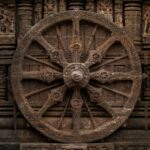
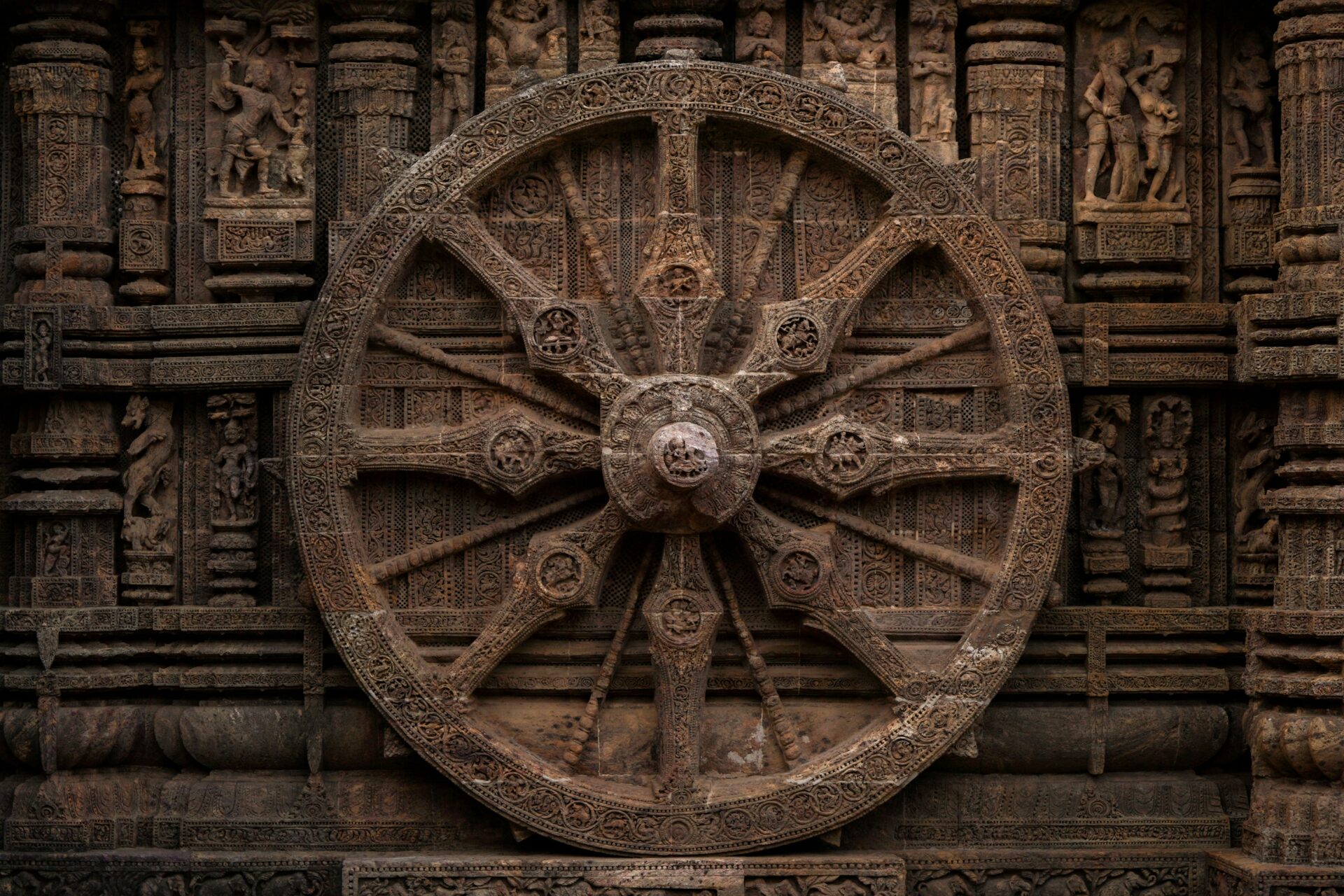
In yoga philosophy, samsara is the “wheel” of conditioned life—endless rebirth shaped by karma and attachment.Samsara represents the repetitive, often suffering-filled, existence in the material world because of our ignorance, our desires and attachments as well as our deeds (karma). Yogis, monks, Buddhists, and others, seek to be liberated from this perpetual cycle by doing spiritual practices that will bring about enlightenment and Self-realization. Once one realizes their true, divine nature, they break the cycle of samsara and attain moksha or nirvana or kevala which are all forms of liberation, freedom from the cycle of rebirth and suffering.
Samsara in philosophy: How ancient traditions describe the cycle?
Samsara is a core concept discussed extensively in several ancient traditions, especially Indian. The Bhagavad Gita, the Upanishads, the Ramayana and other ancient Indian texts, together with Buddhist and Jain scriptures, all refer to and explain samsara.
Paths beyond samsara in different spiritual traditions
Across the Indian spiritual traditions, the paths beyond samsara arise when you follow certain disciplined ways and practices that lead to liberation from the cycle of birth and death. Though these ways use different language, they actually converge on freedom from ignorance, craving, and karmic bondage. For example, in Jnana Yoga (the path of knowledge) the goal is to realize the true Self (Atman), and liberation comes through direct insight, not ritual or belief. The Jnana yogis continually ask "Who am I?", and through meditation practices, samsara ends when the illusion of separateness dissolves. In Karma Yoga (the path of selfless action) the aim is to act but without creating attachment to the results so that the karma created no longer binds the soul to rebirth. In Bhakti Yoga (the path of devotion) union with the divine through love and surrender is the path. The ego dissolves through love, trust, and remembrance and grace lifts the devotee beyond samsara. In Raja Yoga, based on Patañjali’s eightfold path, the goal is mastery over the mind by implementing the yamas and niyamas (codes of behaviour and disciplines), body posture (asana), breath techniques (pranayama), sense withdrawal (pratyahara), concentration (dharana), meditation (dhyana). This path results in stillness of the mind where the Self is revealed and samadhi (liberation) arises. While the Buddhist Path known as The Noble Eightfold Path teaches that once ignorance is dissolved and craving ceases nirvana manifests and the cessation of suffering and rebirth occurs. Finally, the Tantric path uses mantra, visualization, deity yoga, and subtle-body practices in which liberation occurs.
Yoga practices for moving beyond the cycle of samsara
Many traditions describe moving beyond the cycle of samsara in broad terms—through insight, ethical living, devotion, and disciplined practice. In the yogic tradition, these principles are often translated into practical methods and lived guidance through teacher–student lineages; the reflections below draw especially on the Bihar School of Yoga/Satyananda stream as one clear presentation of these practices.
A recommended read on this subject is the enlightening book titled Conversations on the Science of Yoga, Karma Yoga Book 3, Samsara[1]. We find beautiful teachings from our param guru Sri Swami Sivananda who taught that the performance of good and selfless deeds will dispel ignorance. By participating in Satsang with the wise, doing japa (repetition of mantra) and swadhaya (self-reflection in a spiritual context) are other ways. He, also mentions that the grace of guru can break the cycle of samsara.[2]
Sri Swami Satyananda emphasized time and again that the only question which governs life is, "what is the purpose of this and every other incarnation?" He tells us that the answer is simple; to experience the universality and luminosity of the higher Self, to be enlightened, to obtain nirvana or samadhi. One has to realize "I am all" . This should be the guiding and governing philosophy of a person's life, and then everything will automatically be set in order."[3]
Swami Niranjanananda explains that there are certain powerful tantric meditations that can help one understand what the spirit goes through before birth and after death, but they are not for everyone as it depends on one's state of inner evolution and how willing they are to accept and absorb a new awareness. There are also meditations for conscious dying or traditional practices taught to people who fear dying and are greatly attached to their present state of life. Swami Niranjanananda explains that when a person is mentally weak, they are fearful of death, but if mentally strong, there is a natural tendency to accept death. Yoga strengthens the mind, so it will help a person come to terms with death. There are certain meditations for the weak mind, but they need to be monitored closely by a teacher.[4] He goes on to say that when one is breathing their last breath, one should not think of their family, their attachments nor insecurities, but rather of God. It is the last thought or the last impression which is supposed to be the most vital one for the continuation of the spirit's journey.[5]
[1] Conversations on the Science of Yoga, Karma Yoga Book 3, Samsara, from the teachings of two great luminaries of the 20th century, Sri Swami Sivananda Saraswati and Sri Swami Satyananda Saraswati Yoga Publications Trust, Munger, Bihar, Yoga,2013, Golden Jubilee edition.
[2] Ibid.pp.7-8
[3] Ibid.p.20
[4] Ibid.p.18
[5] Ibid.p.38
We find this in the Bhagavad Gita, Chapter 8.5, where the state of mind at death determines the next state. Krishna states:
“Whoever, at the time of death, remembers Me alone,
attains My being; of this there is no doubt.”
Krishna explicitly talks about Karma and Detachment in the Bhagavad Gita (chapter 2.47) telling us that action without attachment prevents bondage in samsara
“You have the right to action alone, never to its fruits.
Do not let the fruits of action be your motive,
nor let your attachment be to inaction.”
In chapter 2.48 of the Gita , we read that by practicing detachment (vairāgya) one will acquire a sense of calmness, stability and composure and this is the path to liberation from samsara.
“Established in yoga, perform actions, abandoning attachment,
remaining even-minded in success and failure.
Such equanimity is yoga.”
Moksha, Nirvana, and Kevala as states beyond rebirth
Moksha, Nirvana, and Kevala are closely related ideas across Indian philosophical traditions, all pointing to ultimate liberation, but each has a distinct meaning shaped by its school of thought.
Moksha appears in the Hindu tradition including Vedānta, Yoga, Sāṃkhya, and Bhakti. It is freedom from samsara caused by karma and ignorance (avidyā). It is when the ātman (self) is liberated and realizes its true nature that it can finally move beyond suffering, karma, and rebirth, and experiences eternal peace, freedom, and truth. This state can be attained while still alive (jīvanmukti) or after death.
Nirvana literally means “extinguishing”. Rooted in the Buddhist tradition it is the extinguishing of cravings (taṇhā), ignorance (avidyā) and hatred (dveṣa). Like moksha, it is freedom from suffering, experiencing a state of profound peace, clarity, and compassion. Nirvana can be attained while alive or at death.
Kevala or Kevalya Jñāna is found in both Jainism and Yoga philosophy and means “absolute”. It is perfect, infinite knowledge attained by the soul when all karmic matter is destroyed. After death, the liberated soul becomes a Siddha, residing at the top of the universe (Siddha-śilā) where it experiences infinite knowledge, perception, bliss, and energy.
How karma, ignorance, and desire sustain the cycle of rebirth?
Numerous ancient texts expound on the way karma, ignorance and desire sustain the cycle of rebirth and suffering. For example, the Katha Upanishad 2.6 tells us that ignorance (avidya) is the cause of samsara.
“Those who dwell in ignorance, yet think themselves wise and learned,
wander about blindly, like the blind led by the blind,
repeatedly falling into the cycle of birth and death.”
Sri Swami Satyananda throws light upon the role of desire and the cycle of samsara by telling us that a person's main desire during his lifetime becomes his last thought. There are rare occasions where in the last moments before his departure, he may think of high spiritual ideas and so the next birth will be directed by that last thought. However, the other karmas of previous lives will also follow him into the next incarnation, despite his great sankalpa. In the next life he may be born in good circumstances, but there will still be suffering. Sri Swami Satyananda clarifies that one has to face and confront one's karma, this means both going through suffering and enjoyment. "One can escape anything in life; one can even cheat God, but one cannot cheat one's karma."[1]
In the Brihadaranyaka Upanishad (4.4.5), we are told how the cycle of rebirth is perpetuated by our karmas
“As is one’s desire, so is one’s will;
as is the will, so is the deed;
as is the deed, so is the destiny.”
The Bihar School of Yoga has published a series of books titled Conversations on the Science of Yoga in which the great masters are quoted on a great number spiritual topics. It is a treasure trove for the yoga aspirant and generously offered to the world for free on the Satyam Yoga Prasad platform: https://www.satyamyogaprasad.net/ebooks
[1] Ibid.p.37