
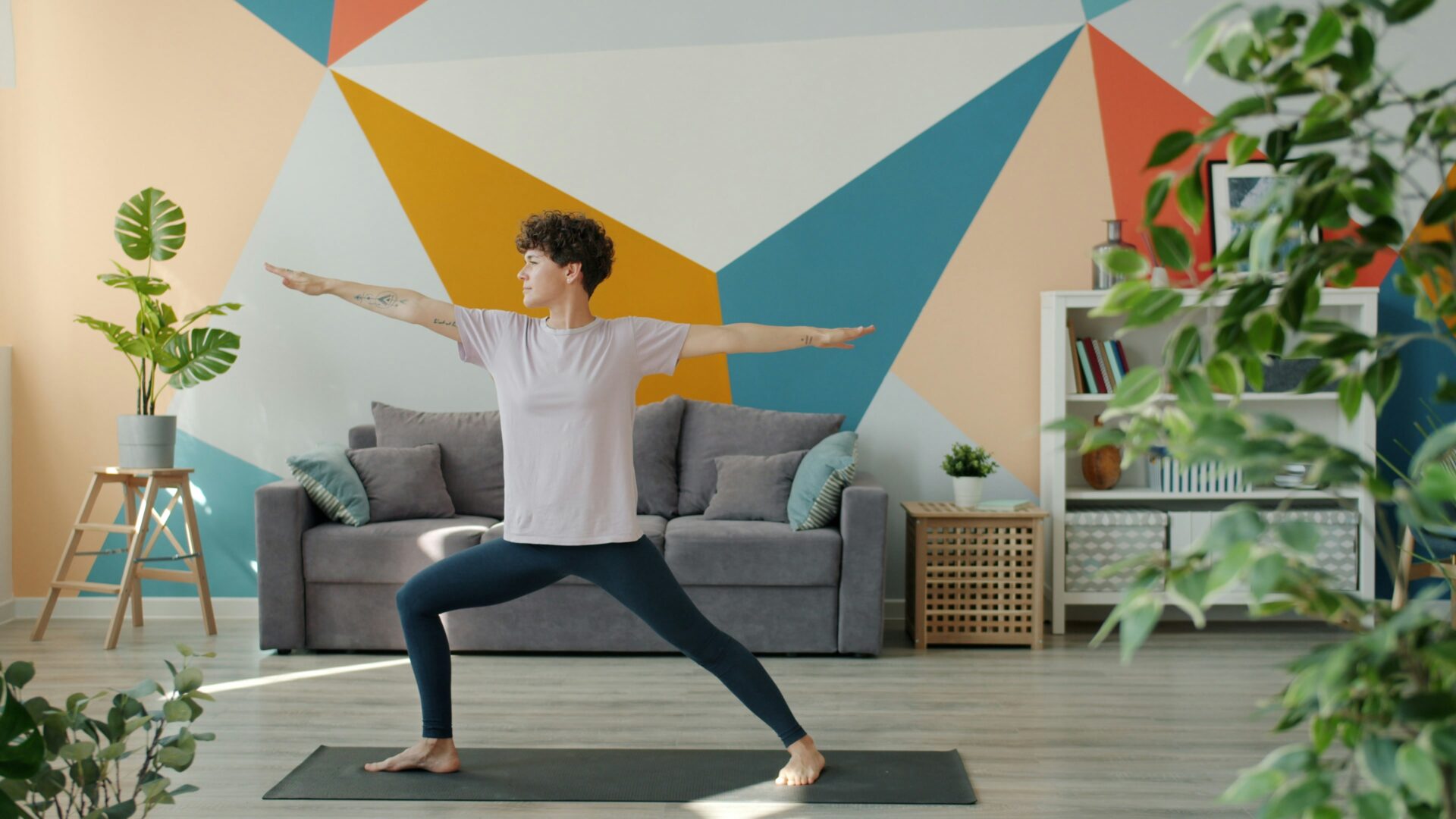

How to do yoga at home for beginners: enjoy flexibility and mindfulness by practicing yoga at home as you create your space and choose the right style.
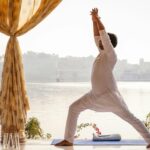
- Create a clutter free space: A great way to start is by setting up a cozy space at home, a quiet corner with a yoga mat, some pillows and a blanket. Be sure to also wear some loose and comfortable clothing for your practice. Make the space inviting so you will want to go there. When I started I lit a candle and some incense and dimmed the lights to create an atmosphere conducive to practicing. I practiced in the evening after work and really looked forward to some quiet time to myself.
- Have a routine: In the Satyananda/ Bihar yoga tradition, there is a very clear understanding of what practices to begin with. Pawanmuktasana is the foundation of Satyandana Yoga because you begin to develop awareness of the body’s movements and later to synchronise breath with movement, as well as the subtle effects they have at the various levels of your being. It is very useful as a preparatory practice as it opens up all the major joints and relaxes the muscles of the body. The series can be practised by anyone since they are simple, gentle and comfortable. You can also start with some beginner-friendly routines or guided videos online. There are lots of free resources, and you can gradually build up your practice.
- Tune into your body’s needs: here the key is to be patient with yourself and just enjoy the process. Learning to listen to your body’s needs is a skill worth acquiring and just have fun with it as you grow!
- Build on the foundational practice: Once you’ve got the basics you can gradually increase the complexity of your routines. It helps to set a consistent schedule, perhaps a few times a week. The asana practice might include Marjariasana (cat pose) Tadasana (palm tree pose) Tiryaka Tadasana ( swaying palm tree pose), Kati chakrasana( waist rotating pose) and Kandharasa (shoulder pose) followed by Shavasana (rest pose) practicing abdominal breathing for 5 minutes.
- Regularity: The beauty of being at home and by oneself is that there’s absolutely no pressure to do more than feels appropriate on any given day. Learning to breathe deeply and to feel at ease in one’s body brings one back to the yoga mat regularly.
- Pranayama: The practice of deep yogic breathing helps to calm the mind. Then the balancing pranayama deepens this feeling of balance. There are also heating and cooling practices, dependent on the season.
- Meditation practices: There is a deeper part of yourself yearning for connection to the relaxed and positive aspect within. Once the breath is calm and relaxed one can introduce the sound of the breath with the mantra so ham to calm and relax the mind.
- For those who have been practicing for a while, it’s really about deepening your practice. You can experiment with more advanced poses, maybe try some longer sequences. You can also consider joining online communities or even workshops to deepen your understanding and connect with other yogis. It’s all about continuous growth and exploration!
Satyanandashram Hellas offers online classes :https//satyanandayoga.carrottechlab.net/en/meditation-centers/courses/
Choosing the right yoga style for beginners at home
The style of yoga you choose to do at home will depend on your needs. Apart from the Satyanada System of Yoga that our blog writes about in depth, there are other styles of yoga you might like to try.
Let's look at four popular types: Hatha, Vinyasa, Yin, and restorative yoga. The biggest differences amongst these are their pace, effort, and intention.
Hatha Yoga: usually includes a mix of physical postures, pranayama (breathing techniques), a guided meditation practice and a final relaxation in shavasana (supine position).
It’s considered a foundational, well-rounded practice, and classes move at a calm, steady pace. Asanas are held for several breaths and there is slow, intentional movement between poses as well as time to adjust and notice sensations in the body. Pranayama is practiced to improve breath control, to increase focus and deepen relaxation.
Pace: slow to moderate
Effort level: low to moderate
Best for: beginners
Vinyasa Yoga: is centered on continuous movement coordinated with breath and feels like a dance of yoga poses. It’s more dynamic and athletic than Hatha, building up heat and stamina, though intensity can vary by teacher and level. Emphasis is on synchronizing breath and movement so as to establish a rhythm and a flow to begin a sequence of asanas. Poses are linked together smoothly and movement often happens one breath per movement. The purpose is to build strength, mobility, coordination, and cardiovascular endurance. There is a small relaxation at the end in shavasana and there might be a short- guided meditation.
Pace: moderate to fast
Effort level: moderate to high
Best for: people who like movement and variety.
Yin Yoga is a slow, meditative practice focused on stillness, long holds, and deep tissue release. The practices are very different from active styles like Hatha or Vinyasa. Yin is about surrender, not muscle effort. The poses are mostly seated or reclining held for 2–5 minutes and sometimes longer. Muscles stay relaxed and effort is minimal
The aim here is for deepening your awareness of the sensations that arise in the pose. Props such as blocks, bolsters, blankets and straps are used so that you feel comfortable to stay in the pose longer. Slow and relaxed breathing is encouraged while in the pose. Other focal points are to notice thoughts, emotions, or resistance while practicing non-judgment and acceptance of whatever arises. The lesson ends with a small meditation practice.
Pace: very slow
Effort level: low, but mentally challenging
Best for: those who want to increasing flexibility and release stress
Restorative Yoga: is a deeply relaxing practice designed to rest the body, calm the nervous system, and support healing. It’s the most passive of all the common yoga styles. There are very few poses in this class (often 4–6 total) which are held from 5 to 20 minutes at a time. The body is completely supported with bolsters, blankets, blocks and eye pillows and no stretching or muscle engagement is required. The purpose is to allow complete physical release of tension, to reduce stress, anxiety, and fatigue. Breathing is slow, gentle and natural. No breath control or effortful pranayama is done. There might be guided awareness of the breath whose purpose is to activate the parasympathetic (“rest-and-digest”) nervous system. Emphasis is on creating a calm atmosphere for example, soft lighting, calm music, aromatherapy. The lesson finishes with a guided meditation or Yoga Nidra.
Pace: Extremely slow
Effort level: Very low
Best for: those recovering from illness, burnout or injury, or suffering from anxiety and insomnia.
Whether you are sick or weak, old or even very old, you can succeed in yoga if you practice diligently.[1]
[1] Swami Swatmarama was a 15th/16th-century Indian yogic sage, famous for compiling the influential Sanskrit text, which systematized Hatha Yoga, explaining techniques such as asanas (postures) and pranayama (breath control) as preparatory steps for higher meditation