



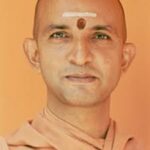

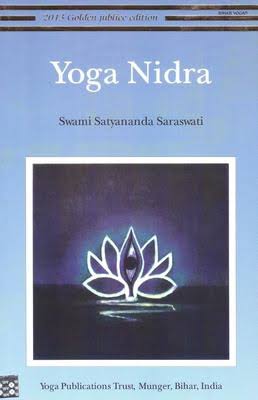

In his book ‘Yoga Nidra’ , Sri Swami Satyananda describes three types of tension: muscular, mental, and emotional. Yoga nidra is a technique that resolves tension on all these three levels, and even further, it can relieve one from spiritual tension and deep inner discontent and existential uncertainty.
Nowadays, yoga nidra has become fashionable as a power nap or substitute for sleep, or antidote for insomnia, but it has much more potential than that.
What is yoga Nidra?
Yoga nidra is derived from two Sanskrit terms: yoga, meaning union, and nidra, meaning sleep. So, ‘yoga nidra’ is literally yogic sleep. A state that leads us to the highest union.
Sri Swami Satyananda compiled the practice from different tantric and yogic sources, making it highly suitable and beneficial for almost everyone in the modern era.
During the practice of yoga nidra one appears to be asleep, but the mind is awake and alert. There is awareness of a deeper state of consciousness. In yoga nidra one identifies with the witnessing principle, dis-identifying from the body and usual modes of perception. Yoga nidra is actually a process of awakening to our true nature.
The full practice consists of 8 to 9 stages. The stages are introduced gradually, thus, a yoga nidra practice lasts from about 15 to 45 minutes, depending on what is included.
When only a few stages of the technique, mainly those concerning the physical body, are practiced, the duration is shorter and it is called a ‘power nap’ or ‘deep relaxation’ or ‘yogic relaxation’.
A complete yoga nidra practice of 45 minutes is as effective as 4 hours of good sleep.
Yoga Nidra: Benefits
Even a shorter power nap version lasting 15 to 20 minutes, especially when practiced on a regular basis, can have immense benefits on multiple levels.
The technique can also be customised for people who have different health conditions. The stages can be adapted accordingly, for different purposes.
Lowers stress
Right from the beginning of the practice, the physical body starts to relax. The breathing becomes slower and deeper, allowing a profound sensation of ‘letting go’ in the musculoskeletal system.
Lowers blood pressure
The heart rate and blood pressure are reduced, easing the inner efforts of the body, which effect the functioning of all the other physical systems as well.
Improves sleep quality
If one practices yoga nidra on a regular basis during the day e.g. once per day 4-5 times per week then the body, nervous system and mind get sufficient rest and recuperation. When the body and mind are able to release the tensions of the day and perform balancing and recovery tasks throughout the day, then during the night, the body and mind can rest at a deeper level and sleep quality is greatly improved.
Relieves mental tensions
After the physical body has relaxed, the practitioner is guided to withdraw from the stimuli in the outer environment. Bringing the attention inwards immediately reduces all the mental activity that is related to processing sensory input, and by adopting the witnessing attitude, the mental charge starts to dissipate.
Relieves emotional tensions
As the grip of the conscious mind, that is trying to control everything, relaxes, material from the subconscious mind can start to surface e.g. impressions from past events or experiences. Once again, by maintaining the attitude of a detached impartial witness, images, visions, thoughts, impressions, emotions, memories, complexes, obsessions, fears, beliefs, etc. are put into perspective and released of their emotional charge. This process is extremely revealing for us and becomes a cathartic one.
Reprograms the mind with ‘sankalpa’
‘Sankalpa’ is another Sanskrit term loosely translated as determination, conviction, or resolve. In the practice of yoga nidra, one can implant in the relaxed and open mind a positive decision or affirmation or resolve. This is a very powerful way to shift the direction of the thoughts and the patterns of the mind, in the direction one wishes their life to flow.
Step-by-step yoga Nidra practice
As already mentioned, the yoga nidra practice has numerous stages and depending on one’s experience and aims, the practice can be adapted.
On the one hand it is relatively simple, and can be practiced at any time of the day. It can even be done from a recording ; all one needs to do is lie down on their back, preferably in the position of shavasana, and press ‘play’.
On the other hand, the real potential of the practice can only be experienced if the practitioner is systematically guided through the technique. It is also not recommended for beginners who suffer from depression, epilepsy, or neurosis. Therefore, it is suggested to explore yoga nidra with a qualified teacher until one is able to do their practice on their own, even without a recording.