



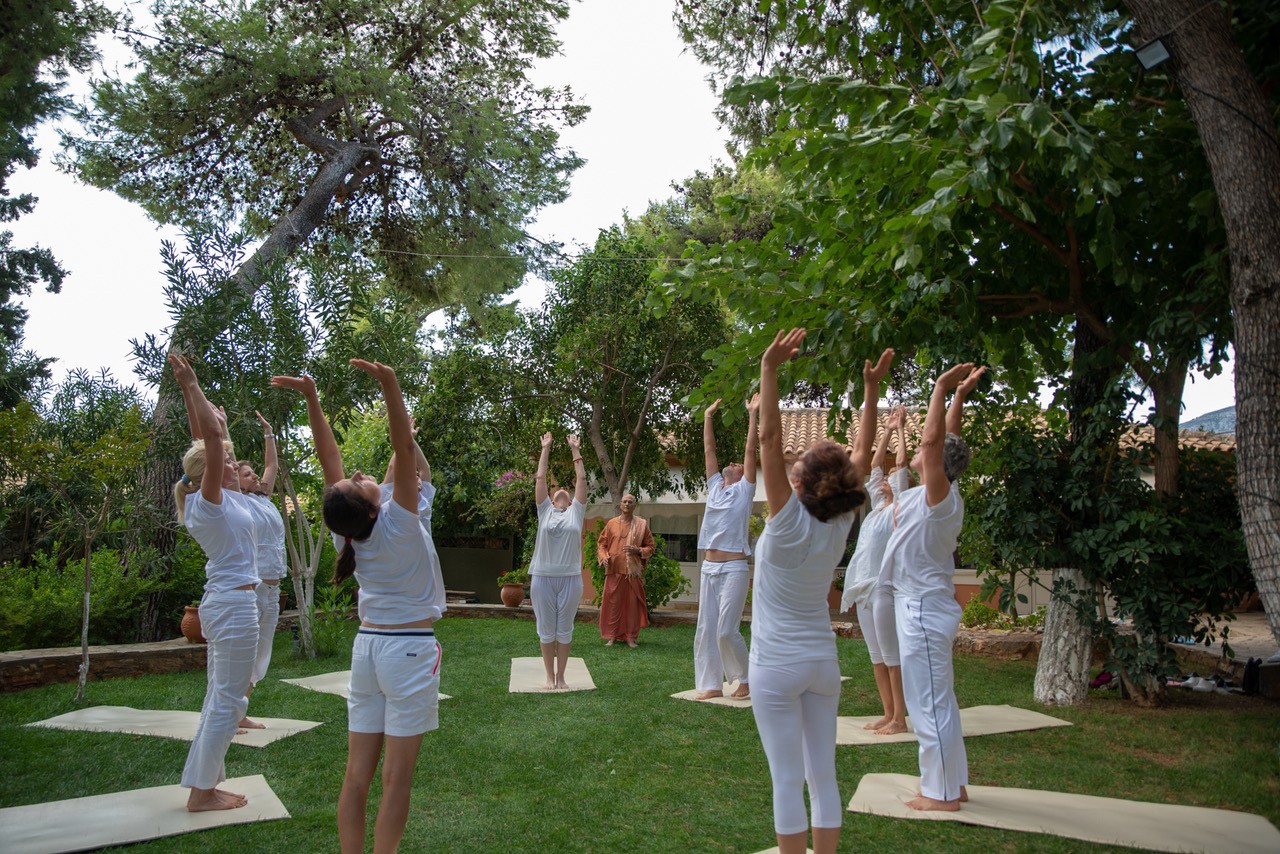

In the System Satyananda Yoga, beginners are encouraged to tailor the frequency of their practice to their individual capacity, lifestyle and goals. The approach emphasizes a systematic and gentle progression prioritizing consistency over intensity. Practicing with awareness is essential as well as focusing on coordinating movements with breath while staying present and mindful of bodily sensations to deepen the connection between body and mind. Beginners are advised to progress gradually under proper guidance.
Are there any general guidelines for beginners?
- Begin slowly: start with shorter, simpler sessions and gradually increase the intensity and duration.
- Keep a balanced approach—focus on developing physical, mental and energetic harmony rather than just physical fitness.
- Listen to your body: avoid overexertion or forcing the body into difficult postures. The System of Satyananda Yoga advocates a non-competitive and intuitive approach.
- Consistency over intensity: regular practice is more beneficial than occasional long sessions.
- Beginners are encouraged to practice on an empty stomach, ideally in the morning or evening.
- Seek guidance from a qualified Satyananda Yoga instructor to ensure correct techniques and adaptations as needed.
By starting gently and practicing consistently, beginners can steadily build a solid foundation in yoga while reaping its holistic benefits.
Here are 10 beginner yoga poses to get one started.
- Tadasana (palm tree pose)
Tadasana, or the palm tree pose, is a foundational yoga posture in the System of Satyananda Yoga. This asana is simple yet highly effective in improving posture, balance, and awareness. It draws inspiration from the steady and upward-reaching nature of a palm tree, symbolizing growth, strength, and stability.
To perform tadasana, stand upright with feet together, arms by your sides, and spine straight. Interlock your fingers and place hands on the top of the head. Turn the palms upwards to face the sky. This is the starting position. Inhale deeply as you stretch your arms overhead and push your palms upwards towards the sky. Then rise onto your toes, lengthening your entire body maintaining the stretch and balancing for a few moments. Exhale and first lower your heels, then your arms into starting position. Practice 10 rounds.
Benefits of Tadasana
Physical Benefits
- Improves posture: aligns the spine and strengthens the back muscles.
- Enhances balance: develops stability and coordination.
- Stretches the body: lengthens and loosens the spine stretches the arms, shoulders, and chest.
- Strengthens muscles: activates the leg and abdominal muscles promoting overall strength.
Mental Benefits
- Improves focus: requires concentration, which enhances mental clarity and awareness.
- Relieves stress: the gentle stretch and focus on breath help calm the nervous system.
Energetic Benefits
- Stimulates upward energy flow (prana) creating a sense of lightness and vitality.
- Balances the nadis (subtle energy channels) and promotes inner harmony.
Precautions
- Avoid lifting the heels if you have ankle instability or balance issues—practice with feet flat on the floor.
- Tadasana is useful during the first 6 months of pregnancy. Pregnant practitioners can keep their feet apart for better stability.
Practice Tip
Tadasana is often used in Satyananda Yoga as a preparatory posture to warm up the body, improve alignment, and cultivate awareness before progressing to other asanas or pranayama practices. It is also an excellent standalone pose to integrate into daily life for better posture and mental clarity. Tadasana, with its simplicity and grounding effect, is a reminder to stay steady and present, just like a tall palm tree rooted deeply yet reaching for the sky.
- Tiryaka Tadasana (swaying palm tree pose)
This is a gentle side-bending posture from the Satyananda Yoga tradition, suitable for beginners.
Stand with feet shoulder-width apart and hands interlocked overhead, palms facing up. Inhale deeply and extend palms further to the sky, and as you exhale, bend sideways to the left without twisting the torso. Inhale to return to the center and repeat on the other side. Perform the movement slowly and rhythmically. Practice 10 rounds.
Physical Benefits:
- Enhances spinal flexibility and side-body stretch.
- Improves digestion and massages abdominal organs.
- Boosts energy and reduces stiffness in the back and waist
Mental Benefits
- Enhances focus and mental clarity: The coordinated movements with breath help calm the mind and improve concentration.
- Reduces stress: the gentle stretching and rhythmic breathing promote relaxation and ease mental tension.
Energetic Benefits
- Balances energy flow: stimulates prana in the side body and spine improving overall vitality.
- Activates nadis: encourages the harmonious flow of energy through subtle channels, promoting a sense of balance and stability.
These benefits make the pose grounding and rejuvenating for the mind and energy systems.
- Kati Chakrasana (waist rotating pose)
This is a dynamic and engaging yoga posture that comes from the Satyananda Yoga tradition, known for its focus on integrating movement, breath, and awareness. It is particularly beneficial for the spine, waist, and internal organ health while also fostering mental clarity and vitality.
To practice kati chakrasana, begin by standing upright with your feet shoulder-width apart and your arms relaxed at your sides. Raise your arms to shoulder level with palms facing down, inhale deeply, and twist your upper body to the right from the waist on an exhalation, allowing your left arm to sweep across your chest placing your left palm on the right shoulder while your right arm extends backward, turning your head to look over your right shoulder. Return to the center on an inhale, repeat the twist to the left side, and afterward, pause to observe the effects on your body and mind while maintaining rhythmic breathing throughout. Practice 10 rounds.
Benefits of Kati Chakrasana
Physical Benefits
- Spinal health: enhances spinal flexibility and strengthens the back muscles.
- Core activation: engages the abdominal muscles, helping tone the waist and correct postural issues.
- Digestive aid: massages internal organs, improving digestion and metabolism.
- Improved circulation: stimulates blood flow, particularly in the torso and back.
Mental Benefits
- Energy boost: activates and revitalizes the body, reducing lethargy giving a feeling of lightness.
- Focus and clarity: encourages mental sharpness through coordinated breath and movement.
Energetic Benefits
- Balances the energy flow in the spine and harmonizes the left and right energy channels (ida and pingala nadis).
Precautions
- Avoid this asana if you have severe spinal issues, hernias, or recent abdominal surgeries.
- Practice gently if you have back pain or stiffness, ensuring there is no strain.
- Always move within your comfortable range of motion and avoid jerky movements.
Kati Chakrasana is often used as a preparatory practice in Satyananda Yoga to warm up the body and cultivate awareness before deeper asanas, pranayama, or meditation practices. It’s simple yet powerful, embodying the holistic approach.
- Poorna Titaliasana (butterfly pose)
A seated asana in the Satyananda Yoga tradition, poorna titaliasana works to open the hips, release tension in the pelvic region, and improve flexibility. It is a dynamic movement that combines physical benefits with relaxation, making it suitable for practitioners of all levels, including beginners.
To perform poorna titaliasana, sit with your spine erect, legs extended, and shoulders relaxed. Bring your knees to your chest then allow your knees to separate and move towards the ground. Bring the soles of your feet together near your pelvis, holding them with your hands, and let your knees drop naturally. Flap your knees up and down like butterfly wings while maintaining an upright spine. On inhale, bring the knees upwards towards the chest and on exhale lower the knees down towards the ground. Repeat 10-30 times
Benefits
Physical Benefits:
- Hip flexibility: stretches the inner thighs and groin, increasing hip joint mobility.
- Relieves tension: releases stiffness in the lower back, hips, and thighs.
- Prepares for meditative poses: helps prepare the body for seated meditation or pranayama by opening the hips and aligning the posture.
- Stimulates the abdominal organs, supporting digestion and reproductive system health.
- Beneficial for women to alleviate menstrual discomfort and enhance pelvic circulation.
Energetic and Emotional Benefits:
- Promotes relaxation by reducing stress held in the hips and pelvic region.
- Encourages a sense of grounding and connection with the lower energy centers.
Precautions
- Avoid if you have severe hip, knee, or lower back injuries.
- Do not force the knees down; work within a comfortable range of motion.
Tips for Beginners
- Sit on a folded blanket to elevate the hips and make the posture more accessible.
- Use a gentle, rhythmic motion rather than forcing the knees to move quickly.
- Focus on breath awareness to deepen the relaxing effects of the pose.
Poorna Titaliasana is an excellent warm-up practice in the Satyananda Yoga System, particularly before deeper forward bends or seated postures. Its simplicity and effectiveness make it an ideal choice for anyone seeking greater flexibility and inner calm.
- Parvatasana (mountain pose)
Parvatasana, or the mountain pose, is a foundational posture in the Satyananda Yoga tradition, symbolizing strength, stability, and stillness. It is often practiced as part of Surya Namaskara (Sun Salutation) and other sequences. Resembling the shape of a mountain, this posture encourages a steady and grounded presence while stretching and strengthening the body.
To practice parvatasana, start in a “tabletop position” on your hands and knees, ensuring proper alignment of your palms under shoulders and knees under hips. Tuck your toes and lift your hips upward, straightening your legs to form an inverted “V” shape, keeping your arms and legs straight but not locked. Press your palms firmly into the mat, relax your neck, and aim your heels toward the ground while lengthening your spine and engaging your core. Breathe deeply and hold the pose for 5–10 breaths before lowering your knees to release into tabletop position.
Benefits of Parvatasana
Physical Benefits
- Strengthens the body: tones the arms, shoulders, and legs while engaging the core.
- Improves flexibility: stretches the spine, hamstrings, calves, and shoulders.
- Enhances posture: promotes alignment and reduces stiffness in the back.
- Improves circulation: encourages blood flow to the head, upper spine and between shoulder blades.
Mental Benefits
- Calms the mind: the grounding nature of the pose fosters mental stillness and clarity.
- Relieves stress: deep breathing in the posture soothes the nervous system.
Energetic Benefits
- Promotes stability and grounding, boosts energy and confidence.
Precautions
- Avoid practicing if you have severe wrist, shoulder, or knee injuries.
- Precautions for inverted asanas apply for anyone suffering from heart conditions, high blood pressure, back conditions or vertigo, and should approach the pose cautiously. Consult a doctor and qualified yoga instructor before undertaking the posture.
- Modify the posture by bending the knees if the hamstrings or lower back are tight.
Practice Tips
- Focus on stretching the spine rather than forcing the heels to touch the ground.
- Keep the body balanced by engaging the arms, legs, and core evenly.
Parvatasana is seen as a meditative and grounding pose that connects practitioners to the qualities of a mountain: strength, stability, and resilience. It is often integrated into sequences like Surya Namaskara.
- Druta Utkatasana (dynamic energy pose)
Druta Utkatasana is a powerful yoga practice. This dynamic posture combines movement and breath awareness, enhancing physical strength, flexibility, and vitality. The term “Druta” means “dynamic” or “fast,” while “Utkatasana” translates to “powerful pose” or “squat.” This pose is particularly effective for activating energy, strengthening the lower body, and improving circulation.
Begin by standing upright with your feet together. If one prefers, stand with the feet hip-width apart, arms relaxed by your sides, and spine straight. Bring palms together in front of chest. Inhale deeply while raising your arms above your head, the palms remain together, then exhale as you bend your knees to lower your body into a squatting position with the knees together, keeping your back straight. Return to standing on an inhale by straightening your knees and lowering your arms to your sides.
For beginners practice slowly by lowering the body down in stages, and sequentially increase the bending of the knees. As your strength and stamina improves, one will be able to come into the squatting position with no pain or discomfort.
Benefits of Druta Utkatasana
Physical Benefits
- Strengthens the lower body: tones and strengthens the thighs, calves, and glutes.
- Improves joint mobility: enhances flexibility in the knees, hips, and ankles.
- Stimulates circulation: boosts blood flow, particularly to the lower body.
- Core engagement: activates the abdominal muscles, improving core stability.
Mental Benefits
- Enhances focus: synchronizing movement with breath promotes deeper awareness.
- Relieves stress: The rhythmic motion helps release physical and mental tension.
Energetic Benefits
- Enhances energy flow through the lower body, creating a sense of vitality.
- It is an ideal pose for breaking inertia and promoting a sense of lightness and vitality.
Precautions
- Avoid this practice if you have severe knee, hip, or ankle issues.
- Not to be practiced during pregnancy nor by women with prolapsed uterus.
- Practitioners should modify or avoid this posture as needed.
Practice Tips for Beginners
- Keep your movements smooth and controlled, avoiding jerky or rushed motions.
- Focus on maintaining proper alignment. If one chooses to do the practice with feet hip- width apart, your knees should not extend beyond your toes when squatting.
- Gradually increase the number of repetitions to build strength and stamina.
- Shashankasana (pose of the moon or hare pose)
In the System of Satyananda Yoga, shashankasana is a beginner-friendly posture that promotes relaxation, emotional grounding, and introspection (if held for extended periods of time).
Shashankasana is a simple forward bending posture whereby one starts in vajrasana (thunder bolt pose) sitting on the heels, inhale and raise the arms above the head, upon exhalation lower the hands and forehead to the ground. Relax in the posture, breathing normally and hold for up to three minutes. By stretching the back and gently compressing the abdomen, it helps release stress, calm the mind, and improve flexibility in the spine and hips. Ideal for beginners it is often used to balance the nervous system and recover between active poses.
Benefits for Beginners
Physical Benefits:
- Spinal relaxation: gently stretches the lower back and vertebrae along the spine relieving tension and stiffness.
- Tones pelvic and reproductive systems: regular practice helps to relive constipation.
- Digestive stimulation: the compression of the abdomen can massage the digestive organs, improving function.
Mental and Emotional Benefits:
- Stress relief: promotes relaxation by activating the parasympathetic nervous system.
- If held for extended periods of time, it releases anger and mental tension.
- Helps beginners connect with their breath and calm the mind.
Preparation for Meditation:
- This pose is a stepping stone for longer meditative practices, encouraging stillness and focus.
Precautions
- Avoid or modify if you have severe ankle, knee, hip, or lower back issues.
- Pregnant individuals should avoid abdominal compression; instead, practice a modified version with knees wider apart.
- People with high blood pressure, vertigo or slipped disc should not do the practice.
- If dizziness or discomfort arises, exit the pose slowly.
Modifications for Beginners
Support for knees:
- Place a folded blanket under the knees for extra cushioning.
Forehead support:
- Place a blanket under the forehead if it does not comfortably reach the ground.
Shashankasana is an excellent posture for beginners to establish a foundation of relaxation and helps develop awareness. It is simple yet profound, bridging the gap between movement and stillness in yoga practice.
- Bhujangasana (cobra pose )
In the System of Satyananda Yoga, bhujangasana is a foundational backbend that promotes flexibility, strengthens the spine, and stimulates energy flow. It is particularly valued for its therapeutic benefits and its role in awakening prana (life energy) in the body.
To perform the cobra pose, lie on your stomach with legs extended and hands placed under your shoulders, keeping elbows close to your body. Inhale to lift your head, chest, and abdomen off the ground using your back muscles more than your arms, while keeping your lower body (the thighs and hips) grounded. The elbows will remain slightly bent unless the spine is very flexible. Maintain relaxed shoulders, gaze forward, and exhale as you gently lower your chest and head back to the ground.
Benefits
Physical Benefits:
- Spinal health: strengthens the spine and improves flexibility.
- Chest and abdomen: opens the chest and stretches the abdominal muscles, promoting better breathing and digestion.
- Posture correction: counteracts the effects of prolonged sitting by opening the front body.
Energetic and Emotional Benefits:
- Reduces stress and improves mood by releasing tension in the back and shoulders.
Therapeutic Applications:
- Beneficial for individuals with mild back pain, asthma or fatigue.
- Enhances circulation to the spinal nerves and internal organs.
Precautions
- Avoid if you have severe back or neck injuries.
- Those with hernias, intestinal tuberculosis or hyperthyroidism should consult a yoga instructor or doctor before attempting this asana.
- Do not overextend the lower back; focus on gentle movements and raise the body to a position that is comfortable.
Tips for Beginners
- If the full pose feels challenging, start with a smaller lift, raising only the head and chest.
- Focus on slow breathing to deepen the posture.
In the Satyananda Yoga tradition, bhujangasana is not only a physical exercise but also a practice to harmonize the body and mind, making it an essential part of the sequences in Surya Namaskara (Sun Salutation). This pose embodies both strength and grace, encouraging practitioners to embrace their inner vitality.
- Eka Pada Pranamasana (one-legged prayer pose)
Eka pada pranamasana is a balancing posture. This asana is a symbol of humility, balance, and focus. It integrates physical stability with mental concentration, cultivating a sense of inner harmony and stillness.
Eka pada pranamasana involves balancing on one leg while in a prayer posture. Begin in tadasana, shift your weight to one foot, and place the sole of the opposite foot on your inner thigh or calf, avoiding the knee joint. Join your palms in front of your chest in a prayer position, focus on a fixed point to maintain balance, and hold for a few breaths. Lower your leg and arms to return to tadasana, then repeat on the other side.
Benefits of eka pada pranamasana
Physical Benefits
- Improves balance: strengthens the legs, ankles, and core muscles, enhancing overall stability.
- Increases flexibility: stretches the hips, thighs, and inner groin.
- Enhances body posture: encourages alignment and body awareness.
Mental Benefits
- Boosts concentration: the need for focus and stillness trains the mind to stay present.
- Relieves stress: the calm and steady pose fosters a sense of grounding and relaxation.
Energetic Benefits
- Balances energy flow in the body, creating harmony between physical and mental states.
Precautions
- Those with severe knee, ankle, or hip injuries should avoid or modify this pose.
- If you find balancing difficult, practice near a wall for support.
- Avoid straining—practice within your range of comfort and flexibility.
Practice Tips
- Focus on a fixed point in front of you to enhance balance.
- Engage your core muscles to help stabilize the body.
- For beginners or those who have trouble lifting the foot high, place it on your calf or ankle instead of the inner thigh.
Eka pada pranamasana is a meditative practice that connects the practitioner to a state of inner stillness. It encourages the integration of body, mind, and breath, reflecting the holistic approach of the Satyananda Yoga tradition. This pose is often practiced as part of the balancing sequences or in preparation for deeper meditative asanas. It symbolizes grounding and centeredness; essential qualities for personal growth and spiritual development.
- Marjari-asana (cat stretch pose)
In the Satyananda Yoga tradition, marjari-asana, is a dynamic and gentle posture that enhances flexibility, spinal health, and coordination. It mimics the stretching motion of a cat, which is both soothing and energizing.
It is a dynamic practice that involves synchronized movement of the spine with breathing. The pose alternates between arching the back on an inhale and rounding the spine on an exhale, promoting flexibility, spinal health, and relaxation.
Physical Benefits:
- Spinal flexibility: stretches and mobilizes the spine, relieving tension and stiffness.
- Core engagement: activates the abdominal muscles, supporting overall posture.
- Neck and back relief: eases discomfort in the neck and back, especially for those who sit for long periods.
Mental and Emotional Benefits:
- Encourages relaxation and awareness through breath-synchronized movement.
- Reduces stress and promotes a sense of grounding.
Circulation and Energy Flow:
- Stimulates blood flow to the spine and abdominal and reproductive organs, supporting digestion and vitality.
Precautions
- Avoid if you have wrist or knee injuries. Use cushions or modify the pose to reduce strain.
- Keep movements gentle, especially if you have back or neck sensitivity.
Tips for Beginners
- Move slowly to develop awareness of your spine.
- Focus on breath awareness to enhance the meditative aspect of the pose.
Marjari-asana is a simple yet transformative practice suitable for all levels. It is often used to prepare the body for deeper postures and meditation. Awareness is on developing the flexibility of the spine.
Where do I start?
Satyananda Yoga offers a holistic approach, combining asanas (postures), pranayama (breathing practices), yoga nidra (deep relaxation), and meditation practices. Beginners can start with the following:
Asanas (postures)
- Practice simple asanas like tadasana (palm tree pose), marjari-asana (cat stretch
pose), and shashankasana (moon or hare pose) to develop flexibility and strength.
- Begin with 10–15 minutes of gentle movements.
Pranayama (breathing practices)
- Start with basic pranayama like abdominal breathing or nadi shodhana (alternate nostril breathing) for 5–10 minutes.
- These practices calm the mind and improve respiratory health.
Relaxation Techniques
- Incorporate shavasana (corpse pose) or yoga nap (shorter version of yoga nidra) for 5 –15 minutes to deeply relax the body and mind.
- The System of Satyananda Yoga emphasizes the importance of relaxation to balance effort with awareness of the effects of practices.
Meditation practices
- Simple meditation practices like antar mouna (inner silence) or focusing on the breath can be introduced for 5–10 minutes.
How often should beginners practice yoga?
Daily practice is ideal for establishing a routine and experiencing the mental and physical benefits of yoga. If daily sessions aren’t feasible, starting with 3–5 days a week is recommended, allowing beginners to become familiar with the practices while giving the body time to adapt and recover. A typical Satyananda Yoga class lasts 45–90 minutes, but this can be adjusted based on an individual’s energy levels and schedule.
Short daily practices; the yogic capsule
For those with limited time, practicing yoga for 15–30 minutes daily can also be effective. Swami Niranjanananda (successor of Sri Swami Satyananda Saraswati, founder of Satyananda Yoga), has introduced “yogic capsules,” which are short, structured routines designed to make yoga accessible to even the busiest individuals. These practices can be seamlessly integrated into daily life, promoting consistency and balance.
You can download the Bihar School of Yoga app onto your phone for free and choose the yogic capsule right for you:
https://www.biharyoga.net/apps.php
Bring yoga into your life and see the enormous benefits that happen not only in the physical body but in your mind, your energy level, your mood and the way you see life.