





Updated on: 18.11.24

What are the seven chakras? 

Chakras are vortices of energy which function like switches controlling the flow of prana (vital energy) within the body. They funnel and absorb cosmic prana (or spiritual energy) from the universe acting as transformers thereby reducing the voltage of energy received from the universe. The chakras send the received energy along the nadis (energy pathways or meridians) to the nervous system and endocrine system of the physical body.   


There are seven main chakras located along the spinal passage starting from the base of the spine to the top of the head. These are mooladhara (root chakra at the perinium in the male body and in the cervix in the female body), swadhisthana (at the tailbone), manipura (behind the navel), anahata (behind the heart), vishuddhi (behind the throat) ajna (at the midbrain behind the eyebrow center) and sahasrara (at the crown of the head). The main energy pathway called sushumna nadi is an energy flow (or spiritual flow) which runs along the centre of the spinal cord from mooladhara to sahasrara chakra. All the chakras are directly connected to every organ of the body and also affect our personality. For example, anahata chakra is connected with the cardiovascular system and the lungs. It also contains all the heart-based qualities, such as understanding, courage, compassion, empathy and unconditional love. 


How to balance each of the chakras? 

The aim is to purify and awaken the chakras systematically. The branches of yoga that directly focus on awakening the chakras are kriya yoga and kundalini yoga. In kriya yoga one consciously rotates their attention on fixed pathways and through the different chakras. The branch of yoga known as kundalini yoga is a dynamic process of awakening the kundalini energy. This is the dormant energy that resides in mooladhara chakra. In both kundalini and kriya yoga one learns how to focus their awareness on the chakra trigger points or kshetrams which are located at the front of the body. 


There are many ways to balance and awaken the 7 chakras. One way is Chakra Shuddhi meditation which purifies these psychic centres by locating their kshetram and combines the use of mantra and breath awareness. In Satyananda Yoga, we start by purifying ajna chakra and then move on to working with mooladhara, swadhishtana, manipura, anahata and vishuddhi. 


A second way is through the practice of certain asanas and pranayama. Sri Swami Satyananda indicated that the best way to balance the chakras is through the combination of asana and mantra. Care is to be taken when awakening the chakras, as large amounts of energy can be released which the practitioner might not be able to manage. These practices are ideally learnt in an ashram under the direct guidance of a yoga master or guru. 


The seven main chakras and their corresponding color  

Mooladhara The root chakra, deep red 

Known as the root centre, the seat of kundalini energy, located at the perineum in the male body and the cervix in the female body. 

Swadhisthana – The Sacral Chakra, orange-red 

Known as one’s own abode. It is the psychic centre, located at the coccyx. 

Manipura – The Solar Plexus Chakra, yellow  

Known as the city of gems, it is the centre of dynamism, vitality, willpower and achievement, located behind the navel. 

Anahata – The Heart Chakra, blue 

Known as the unstruck sound and the wish-fulfilling centre. When this centre is awakened we become free of our pre-defined fate and begin to gain control over our destiny; located behind the sternum. 

Vishuddhi – The Throat Chakra, purple 

Known as the centre of purification, located behind the throat pit 

Ajna – The Third Eye Chakra, clear or grey  

Known as the command centre, the seat of intuition, located in the midbrain behind the eyebrow centre. 

 Bindu 

Although a minor chakra its role is very important because it represents the highest point of human consciousness, the source of all creation, located at the top back of the head 

Sahasrara – The Crown Chakra, red or multi coloured  

The lotus of a thousand petals, the abode of supreme consciousness, located at the crown of the head. 


Chakra Activation: How to activate the chakras 

The main factors associated with chakra activation include disciplined yogic practices, such as asanas, pranayama and meditation, along with mental focus and emotional stability. Consistency in practice, a balanced lifestyle, and the guidance of an experienced teacher or guru are also essential enabling gradual energy flow through the nadis and the awakening of kundalini energy.  


The role of prana 

Prana, the vital life force, flows through the body’s energy channels (nadis) and directly impacts the chakras by energizing and activating them. When prana is controlled through practices like pranayama, it balances the chakras, enhancing mental clarity, physical health, and spiritual growth by facilitating the kundalini energy’s upward movement. 


The role of sound 

In the system of Satyananda Yoga, nada yoga is defined as the “yoga of sound.” Each chakra vibrates at a unique frequency and sound—especially through the use of mantras—creates harmony within the chakras, helping to “tune” them, align their energies and clear any blockages. This tuning process promotes the free flow of prana (vital energy) throughout the body, which is essential for physical, emotional and spiritual well-being. 

A central practice within nada yoga is chanting bija mantras, or seed sounds. These specific sounds resonate with each chakra, deepening meditation, calming the mind, and enhancing self-awareness, which leads to spiritual transformation and a connection with nada, the universal essence of sound. The bija mantras associated with each chakra are as follows: 

  1. Root Chakra (Mooladhara)Lam 
  1. Sacral Chakra (Swadhisthana)Vam 
  1. Solar Plexus Chakra (Manipura)Ram 
  1. Heart Chakra (Anahata)Yam 
  1. Throat Chakra (Vishuddhi)Ham 
  1. Third Eye Chakra (Ajna)Om (or Aum) 
  1. Crown Chakra (Sahasrara) – Silence (no specific mantra, as it is beyond sound) 


How to use the bija mantras for each chakra?  

To use the bija mantras for each chakra, chant each specific mantra (e.g., “LAM” for the root chakra) while focusing attention on the chakra’s location in the body. Allow the sound to resonate deeply within helping to activate, balance, and clear any energetic blockages in that chakra. 

The role of visualization 

Visualization plays a crucial role in balancing chakras by mentally focusing on each chakra’s specific color and symbol to enhance their activation and alignment. Techniques include: 


  • Sequential Focus: Concentrate on one chakra at a time from root to crown. 
  • Color Imagery: Visualize vibrant colors corresponding to each chakra. 
  • Symbol Integration: Incorporate each chakra’s unique symbol or yantra. 
  • Breath Awareness: Synchronize visualizations with deep, steady breaths. 


These practices facilitate energy flow and harmony during meditation. 

Visualizing symbols, like the lotus petals or sacred geometry, strengthens the chakra’s vibrational frequency fostering balance and spiritual insight 

How to identify blocked chakras? 

Blocked chakras manifest as physical, emotional, and psychological symptoms unique to each energy centre and whose common indicators include: 

  1. Root Chakra (Mooladhara): Fear, insecurity, poor boundaries, neediness and reassurance-seeking, lower back pain, leg issues. 
  1. Sacral Chakra (Swadhisthana): Guilt, emotional instability, lack of creativity, low sex drive, reproductive issues. 
  1. Solar Plexus Chakra (Manipura): Shame, low self-esteem and confidence, arrogance, aggression, avoidance of responsibility, digestive problems. 
  1. Heart Chakra (Anahata): Grief, inability to express love, lack of compassion, possessiveness, jealousy, loneliness, heart and respiratory problems. 
  1. Throat Chakra (Vishuddhi): Prone to dishonesty, blocked artistic expression, communication issues, sore throat, thyroid problems. 
  1. Third eye Chakra (Ajna): Poor intuition, lack of imagination, difficulty with discrimination, obsessive thoughts, headaches, sinus issues. 
  1. Crown Chakra (Sahasrara): Disconnection, depression, spiritual dissatisfaction. 

Balancing these centers restores health and emotional well-being. 


How to unblock Mooladhara- Root chakra? 

Practice: Asanas (grounding postures like Garudasana and Veerasana), nasikagra drishti (nose tip gazing), moola bandha (perineal contraction) 

Sound: Chanting the bija mantra “LAM.” 

Meditation: Visualize a red inverted triangle or a yellow square to enhance inner stability and balance. Focus on grounding and stability at the base of the spine. 

Focus: Increase your  awareness around security, physical stability, and physical sensations. 


How to unblock Swadhisthana- Sacral chakra? 

Practice: Asanas that generate fluid movements, such as Gatyatmak meru wakrasana, Paschimottanasana and Eka Padasana.  

Ashwini Mudra, vajroli mudra (for men) sahajoli mudra for women.  

Sound: Chanting the bija mantra “VAM.” 

Meditation: Imagine a vast, deep ocean with dark waves rolling under a starry night sky. The tides symbolize the ebb and flow of awareness, capturing the movement of emotions, creativity, and pleasure. 

Focus: Explore areas of creativity and emotional balance.  


How to unblock Manipura- Solar Plexus chakra? 

Practice: Core-strengthening asanas such as Naukasana, Chakki Chalanasana , Agnisara Kriya (panting breath).  

Sound: Chanting the bija mantra “RAM.” 

Meditation: Envision a brilliant sun or a sphere of fire, radiating vibrant energy. Feel the light emanating from this source as it flows through and fills your entire body, enhancing personal power and will. 

Focus: Build self-confidence, determination and clarity. 

How to unblock Anahata- Heart chakra? 

Practice: Heart-opening Asanas like Dwikonasana and Ardha Ushtrasana, Ajapa Japa meditation, and Bhramari Pranayama (humming bee breath) 

Sound: Chanting the bija mantra “YAM.” 

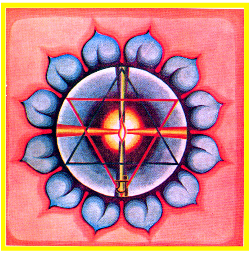
Meditation: Picture a blue lotus or a blue hexagon made up of two interlocking triangles, with a small, brilliant flame glowing at its center. Imagine this flame as steady and unwavering, like an un-flickering candle.  

Focus: Cultivate compassion, unconditional love, and emotional release. 


How to unblock Vishuddhi-Throat chakra? 

Practice: Neck and shoulder stretches, Sarvangasana, Matsyasana, Jalandhara Bandha and Ujjayi Pranayama (the psychic breath). 

Sound: Chanting the bija mantra “HAM.” 

Meditation: Imagine a large, pure drop of white nectar. Feel the refreshing, icy droplets of this sweet nectar cascading down to the vishuddhi chakra, creating a sensation of blissful intoxication.  

Focus: Develop clear communication, honesty, and expression. 

How to unblock Ajna-Third eye chakra? 

Practice: Tadasana, Ashwa Sanchalanasana, Trataka (concentrated gazing), Anuloma Viloma pranayama (the coming and going breath) with prana shuddhi and shambhavi mudra 

Sound: Chanting the bija mantra “OM.” 

Meditation: Envision a small point of light or an Aum symbol at the eyebrow center allowing your thoughts to focus on the inner guru within you. 

Focus: Strengthenintuitive abilities, insight, and inner guidance. 


How to unblock Bindu chakra? 

Practice: Shirshasana, Moorchha pranayama (swooning or fainting breath) vajroli/sahajoli mudra with awareness of bindu.  

Meditation: Visualization of a crescent moon at bindu shining in the darkness of a night sky; allow its calming energy to envelop your mind and body. 

What kind of food to eat in preparation for kundalini awakening?  

Consuming light, pure foods can help clear mental clutter and promote clarity, aiding in the unblocking the chakras. A sattwic diet nourishes the mind and nervous system supporting a higher consciousness. Light, easily digestible foods like boiled grains, lentils, and minimal protein are ideal for kundalini practices, reducing strain on digestion. Avoid fats; favor carbohydrates such as rice, potatoes for body temperature regulation. Simple spices like cumin, turmeric, mustard seeds and cardamon aid digestion, preserving vital energy and internal warmth. Staying well-hydrated supports overall energy flow and mental clarity. 

How can balancing the seven chakras improve your health and well-being? 

When there is an imbalance in any chakra this will manifest as a physical ailment or discomfort. By applying the chakra purifying techniques mentioned above, one will experience improvements in physical health, mental clarity, increased awareness and emotional balance. The chakras in many of us are switched off completely, or they are only partially opened. Therefore, the chakras are only illuminating or activating certain areas of the brain. When all the chakras are functioning fully, the whole brain is illuminated with energy and power; and the mind has full expression. This is why science and yoga agree that the ordinary person only uses about 10% of their brain’s capacity. The remaining 90% is dormant, waiting to be activated through the chakras. 


For a deeper understanding of the chakras and Kundalini yoga, one of the best and most comprehensive books to read is Kundalini Tantra written by Sri Swami Satyananda Saraswati, a great luminary and yoga master who spread the ancient yoga practices to the West in a simple and practical way while maintaining their authenticity and potency. 

satyananda yoga logo

Satyanandashram Hellas

Alithias 1, 19002 Paiania, Greece

PO Box 22, 19002 Paiania, Greece

+306947009660

info@satyanandayoga.gr

Paiania Meditation Center

Dimarchou Iona Vore (former Diadochou Konstantinou) 32, 19002 Paiania

+30 210 6641545, 695 6482415

sycp@satyanandayoga.gr

Athens Meditation Center

Simetelou 2, 115 28, Athens

210 3311178, 694 2974467

syca@satyanandayoga.gr

Thessaloniki Meditation Center

Proxenou Koromila 1, 54623 Thessaloniki

+30 2310 283109

sycs@satyanandayoga.gr

The trademark Satyanandashram Hellas CENTER OF YOGA® is a trademark owned by Satyanandashram Hellas, Greece and used with permission.
The term SATYANANDA YOGA® is a trademark owned by IYFM and used with permission.
Satyananda Yoga Nidra® is a registered trademark of IYFM used with permission.

How you can be part of this beautiful community of service

You are welcome to come and unite in our efforts to help us accomplish our aims and goals. Our association needs people who are ready to offer their hearts, their skills and ideas as well as monetary contributions, and to integrate their ‘head, heart and hands’ in service.

If you consider the needs of others, we need you.
If you have a generous heart, we need you.
Ιf you have large hands, we need you.
If you have bright ideas, we need you.

Your contributions allow us to reach out to more and more people. Your contributions enable us to support and work towards the fulfilment of the vision of Swami Satyananda, Swami Niranjanananda and their lineage  that of peace and prosperity for all humankind.

X

What are the 7 Chakras and How to Balance Them?

Updated on: 18.11.24

What are the seven chakras? 

Chakras are vortices of energy which function like switches controlling the flow of prana (vital energy) within the body. They funnel and absorb cosmic prana (or spiritual energy) from the universe acting as transformers thereby reducing the voltage of energy received from the universe. The chakras send the received energy along the nadis (energy pathways or meridians) to the nervous system and endocrine system of the physical body.   


There are seven main chakras located along the spinal passage starting from the base of the spine to the top of the head. These are mooladhara (root chakra at the perinium in the male body and in the cervix in the female body), swadhisthana (at the tailbone), manipura (behind the navel), anahata (behind the heart), vishuddhi (behind the throat) ajna (at the midbrain behind the eyebrow center) and sahasrara (at the crown of the head). The main energy pathway called sushumna nadi is an energy flow (or spiritual flow) which runs along the centre of the spinal cord from mooladhara to sahasrara chakra. All the chakras are directly connected to every organ of the body and also affect our personality. For example, anahata chakra is connected with the cardiovascular system and the lungs. It also contains all the heart-based qualities, such as understanding, courage, compassion, empathy and unconditional love. 


How to balance each of the chakras? 

The aim is to purify and awaken the chakras systematically. The branches of yoga that directly focus on awakening the chakras are kriya yoga and kundalini yoga. In kriya yoga one consciously rotates their attention on fixed pathways and through the different chakras. The branch of yoga known as kundalini yoga is a dynamic process of awakening the kundalini energy. This is the dormant energy that resides in mooladhara chakra. In both kundalini and kriya yoga one learns how to focus their awareness on the chakra trigger points or kshetrams which are located at the front of the body. 


There are many ways to balance and awaken the 7 chakras. One way is Chakra Shuddhi meditation which purifies these psychic centres by locating their kshetram and combines the use of mantra and breath awareness. In Satyananda Yoga, we start by purifying ajna chakra and then move on to working with mooladhara, swadhishtana, manipura, anahata and vishuddhi. 


A second way is through the practice of certain asanas and pranayama. Sri Swami Satyananda indicated that the best way to balance the chakras is through the combination of asana and mantra. Care is to be taken when awakening the chakras, as large amounts of energy can be released which the practitioner might not be able to manage. These practices are ideally learnt in an ashram under the direct guidance of a yoga master or guru. 


The seven main chakras and their corresponding color  

Mooladhara The root chakra, deep red 

Known as the root centre, the seat of kundalini energy, located at the perineum in the male body and the cervix in the female body. 

Swadhisthana - The Sacral Chakra, orange-red 

Known as one’s own abode. It is the psychic centre, located at the coccyx. 

Manipura - The Solar Plexus Chakra, yellow  

Known as the city of gems, it is the centre of dynamism, vitality, willpower and achievement, located behind the navel. 

Anahata - The Heart Chakra, blue 

Known as the unstruck sound and the wish-fulfilling centre. When this centre is awakened we become free of our pre-defined fate and begin to gain control over our destiny; located behind the sternum. 

Vishuddhi - The Throat Chakra, purple 

Known as the centre of purification, located behind the throat pit 

Ajna - The Third Eye Chakra, clear or grey  

Known as the command centre, the seat of intuition, located in the midbrain behind the eyebrow centre. 

 Bindu 

Although a minor chakra its role is very important because it represents the highest point of human consciousness, the source of all creation, located at the top back of the head 

Sahasrara - The Crown Chakra, red or multi coloured  

The lotus of a thousand petals, the abode of supreme consciousness, located at the crown of the head. 


Chakra Activation: How to activate the chakras 

The main factors associated with chakra activation include disciplined yogic practices, such as asanas, pranayama and meditation, along with mental focus and emotional stability. Consistency in practice, a balanced lifestyle, and the guidance of an experienced teacher or guru are also essential enabling gradual energy flow through the nadis and the awakening of kundalini energy.  


The role of prana 

Prana, the vital life force, flows through the body's energy channels (nadis) and directly impacts the chakras by energizing and activating them. When prana is controlled through practices like pranayama, it balances the chakras, enhancing mental clarity, physical health, and spiritual growth by facilitating the kundalini energy's upward movement. 


The role of sound 

In the system of Satyananda Yoga, nada yoga is defined as the "yoga of sound." Each chakra vibrates at a unique frequency and sound—especially through the use of mantras—creates harmony within the chakras, helping to "tune" them, align their energies and clear any blockages. This tuning process promotes the free flow of prana (vital energy) throughout the body, which is essential for physical, emotional and spiritual well-being. 

A central practice within nada yoga is chanting bija mantras, or seed sounds. These specific sounds resonate with each chakra, deepening meditation, calming the mind, and enhancing self-awareness, which leads to spiritual transformation and a connection with nada, the universal essence of sound. The bija mantras associated with each chakra are as follows: 

  1. Root Chakra (Mooladhara)Lam 
  1. Sacral Chakra (Swadhisthana)Vam 
  1. Solar Plexus Chakra (Manipura)Ram 
  1. Heart Chakra (Anahata)Yam 
  1. Throat Chakra (Vishuddhi)Ham 
  1. Third Eye Chakra (Ajna)Om (or Aum) 
  1. Crown Chakra (Sahasrara) – Silence (no specific mantra, as it is beyond sound) 


How to use the bija mantras for each chakra?  

To use the bija mantras for each chakra, chant each specific mantra (e.g., “LAM” for the root chakra) while focusing attention on the chakra's location in the body. Allow the sound to resonate deeply within helping to activate, balance, and clear any energetic blockages in that chakra. 

The role of visualization 

Visualization plays a crucial role in balancing chakras by mentally focusing on each chakra’s specific color and symbol to enhance their activation and alignment. Techniques include: 


  • Sequential Focus: Concentrate on one chakra at a time from root to crown. 
  • Color Imagery: Visualize vibrant colors corresponding to each chakra. 
  • Symbol Integration: Incorporate each chakra’s unique symbol or yantra. 
  • Breath Awareness: Synchronize visualizations with deep, steady breaths. 


These practices facilitate energy flow and harmony during meditation. 

Visualizing symbols, like the lotus petals or sacred geometry, strengthens the chakra’s vibrational frequency fostering balance and spiritual insight 

How to identify blocked chakras? 

Blocked chakras manifest as physical, emotional, and psychological symptoms unique to each energy centre and whose common indicators include: 

  1. Root Chakra (Mooladhara): Fear, insecurity, poor boundaries, neediness and reassurance-seeking, lower back pain, leg issues. 
  1. Sacral Chakra (Swadhisthana): Guilt, emotional instability, lack of creativity, low sex drive, reproductive issues. 
  1. Solar Plexus Chakra (Manipura): Shame, low self-esteem and confidence, arrogance, aggression, avoidance of responsibility, digestive problems. 
  1. Heart Chakra (Anahata): Grief, inability to express love, lack of compassion, possessiveness, jealousy, loneliness, heart and respiratory problems. 
  1. Throat Chakra (Vishuddhi): Prone to dishonesty, blocked artistic expression, communication issues, sore throat, thyroid problems. 
  1. Third eye Chakra (Ajna): Poor intuition, lack of imagination, difficulty with discrimination, obsessive thoughts, headaches, sinus issues. 
  1. Crown Chakra (Sahasrara): Disconnection, depression, spiritual dissatisfaction. 

Balancing these centers restores health and emotional well-being. 


How to unblock Mooladhara- Root chakra? 

Practice: Asanas (grounding postures like Garudasana and Veerasana), nasikagra drishti (nose tip gazing), moola bandha (perineal contraction) 

Sound: Chanting the bija mantra “LAM.” 

Meditation: Visualize a red inverted triangle or a yellow square to enhance inner stability and balance. Focus on grounding and stability at the base of the spine. 

Focus: Increase your  awareness around security, physical stability, and physical sensations. 


How to unblock Swadhisthana- Sacral chakra? 

Practice: Asanas that generate fluid movements, such as Gatyatmak meru wakrasana, Paschimottanasana and Eka Padasana.  

Ashwini Mudra, vajroli mudra (for men) sahajoli mudra for women.  

Sound: Chanting the bija mantra “VAM.” 

Meditation: Imagine a vast, deep ocean with dark waves rolling under a starry night sky. The tides symbolize the ebb and flow of awareness, capturing the movement of emotions, creativity, and pleasure. 

Focus: Explore areas of creativity and emotional balance.  


How to unblock Manipura- Solar Plexus chakra? 

Practice: Core-strengthening asanas such as Naukasana, Chakki Chalanasana , Agnisara Kriya (panting breath).  

Sound: Chanting the bija mantra “RAM.” 

Meditation: Envision a brilliant sun or a sphere of fire, radiating vibrant energy. Feel the light emanating from this source as it flows through and fills your entire body, enhancing personal power and will. 

Focus: Build self-confidence, determination and clarity. 

How to unblock Anahata- Heart chakra? 

Practice: Heart-opening Asanas like Dwikonasana and Ardha Ushtrasana, Ajapa Japa meditation, and Bhramari Pranayama (humming bee breath) 

Sound: Chanting the bija mantra “YAM.” 

Meditation: Picture a blue lotus or a blue hexagon made up of two interlocking triangles, with a small, brilliant flame glowing at its center. Imagine this flame as steady and unwavering, like an un-flickering candle.  

Focus: Cultivate compassion, unconditional love, and emotional release. 


How to unblock Vishuddhi-Throat chakra? 

Practice: Neck and shoulder stretches, Sarvangasana, Matsyasana, Jalandhara Bandha and Ujjayi Pranayama (the psychic breath). 

Sound: Chanting the bija mantra “HAM.” 

Meditation: Imagine a large, pure drop of white nectar. Feel the refreshing, icy droplets of this sweet nectar cascading down to the vishuddhi chakra, creating a sensation of blissful intoxication.  

Focus: Develop clear communication, honesty, and expression. 

How to unblock Ajna-Third eye chakra? 

Practice: Tadasana, Ashwa Sanchalanasana, Trataka (concentrated gazing), Anuloma Viloma pranayama (the coming and going breath) with prana shuddhi and shambhavi mudra 

Sound: Chanting the bija mantra “OM.” 

Meditation: Envision a small point of light or an Aum symbol at the eyebrow center allowing your thoughts to focus on the inner guru within you. 

Focus: Strengthenintuitive abilities, insight, and inner guidance. 


How to unblock Bindu chakra? 

Practice: Shirshasana, Moorchha pranayama (swooning or fainting breath) vajroli/sahajoli mudra with awareness of bindu.  

Meditation: Visualization of a crescent moon at bindu shining in the darkness of a night sky; allow its calming energy to envelop your mind and body. 

What kind of food to eat in preparation for kundalini awakening?  

Consuming light, pure foods can help clear mental clutter and promote clarity, aiding in the unblocking the chakras. A sattwic diet nourishes the mind and nervous system supporting a higher consciousness. Light, easily digestible foods like boiled grains, lentils, and minimal protein are ideal for kundalini practices, reducing strain on digestion. Avoid fats; favor carbohydrates such as rice, potatoes for body temperature regulation. Simple spices like cumin, turmeric, mustard seeds and cardamon aid digestion, preserving vital energy and internal warmth. Staying well-hydrated supports overall energy flow and mental clarity. 

How can balancing the seven chakras improve your health and well-being? 

When there is an imbalance in any chakra this will manifest as a physical ailment or discomfort. By applying the chakra purifying techniques mentioned above, one will experience improvements in physical health, mental clarity, increased awareness and emotional balance. The chakras in many of us are switched off completely, or they are only partially opened. Therefore, the chakras are only illuminating or activating certain areas of the brain. When all the chakras are functioning fully, the whole brain is illuminated with energy and power; and the mind has full expression. This is why science and yoga agree that the ordinary person only uses about 10% of their brain’s capacity. The remaining 90% is dormant, waiting to be activated through the chakras. 


For a deeper understanding of the chakras and Kundalini yoga, one of the best and most comprehensive books to read is Kundalini Tantra written by Sri Swami Satyananda Saraswati, a great luminary and yoga master who spread the ancient yoga practices to the West in a simple and practical way while maintaining their authenticity and potency.