




Ashtanga Yoga: The Eightfold Path of Transformation

The Eight Limbs of Patanjali

Ashtanga Yoga, meaning “eight-limbed yoga” or the eight angas (stages), is a comprehensive system of yogic practice outlined by the sage Patanjali in the Yoga Sutras. The first six limbs involve practical methods and disciplines, while the final two—dhyana (meditation) and samadhi (absorption)—are states of mind that arise naturally from sustained inner work. This structured path to spiritual evolution unfolds through eight interconnected limbs:

  • Yama: ethical restraints that calm emotional turbulence.
  • Niyama: personal observances that stabilize the mind.
  • Asana: steady posture for physical and mental balance.
  • Pranayama: regulated breathing to control life force.
  • Pratyahara: withdrawal of the senses from external distractions.
  • Dharana: focused concentration on a single point.
  • Dhyana: uninterrupted meditation.
  • Samadhi: complete absorption or unity with the object of meditation.

Together, these limbs form a transformative framework for self-discipline, purification of body and mind, and ultimately, the transcendence of ego into spiritual freedom.

Modern Ashtanga Practice

In modern times, the term Ashtanga Yoga is also widely associated with the dynamic practice system handed down from Sri T. Krishnamacharya to his student Pattabhi Jois, within the tradition of the guru-discpline parampara. This form emphasizes a set sequence of postures performed in a flowing manner (vinyasa), synchronized with breath and internal focus (drishti). While rooted primarily in the limbs of asana and pranayama, it serves as a gateway to the deeper meditative and transformative aspects of yoga, making it a holistic path toward physical purification, mental clarity, and spiritual evolution.

The Primary Series (Yoga Chikitsa – Yoga Therapy) purifies and aligns the body through forward bends, hip openers, and foundational postures that build strength and flexibility. The Intermediate Series (Nadi Shodhana – Nerve Cleansing) works on the nervous system and energy flow through deeper backbends and twists, developing emotional stability and inner balance. The Advanced Series (Sthira Bhaga – Strength and Grace) integrates highly demanding postures, requiring strength, flexibility, and control, and cultivates the union of physical mastery with meditative awareness.


Series Sanskrit Name Focus & Purpose Key Features
Primary Series Yoga Chikitsa Detoxifies and aligns the body; builds strength and flexibility Forward bends, hip openers, foundational poses
Intermediate Series Nadi Shodhana Purifies the nervous system and energy channels Deeper backbends, twists, advanced postures
Advanced Series Sthira Bhaga Integrates strength, flexibility, and control Highly demanding postures, meditative awareness


Importantly, each yoga master receives a unique mandate to share the teachings, and no one system is exclusively right or wrong. Just as Sage Patanjali emphasized ethical observances (yama and niyama) as the essential foundation before the practice of asana, so too in the Satyananda Yoga tradition, spiritual evolution is grounded in developing inner awareness and character development. This integrated vision supports the understanding that different expressions of Ashtanga Yoga complement rather than contradict each other, each adapted to the time, place, and capacity of the student.

Swami Sivananda’s Eightfold Path

In the Satyananda Yoga tradition, our Paramguru Sri Swami Sivananda expanded upon the classical eightfold path of Sage Patanjali by offering a dynamic, heart-centered model of spiritual life. While Patanjali’s Ashtanga Yoga focuses on the exploration of the mind through progressive internalization and discipline, Sri Swami Sivananda’s Ashtanga Yoga emphasizes the expression of a refined and awakened mind in daily life. As Swami Niranjanananda Saraswati has said, “The Ashtanga Yoga of Sage Patanjali deals with the exploration of the mind. The Ashtanga Yoga of Sri Swami Sivananda deals with the expression of that mind.” His eightfold path—Serve, Love, Give, Purify, Be Good, Do Good, Meditate, Realise—forms a complete sadhana, offering practical and uplifting steps that transform character and awaken spiritual consciousness. This approach is not theoretical; it is a lived experience that harmonizes thought, emotion, and action into a lifestyle of compassion, service, and inner awareness.

The Role of the 18 ITIES

Supporting this path, Sri Swami Sivananda also gave us the 18 ITIES—qualities such as serenity, sincerity, humility, and generosity—which are practical tools for inner purification and social harmony. These virtues act as steady companions on the spiritual journey, helping the aspirant turn every moment into an act of yoga. Through practising these ITIES, life becomes a field of sadhana where every situation is an opportunity to grow and serve. As Swami Niranjanananda beautifully explains, the ITIES are not merely ideals but expressions of love, awareness, and unity. With dedication, these values refine our being, leading us naturally from action into meditation, and ultimately to spiritual realization. In this way, Sri Swami Sivananda’s Ashtanga Yoga becomes a roadmap to living divinity—not only in retreat or silence, but in every thought, word, and deed.

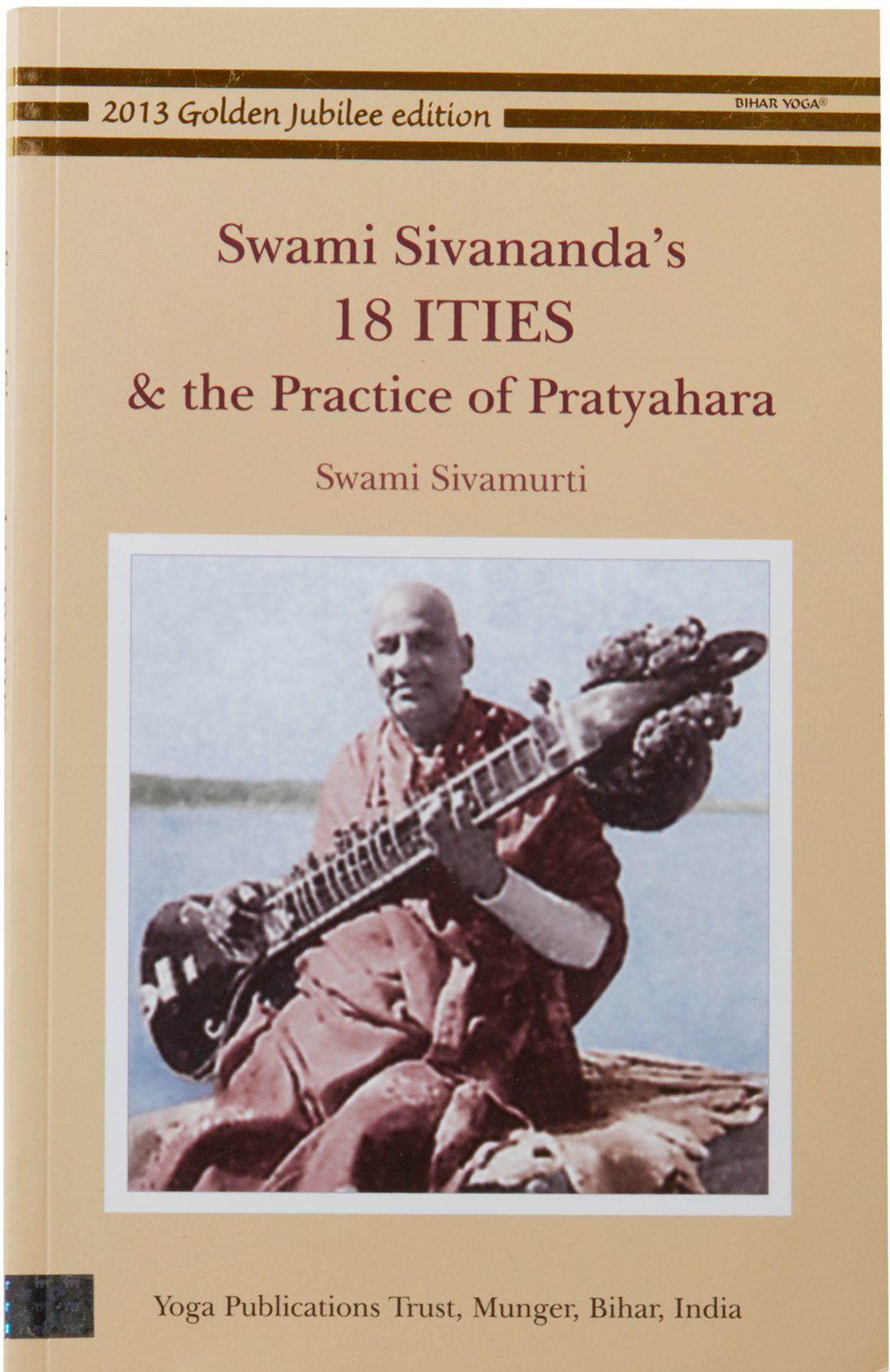
Further insights can be found in the book Pratyahara and the 18 ITIES by Swami Sivamurti Saraswati published by the Yoga Publications Trust. This practical and reflective text offers a detailed guide on how these timeless virtues act as stepping-stones to inner mastery, and how their integration into daily life strengthens the foundation for higher yogic practices. Rooted in the fifth limb of yoga—pratyahara, the withdrawal of the senses—this book reveals how cultivating the ITIES supports the inward journey and helps build the mental clarity and focus essential for deeper states of meditation and self-awareness.

Ashtanga Yoga, in both its classical and modern expressions, offers a profound and structured path for personal transformation. Whether you are drawn to the eightfold path outlined by Sage Patanjali, the dynamic vinyasa sequences of Pattabhi Jois, or the heart-centered teachings of Sri Swami Sivananda, the essence remains the same: yoga is a journey of self-discovery, discipline, and awakening.

By integrating ethical living, mindful practice, and inner reflection, Ashtanga Yoga guides us beyond the physical postures into deeper realms of clarity, compassion, and spiritual freedom. Each limb, each series, and each moment on the mat becomes an opportunity to purify the body, steady the mind, and realize our highest potential.

Ultimately, the true power of Ashtanga Yoga lies in its adaptability and relevance to every seeker. No matter where you begin, this ancient system invites you to explore, evolve, and embody the timeless wisdom of yoga—on and off the mat, in every thought, word, and action. May your journey along this eightfold path be one of growth, balance, and inner joy.

satyananda yoga logo

Satyanandashram Hellas

Alithias 1, 19002 Paiania, Greece

PO Box 22, 19002 Paiania, Greece

+306947009660

info@satyanandayoga.gr

Paiania Meditation Center

Dimarchou Iona Vore (former Diadochou Konstantinou) 32, 19002 Paiania

+30 210 6641545, 695 6482415

sycp@satyanandayoga.gr

Athens Meditation Center

Simetelou 2, 115 28, Athens

210 3311178, 694 2974467

syca@satyanandayoga.gr

Thessaloniki Meditation Center

Proxenou Koromila 1, 54623 Thessaloniki

+30 2310 283109

sycs@satyanandayoga.gr

The trademark Satyanandashram Hellas CENTER OF YOGA® is a trademark owned by Satyanandashram Hellas, Greece and used with permission.
The term SATYANANDA YOGA® is a trademark owned by IYFM and used with permission.
Satyananda Yoga Nidra® is a registered trademark of IYFM used with permission.

How you can be part of this beautiful community of service

You are welcome to come and unite in our efforts to help us accomplish our aims and goals. Our association needs people who are ready to offer their hearts, their skills and ideas as well as monetary contributions, and to integrate their ‘head, heart and hands’ in service.

If you consider the needs of others, we need you.
If you have a generous heart, we need you.
Ιf you have large hands, we need you.
If you have bright ideas, we need you.

Your contributions allow us to reach out to more and more people. Your contributions enable us to support and work towards the fulfilment of the vision of Swami Satyananda, Swami Niranjanananda and their lineage  that of peace and prosperity for all humankind.

X

What is Ashtanga Yoga: Definition, History and Principles

Ashtanga Yoga: The Eightfold Path of Transformation

The Eight Limbs of Patanjali

Ashtanga Yoga, meaning "eight-limbed yoga" or the eight angas (stages), is a comprehensive system of yogic practice outlined by the sage Patanjali in the Yoga Sutras. The first six limbs involve practical methods and disciplines, while the final two—dhyana (meditation) and samadhi (absorption)—are states of mind that arise naturally from sustained inner work. This structured path to spiritual evolution unfolds through eight interconnected limbs:

  • Yama: ethical restraints that calm emotional turbulence.
  • Niyama: personal observances that stabilize the mind.
  • Asana: steady posture for physical and mental balance.
  • Pranayama: regulated breathing to control life force.
  • Pratyahara: withdrawal of the senses from external distractions.
  • Dharana: focused concentration on a single point.
  • Dhyana: uninterrupted meditation.
  • Samadhi: complete absorption or unity with the object of meditation.

Together, these limbs form a transformative framework for self-discipline, purification of body and mind, and ultimately, the transcendence of ego into spiritual freedom.

Modern Ashtanga Practice

In modern times, the term Ashtanga Yoga is also widely associated with the dynamic practice system handed down from Sri T. Krishnamacharya to his student Pattabhi Jois, within the tradition of the guru-discpline parampara. This form emphasizes a set sequence of postures performed in a flowing manner (vinyasa), synchronized with breath and internal focus (drishti). While rooted primarily in the limbs of asana and pranayama, it serves as a gateway to the deeper meditative and transformative aspects of yoga, making it a holistic path toward physical purification, mental clarity, and spiritual evolution.

The Primary Series (Yoga Chikitsa – Yoga Therapy) purifies and aligns the body through forward bends, hip openers, and foundational postures that build strength and flexibility. The Intermediate Series (Nadi Shodhana – Nerve Cleansing) works on the nervous system and energy flow through deeper backbends and twists, developing emotional stability and inner balance. The Advanced Series (Sthira Bhaga – Strength and Grace) integrates highly demanding postures, requiring strength, flexibility, and control, and cultivates the union of physical mastery with meditative awareness.


Series Sanskrit Name Focus & Purpose Key Features
Primary Series Yoga Chikitsa Detoxifies and aligns the body; builds strength and flexibility Forward bends, hip openers, foundational poses
Intermediate Series Nadi Shodhana Purifies the nervous system and energy channels Deeper backbends, twists, advanced postures
Advanced Series Sthira Bhaga Integrates strength, flexibility, and control Highly demanding postures, meditative awareness


Importantly, each yoga master receives a unique mandate to share the teachings, and no one system is exclusively right or wrong. Just as Sage Patanjali emphasized ethical observances (yama and niyama) as the essential foundation before the practice of asana, so too in the Satyananda Yoga tradition, spiritual evolution is grounded in developing inner awareness and character development. This integrated vision supports the understanding that different expressions of Ashtanga Yoga complement rather than contradict each other, each adapted to the time, place, and capacity of the student.

Swami Sivananda’s Eightfold Path

In the Satyananda Yoga tradition, our Paramguru Sri Swami Sivananda expanded upon the classical eightfold path of Sage Patanjali by offering a dynamic, heart-centered model of spiritual life. While Patanjali's Ashtanga Yoga focuses on the exploration of the mind through progressive internalization and discipline, Sri Swami Sivananda's Ashtanga Yoga emphasizes the expression of a refined and awakened mind in daily life. As Swami Niranjanananda Saraswati has said, “The Ashtanga Yoga of Sage Patanjali deals with the exploration of the mind. The Ashtanga Yoga of Sri Swami Sivananda deals with the expression of that mind.” His eightfold path—Serve, Love, Give, Purify, Be Good, Do Good, Meditate, Realise—forms a complete sadhana, offering practical and uplifting steps that transform character and awaken spiritual consciousness. This approach is not theoretical; it is a lived experience that harmonizes thought, emotion, and action into a lifestyle of compassion, service, and inner awareness.

The Role of the 18 ITIES

Supporting this path, Sri Swami Sivananda also gave us the 18 ITIES—qualities such as serenity, sincerity, humility, and generosity—which are practical tools for inner purification and social harmony. These virtues act as steady companions on the spiritual journey, helping the aspirant turn every moment into an act of yoga. Through practising these ITIES, life becomes a field of sadhana where every situation is an opportunity to grow and serve. As Swami Niranjanananda beautifully explains, the ITIES are not merely ideals but expressions of love, awareness, and unity. With dedication, these values refine our being, leading us naturally from action into meditation, and ultimately to spiritual realization. In this way, Sri Swami Sivananda’s Ashtanga Yoga becomes a roadmap to living divinity—not only in retreat or silence, but in every thought, word, and deed.

Further insights can be found in the book Pratyahara and the 18 ITIES by Swami Sivamurti Saraswati published by the Yoga Publications Trust. This practical and reflective text offers a detailed guide on how these timeless virtues act as stepping-stones to inner mastery, and how their integration into daily life strengthens the foundation for higher yogic practices. Rooted in the fifth limb of yoga—pratyahara, the withdrawal of the senses—this book reveals how cultivating the ITIES supports the inward journey and helps build the mental clarity and focus essential for deeper states of meditation and self-awareness.

Ashtanga Yoga, in both its classical and modern expressions, offers a profound and structured path for personal transformation. Whether you are drawn to the eightfold path outlined by Sage Patanjali, the dynamic vinyasa sequences of Pattabhi Jois, or the heart-centered teachings of Sri Swami Sivananda, the essence remains the same: yoga is a journey of self-discovery, discipline, and awakening.

By integrating ethical living, mindful practice, and inner reflection, Ashtanga Yoga guides us beyond the physical postures into deeper realms of clarity, compassion, and spiritual freedom. Each limb, each series, and each moment on the mat becomes an opportunity to purify the body, steady the mind, and realize our highest potential.

Ultimately, the true power of Ashtanga Yoga lies in its adaptability and relevance to every seeker. No matter where you begin, this ancient system invites you to explore, evolve, and embody the timeless wisdom of yoga—on and off the mat, in every thought, word, and action. May your journey along this eightfold path be one of growth, balance, and inner joy.