




Updated on 26.08.25

What is Prana in Yoga?

Before we delve into what Prana in Yoga is, it is necessary to get an understanding of what is prana exactly.

Prana is not air, it is not oxygen, it is not the breath. It is most commonly defined as “the life force”.  Prana is made up of two syllables: pra which means ‘constant’ and na which means ‘movement’. So, prana is the vital force in constant motion that is the basis of all manifested creation. Prana  sustains everything: a planet, a stone, a blade of grass, cells, electricity, magnetic fields, the wind, water, cars, computers; all of these cannot exist or move without prana. The individual prana within each being is part of the cosmic sea of mahaprana. For life to exist both prana and chitta (consciousness) must be present. The moment prana leaves the body, consciousness departs, because prana and consciousness are the two poles of the one source, which is the Self. Prana is considered the fundamental energy that sustains, not only physical life, but also the mind and consciousness. The ancient yogis understood prana as a dynamic force, constantly moving and influencing every bodily function, thought, and emotion.

In all yogic traditions, prana is central to health, vitality, and spiritual growth.

Everyone is born with a certain quantum of prana, but it changes continuously. Positive thoughts and yogic practices generate higher levels of prana, and this is the reason why we feel so ‘good and revitalised’ after a yoga session.


Prana Vidya

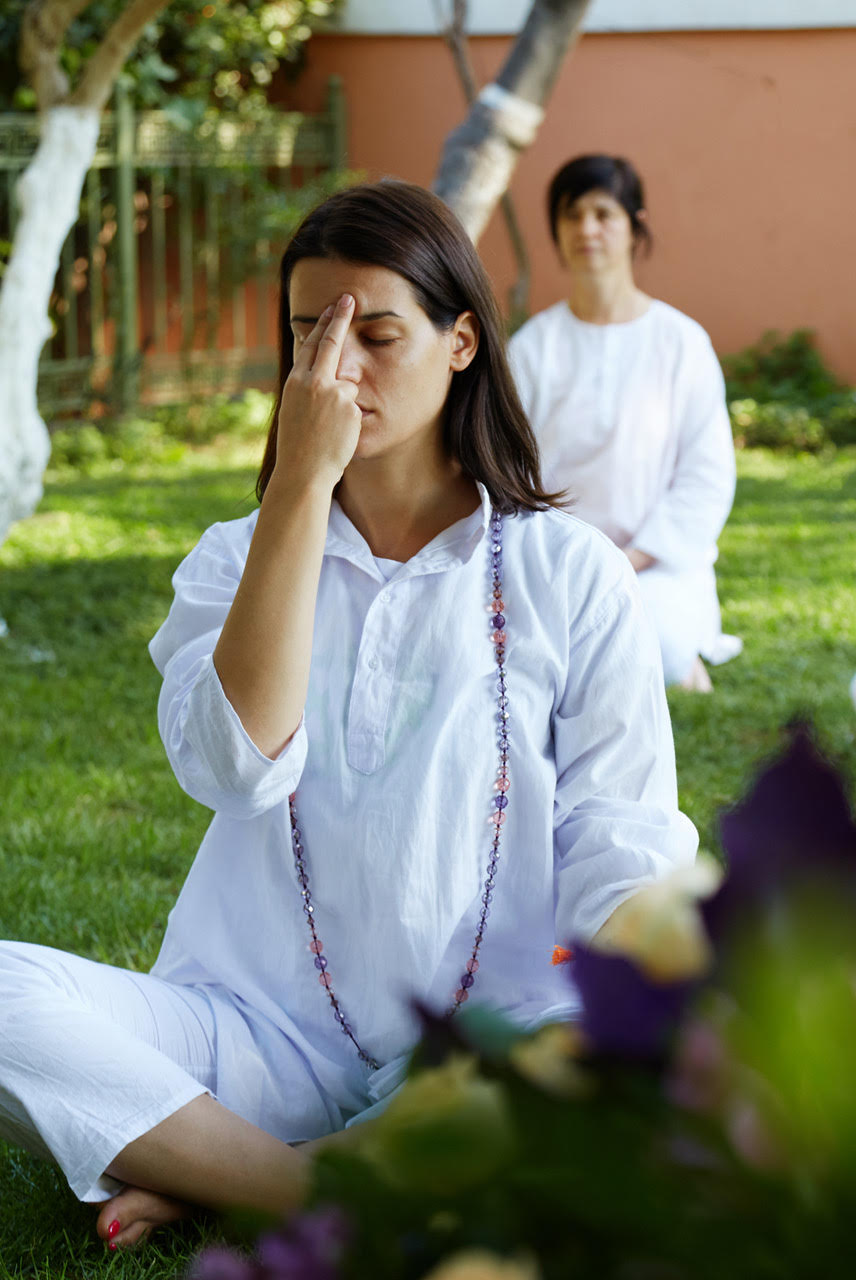
In the Satyananda Yoga tradition, there is an emphasis on practices that cultivate and regulate prana. Prana Vidya is a powerful technique specifically dedicated to understanding, directing, and expanding prana within the body. This system of practices, unique to the Satyananda Yoga tradition, combines pranayama (breath control), visualization, and concentration to enhance prana flow and vitality.

Prana flows through subtle channels known as nadis and is stored in energy centers, (the chakras), in the energy body (subtle body). Prana Vidya techniques clear the blockages in the nadis and energise the chakras helping practitioners improve physical health, mental clarity, and emotional balance.

These techniques also cultivate greater self-awareness, resilience, and can achieve transformative spiritual states. This advanced practice is often taught to experienced practitioners under the guidance of an experienced teacher or guru.


What is the importance of prana in yogic practice and well-being?

Blockages or imbalances in prana along the nadis can result in physical ailments or mental unrest. Yogic practices like pranayama, asanas and meditation work together to balance and enhance prana, promoting overall well-being. By cultivating pranic energy, practitioners not only experience enhanced health but also access deeper levels of self-awareness and spiritual fulfillment.


How does prana enhance your physical and spiritual health?

Prana  influences the body on many levels, initiating a deep transformation that goes beyond physical fitness. The practice of pranayama and pranic awareness:

Boosts Vital Energy: By refining the breath, Prana Yoga strengthens the pranic field, increasing energy levels and rejuvenating the body.

Strengthens the Respiratory System: It enhances lung elasticity and efficiency, promoting deeper and more conscious breathing.

Purifies the Nadis (Energy Channels): The clearing of these pathways allows prana to flow freely, improving physiological and energetic health.

Supports Longevity: Yogic texts state that breath control prolongs life, as prana is directly linked to vitality.

Aligns with Cosmic Energy: Spiritually, Prana harmonizes individual energy with universal consciousness, leading to higher states of awareness.


What is the connection between prana and your energy in yoga?

Prana is the essence of life and the fundamental force behind all physical and mental activities. According to yogic philosophy:

Prana is the Link Between the Body and Mind: Breath is the external manifestation of prana, and by controlling it, one can regulate mental and emotional states.

Prana Exists in Five Forms (Pancha Prana): These energy fields regulate different bodily functions, such as digestion, circulation, and cognition.

Balance Between Prana and Apana is Key: The upward-moving prana and downward-moving apana must be harmonized to awaken higher consciousness


How can prana help you achieve mental clarity and emotional balance?

By increasing one’s prana ones mental and emotional well-being is helped, specifically by;

Reduce Stress and Anxiety: Controlled breathing shifts the nervous system into a parasympathetic state, promoting relaxation.

Improve Concentration and Mental Focus: With better oxygenation and energy flow, the mind becomes clearer and more alert.

Regulate Emotional States: By influencing prana, one can stabilize emotions, reducing reactivity and fostering inner peace.

Enhance Meditative States: Advanced Prana Yoga practices prepare the mind for deep meditation and spiritual insight.

When one’s prana levels are low, the mind becomes restless and disturbed, leading to negative thoughts and emotions. By practicing pranayama and prana vidya one can increase their pranic flow, clears blockages and stabilizes the mind. This process awakens dormant areas of the brain, sharpens perception, and improves concentration, leading to greater mental and emotional clarity.


What are the five types of prana and where are they found in our body? 

According to yogic texts, in order to control all the body functions prana shakti  divides itself into 5 major forces of prana known as the pancha pranas which manifest through the energy body (pranamaya kosha) and which have a direct effect on the physical body.

It is important here for the beginner reading this text to distinguish among the different bodies or dimensions of existence that we have otherwise known as the koshas (sheaths). Humans can experience 5 dimensions of existence or  5 spheres in which we live at any time ranging from gross to more subtle energies. Below is a brief outline:

Annamaya kosha:[ anna= food, maya=comprised of] this is the gross physical body (cells, tissues, organs, bone marrow, blood, etc.) and depends on food, water, air and prana.

Pranamaya kosha: is the energy field of an individual and we experience it on a more subtle level. It is the basis for the practices of pranayama , pranavidya and prana yoga.

Manomaya kosha: is the mental dimension experienced as the mind It bridges the outer world (experiences and sensations) with the inner world (the intuitive and causal bodies)

Vijnamamayaksha: (MISTAKE)links the individual mind with the universal mind. Inner knowledge comes to the conscious mind from this level.

Anandamaya kosha: is the state of bliss and grace. This is the causal or transcendental body. Prana is the most subtle in this body.

So, where do we find the five pranas? They are located in the energy body (pranamayakosha). Each one has a unique function supporting our physical, mental and spiritual well-being. The following is a brief description of the five pranas as outlined in the Satyananda Yoga tradition:

Sthoola Prana: Centered in the chest, it governs respiratory and circulatory systems, facilitating the intake of the life force (cosmic prana). It also acts on mental clarity and focus enabling positive mental impressions to flow into the mind. Proper functioning of sthoola prana is essential for physical vitality as well as a balanced and focused mind. Note that sthoola prana used within this context does not refer to the cosmic prana instead it refers to one of the five  flows of energy.

Apana: Located in the pelvic region, it controls elimination and reproductive functions. It is responsible for the downward movement, handling waste elimination and reproductive health. At a subtle level, it removes negative thoughts and emotions, which assists in maintaining mental and emotional balance.

Samana: Positioned between the navel and heart, samana governs digestion and metabolism. It harmonizes the forces of prana and apana, promoting balanced assimilation of nutrients and mental peace. Samana’s energy aids in maintaining physical vitality and mental stability

Udana: Found in the extremities, udana governs sensory functions and movement of arms, legs, and head. It supports speech, cognitive clarity, and self-expression, linking mind and body. Through meditation, udana can aid in transcending physical needs leading to higher states of awareness.

Vyana: This prana pervades the entire body acting as a reserve force for all other pranas. It coordinates and distributes energy, promoting physical coordination and maintaining mental equilibrium. Vyana ensures that all bodily functions remain balanced supporting both the physical body’s and the subtle body’s  health.


How does lifestyle play a role with our pranic body (pranamaya kosha)? 

Lifestyle plays a significant role in influencing the five pranas of the pranic body. Activities such as exercise, work, sleep, diet, and sexual relations all impact the flow and distribution of prana within the body.

When lifestyle habits are irregular, dietary choices are poor, or stress is present, pranic flow becomes blocked or depleted. This depletion is often felt as a sense of being “drained of energy.” A lack of energy in a specific prana can weaken the organs and limbs it governs, eventually leading to illness or metabolic dysfunction.


Where to learn more about prana?

To learn more about prana within the Satyananda Yoga tradition, you can explore several resources:

Swami Niranjanananda Saraswati who is the successor of Sri Swami Satyananda Saraswati, and the current head of the Bihar School of Yoga, has written numerous books that expound on prana, pranayama, and the philosophy of yoga. Some important ones include:


Prana Pranayama -This book specifically covers pranayama techniques and the understanding of prana.

Prana Vidya – explores the science of prana techniques to awaken and control pranic energy through a combination of pranayama and more advanced techniques.

Books by Sri Swami Satyananda Saraswati (the founder of the Satyananda Yoga tradition)

Yoga Nidra: Though it focuses on deep relaxation, it often touches upon prana and its role in mental and physical health.

Asana, Pranayama, Mudra, Bandha: This highly acclaimed manual is a key textbook that provides insight into pranayama and prana.


The Bihar School of Yoga Website (biharyoga.net) Founded by Sri Swami Satyananda Saraswati, the Bihar School of Yoga is the home of the Satyananda Yoga tradition. Here you can find more resources and possibly online courses related to prana on the Bihar School of Yoga website and through their associated Satyananda Yoga centers.
Many teachers trained in the System of Satyananda Yoga provide insights into prana through classes, workshops, and videos.


Online Resources and Videos: There are various online videos and recorded teachings available through platforms like YouTube or through yoga organizations.

By visiting Satyanandashram Hellas YouTube channel there are  practices in available both in English and Greek.

You can also download the Satyam Yoga Prasad app and enjoy a variety of meditations from the masters of our tradition: Sri Swami Satyananda Saraswati and Swami Niranjanannada Saraswati.

https://satyamyogaprasad.net/audio/audiopractices?prop=audio

Swami Niranjanananda has also shared many teachings online, including the subject of prana. By diving into these resources, you’ll get a comprehensive understanding of prana as taught within the System of Satyananda Yoga.

satyananda yoga logo

Satyanandashram Hellas

Alithias 1, 19002 Paiania, Greece

PO Box 22, 19002 Paiania, Greece

+306947009660

info@satyanandayoga.gr

Paiania Meditation Center

Dimarchou Iona Vore (former Diadochou Konstantinou) 32, 19002 Paiania

+30 210 6641545, 695 6482415

sycp@satyanandayoga.gr

Athens Meditation Center

Simetelou 2, 115 28, Athens

210 3311178, 694 2974467

syca@satyanandayoga.gr

Thessaloniki Meditation Center

Proxenou Koromila 1, 54623 Thessaloniki

+30 2310 283109

sycs@satyanandayoga.gr

The trademark Satyanandashram Hellas CENTER OF YOGA® is a trademark owned by Satyanandashram Hellas, Greece and used with permission.
The term SATYANANDA YOGA® is a trademark owned by IYFM and used with permission.
Satyananda Yoga Nidra® is a registered trademark of IYFM used with permission.

How you can be part of this beautiful community of service

You are welcome to come and unite in our efforts to help us accomplish our aims and goals. Our association needs people who are ready to offer their hearts, their skills and ideas as well as monetary contributions, and to integrate their ‘head, heart and hands’ in service.

If you consider the needs of others, we need you.
If you have a generous heart, we need you.
Ιf you have large hands, we need you.
If you have bright ideas, we need you.

Your contributions allow us to reach out to more and more people. Your contributions enable us to support and work towards the fulfilment of the vision of Swami Satyananda, Swami Niranjanananda and their lineage  that of peace and prosperity for all humankind.

X

What is Prana in Yoga?

Updated on 26.08.25

What is Prana in Yoga?

Before we delve into what Prana in Yoga is, it is necessary to get an understanding of what is prana exactly.

Prana is not air, it is not oxygen, it is not the breath. It is most commonly defined as "the life force".  Prana is made up of two syllables: pra which means 'constant' and na which means 'movement'. So, prana is the vital force in constant motion that is the basis of all manifested creation. Prana  sustains everything: a planet, a stone, a blade of grass, cells, electricity, magnetic fields, the wind, water, cars, computers; all of these cannot exist or move without prana. The individual prana within each being is part of the cosmic sea of mahaprana. For life to exist both prana and chitta (consciousness) must be present. The moment prana leaves the body, consciousness departs, because prana and consciousness are the two poles of the one source, which is the Self. Prana is considered the fundamental energy that sustains, not only physical life, but also the mind and consciousness. The ancient yogis understood prana as a dynamic force, constantly moving and influencing every bodily function, thought, and emotion.

In all yogic traditions, prana is central to health, vitality, and spiritual growth.

Everyone is born with a certain quantum of prana, but it changes continuously. Positive thoughts and yogic practices generate higher levels of prana, and this is the reason why we feel so 'good and revitalised' after a yoga session.


Prana Vidya

In the Satyananda Yoga tradition, there is an emphasis on practices that cultivate and regulate prana. Prana Vidya is a powerful technique specifically dedicated to understanding, directing, and expanding prana within the body. This system of practices, unique to the Satyananda Yoga tradition, combines pranayama (breath control), visualization, and concentration to enhance prana flow and vitality.

Prana flows through subtle channels known as nadis and is stored in energy centers, (the chakras), in the energy body (subtle body). Prana Vidya techniques clear the blockages in the nadis and energise the chakras helping practitioners improve physical health, mental clarity, and emotional balance.

These techniques also cultivate greater self-awareness, resilience, and can achieve transformative spiritual states. This advanced practice is often taught to experienced practitioners under the guidance of an experienced teacher or guru.


What is the importance of prana in yogic practice and well-being?

Blockages or imbalances in prana along the nadis can result in physical ailments or mental unrest. Yogic practices like pranayama, asanas and meditation work together to balance and enhance prana, promoting overall well-being. By cultivating pranic energy, practitioners not only experience enhanced health but also access deeper levels of self-awareness and spiritual fulfillment.


How does prana enhance your physical and spiritual health?

Prana  influences the body on many levels, initiating a deep transformation that goes beyond physical fitness. The practice of pranayama and pranic awareness:

Boosts Vital Energy: By refining the breath, Prana Yoga strengthens the pranic field, increasing energy levels and rejuvenating the body.

Strengthens the Respiratory System: It enhances lung elasticity and efficiency, promoting deeper and more conscious breathing.

Purifies the Nadis (Energy Channels): The clearing of these pathways allows prana to flow freely, improving physiological and energetic health.

Supports Longevity: Yogic texts state that breath control prolongs life, as prana is directly linked to vitality.

Aligns with Cosmic Energy: Spiritually, Prana harmonizes individual energy with universal consciousness, leading to higher states of awareness.


What is the connection between prana and your energy in yoga?

Prana is the essence of life and the fundamental force behind all physical and mental activities. According to yogic philosophy:

Prana is the Link Between the Body and Mind: Breath is the external manifestation of prana, and by controlling it, one can regulate mental and emotional states.

Prana Exists in Five Forms (Pancha Prana): These energy fields regulate different bodily functions, such as digestion, circulation, and cognition.

Balance Between Prana and Apana is Key: The upward-moving prana and downward-moving apana must be harmonized to awaken higher consciousness


How can prana help you achieve mental clarity and emotional balance?

By increasing one's prana ones mental and emotional well-being is helped, specifically by;

Reduce Stress and Anxiety: Controlled breathing shifts the nervous system into a parasympathetic state, promoting relaxation.

Improve Concentration and Mental Focus: With better oxygenation and energy flow, the mind becomes clearer and more alert.

Regulate Emotional States: By influencing prana, one can stabilize emotions, reducing reactivity and fostering inner peace.

Enhance Meditative States: Advanced Prana Yoga practices prepare the mind for deep meditation and spiritual insight.

When one's prana levels are low, the mind becomes restless and disturbed, leading to negative thoughts and emotions. By practicing pranayama and prana vidya one can increase their pranic flow, clears blockages and stabilizes the mind. This process awakens dormant areas of the brain, sharpens perception, and improves concentration, leading to greater mental and emotional clarity.


What are the five types of prana and where are they found in our body? 

According to yogic texts, in order to control all the body functions prana shakti  divides itself into 5 major forces of prana known as the pancha pranas which manifest through the energy body (pranamaya kosha) and which have a direct effect on the physical body.

It is important here for the beginner reading this text to distinguish among the different bodies or dimensions of existence that we have otherwise known as the koshas (sheaths). Humans can experience 5 dimensions of existence or  5 spheres in which we live at any time ranging from gross to more subtle energies. Below is a brief outline:

Annamaya kosha:[ anna= food, maya=comprised of] this is the gross physical body (cells, tissues, organs, bone marrow, blood, etc.) and depends on food, water, air and prana.

Pranamaya kosha: is the energy field of an individual and we experience it on a more subtle level. It is the basis for the practices of pranayama , pranavidya and prana yoga.

Manomaya kosha: is the mental dimension experienced as the mind It bridges the outer world (experiences and sensations) with the inner world (the intuitive and causal bodies)

Vijnamamayaksha: (MISTAKE)links the individual mind with the universal mind. Inner knowledge comes to the conscious mind from this level.

Anandamaya kosha: is the state of bliss and grace. This is the causal or transcendental body. Prana is the most subtle in this body.

So, where do we find the five pranas? They are located in the energy body (pranamayakosha). Each one has a unique function supporting our physical, mental and spiritual well-being. The following is a brief description of the five pranas as outlined in the Satyananda Yoga tradition:

Sthoola Prana: Centered in the chest, it governs respiratory and circulatory systems, facilitating the intake of the life force (cosmic prana). It also acts on mental clarity and focus enabling positive mental impressions to flow into the mind. Proper functioning of sthoola prana is essential for physical vitality as well as a balanced and focused mind. Note that sthoola prana used within this context does not refer to the cosmic prana instead it refers to one of the five  flows of energy.

Apana: Located in the pelvic region, it controls elimination and reproductive functions. It is responsible for the downward movement, handling waste elimination and reproductive health. At a subtle level, it removes negative thoughts and emotions, which assists in maintaining mental and emotional balance.

Samana: Positioned between the navel and heart, samana governs digestion and metabolism. It harmonizes the forces of prana and apana, promoting balanced assimilation of nutrients and mental peace. Samana’s energy aids in maintaining physical vitality and mental stability

Udana: Found in the extremities, udana governs sensory functions and movement of arms, legs, and head. It supports speech, cognitive clarity, and self-expression, linking mind and body. Through meditation, udana can aid in transcending physical needs leading to higher states of awareness.

Vyana: This prana pervades the entire body acting as a reserve force for all other pranas. It coordinates and distributes energy, promoting physical coordination and maintaining mental equilibrium. Vyana ensures that all bodily functions remain balanced supporting both the physical body's and the subtle body's  health.


How does lifestyle play a role with our pranic body (pranamaya kosha)? 

Lifestyle plays a significant role in influencing the five pranas of the pranic body. Activities such as exercise, work, sleep, diet, and sexual relations all impact the flow and distribution of prana within the body.

When lifestyle habits are irregular, dietary choices are poor, or stress is present, pranic flow becomes blocked or depleted. This depletion is often felt as a sense of being “drained of energy.” A lack of energy in a specific prana can weaken the organs and limbs it governs, eventually leading to illness or metabolic dysfunction.


Where to learn more about prana?

To learn more about prana within the Satyananda Yoga tradition, you can explore several resources:

Swami Niranjanananda Saraswati who is the successor of Sri Swami Satyananda Saraswati, and the current head of the Bihar School of Yoga, has written numerous books that expound on prana, pranayama, and the philosophy of yoga. Some important ones include:


Prana Pranayama -This book specifically covers pranayama techniques and the understanding of prana.

Prana Vidya – explores the science of prana techniques to awaken and control pranic energy through a combination of pranayama and more advanced techniques.

Books by Sri Swami Satyananda Saraswati (the founder of the Satyananda Yoga tradition)

Yoga Nidra: Though it focuses on deep relaxation, it often touches upon prana and its role in mental and physical health.

Asana, Pranayama, Mudra, Bandha: This highly acclaimed manual is a key textbook that provides insight into pranayama and prana.


The Bihar School of Yoga Website (biharyoga.net) Founded by Sri Swami Satyananda Saraswati, the Bihar School of Yoga is the home of the Satyananda Yoga tradition. Here you can find more resources and possibly online courses related to prana on the Bihar School of Yoga website and through their associated Satyananda Yoga centers.
Many teachers trained in the System of Satyananda Yoga provide insights into prana through classes, workshops, and videos.


Online Resources and Videos: There are various online videos and recorded teachings available through platforms like YouTube or through yoga organizations.

By visiting Satyanandashram Hellas YouTube channel there are  practices in available both in English and Greek.

You can also download the Satyam Yoga Prasad app and enjoy a variety of meditations from the masters of our tradition: Sri Swami Satyananda Saraswati and Swami Niranjanannada Saraswati.

https://satyamyogaprasad.net/audio/audiopractices?prop=audio

Swami Niranjanananda has also shared many teachings online, including the subject of prana. By diving into these resources, you’ll get a comprehensive understanding of prana as taught within the System of Satyananda Yoga.