





Yoga Nidra has become a popular practice in our modern age because it is less demanding than asana and pranayama, and an effective way to induce much needed relaxation. In fact, most people think that yoga nidra is just a deep relaxation technique and the well-earned reward at the end of a yoga class. 

Perhaps this is the biggest mistake one could make with yoga nidra – misunderstanding the true value and potential of the practice. 

What is Yoga Nidra Meditation? 

Yoga Nidra is originally a tantric practice, synthesised from different elements by Sri Swami Satyananda Saraswati for modern man. It is a meditation practice with many stages, done lying down, which can lead the practitioner from pratyahara to deep meditation. It is classified as a pratyahara practice, because that is the main emphasis, however, it can deepen even beyond that. 

Pratyahara practices essentially train the awareness to internalise and withdraw the mind from processing all the sensory stimuli that are constantly being received from the external environment through the senses. 

Pratyahara is a natural state that is experienced when we fall asleep. The external activities continue creating sounds, smells etc., but the mind is turned inward and is not registering or processing any sensory input. Pratyahara is the first essential step on the path to meditation, because it is necessary to internalise the awareness to look within at the workings and content of the mind. 

What are the Benefits of Practicing Yoga Nidra Meditation? 

Practicing yoga nidra on a regular basis has multiple benefits. It brings effective relief from physical, mental and emotional tensions. These tensions are stored in the body-mind complex in different ways. Some tensions are more superficial and easier to release, others are deeper in the psyche and more difficult to access and diffuse. 

Relaxation and Stress Relief 

In yoga nidra, the brain waves change from beta (awake, activity) to alpha (relaxed, borderline of sleeping-waking state), and sometimes into theta (light sleep). During the practice, one is moving between these brain wave states and training to maintain awareness in the alpha brain wave frequencies. In this way the body relaxes deeply and the mind also relaxes. As the mind lets go of conscious control, deeper tensions and emotionally charged impressions are able to surface, be witnessed and liberated. This is the secret of success in yoga nidra. 

Improved Sleep Quality 

Sleep quality improves as the body and mind are trained to relax deeper. It is the cumulative effect of regular practice that effects the sleep patterns, and not using yoga nidra as a method to induce sleep, which is a common misuse. 

Reprogramming the Mind 

An important stage in yoga nidra is forming a resolve, (sankalpa), similar to a short positive affirmation said in the present or present continuous tense. Such a statement is repeated mentally when the mind is open, with little resistance, to influence the existing thinking patterns and mental programming. The sankalpa in yoga nidra is a valuable tool to change our perception and re-direct our lives. 

What is the Best Time of the Day to Practice Yoga Nidra? 

Yoga nidra can be practiced at any time of the day. People who use yoga nidra to take a pause in the day, prefer to do it in the afternoon or when coming home from work. Others use it as an aid to relax before sleep at night. Since it is a pratyahara practice, it can also be done in the morning as a meditation. 

Why is Proper Technique Important in Yoga Nidra Meditation? 

As with all yoga practices, straying from the original teachings and technique, compromises the effectiveness and multi-level impact of the practice. Yoga Nidra is comprised of 8-9 stages, which should be practiced in a prescribed way and order. This systematic approach was devised by Sri Swami Satyananda Saraswati from his insight into the human being and how yoga nidra can benefit and expand one’s experience. 

Nowadays, there are many versions of the practice, stages added or missed out, with background music and the teacher lulling the students into a daydream. The experience may be pleasant, but it is no longer a meditation technique. 

What are the Most Common Mistakes You Should Avoid When Practicing Yoga Nidra? 

Rushing the practice

Yoga Nidra has numerous stages and can last from 20-45 minutes depending on which stages are included. It is important to extrovert the awareness properly at the end of the practice and connect with the surroundings, therefore ensure there is sufficient time for that. Rushing the practice will not allow the relaxation to set in and ending the practice in a hurry can leave one disorientated and flustered. 

Expecting immediate results 

Yoga Nidra, as with most yoga practices, yields results over time. Daily or weekly practice trains the body and mind to respond in a certain way. Therefore, be regular with your practice without expectations, and in due course, you will notice the benefits. 

Not finding a comfortable position 

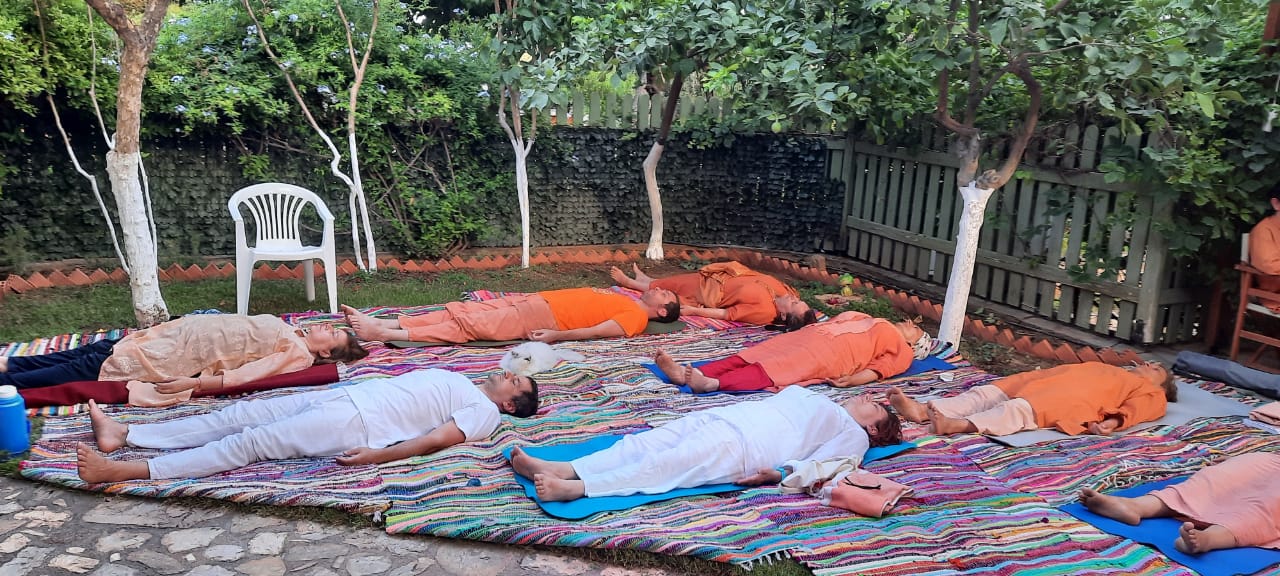
Yoga Nidra is traditionally done in shavasana, the corpse pose, lying on one’s back in a way that the physical body requires the absolute minimum or no effort to maintain the position, and sensory stimulation is reduced. To this end, instructions such as the following are given: allow the legs to rest on the floor slightly apart with the feet loose to the sides and hands at the side of the body with palms facing upwards. 

It is important to find a comfortable and steady position, as in any meditation practice, so that one will not be distracted or extroverted during the practice. This includes the use of a blanket or cushion behind the head or under the knees if needed, and regulating the temperature, lighting and sound in the environment as much as possible. 

If one ignores these factors, the state of pratyahara is likely to be compromised. 

Misusing the practice to induce sleep 

People who have difficultly falling asleep or have insomnia often think yoga nidra is the ideal way to fall asleep, since it helps them to relax and induce the state of pratyahara. However, this is not advisable because one is essentially using the yoga nidra practice to fall unconscious, where as the great potential of this meditation practice is fulfilled when the mind is clear and awake. Using yoga nidra to fall asleep trains the body and mind in this direction, instead of using the state of pratyahara to deepen the awareness. 

Contra-indications 

It should also be noted that people who are suffering from depression, neurosis or psychosis, should not practice yoga nidra without first consulting an experienced yoga teacher. The degree of introversion and the reaction to inner experiences need to be carefully considered and monitored in such cases. 

satyananda yoga logo

Satyanandashram Hellas

Alithias 1, 19002 Paiania, Greece

PO Box 22, 19002 Paiania, Greece

+306947009660

info@satyanandayoga.gr

Paiania Meditation Center

Dimarchou Iona Vore (former Diadochou Konstantinou) 32, 19002 Paiania

+30 210 6641545, 695 6482415

sycp@satyanandayoga.gr

Athens Meditation Center

Simetelou 2, 115 28, Athens

210 3311178, 694 2974467

syca@satyanandayoga.gr

Thessaloniki Meditation Center

Proxenou Koromila 1, 54623 Thessaloniki

+30 2310 283109

sycs@satyanandayoga.gr

The trademark Satyanandashram Hellas CENTER OF YOGA® is a trademark owned by Satyanandashram Hellas, Greece and used with permission.
The term SATYANANDA YOGA® is a trademark owned by IYFM and used with permission.
Satyananda Yoga Nidra® is a registered trademark of IYFM used with permission.

How you can be part of this beautiful community of service

You are welcome to come and unite in our efforts to help us accomplish our aims and goals. Our association needs people who are ready to offer their hearts, their skills and ideas as well as monetary contributions, and to integrate their ‘head, heart and hands’ in service.

If you consider the needs of others, we need you.
If you have a generous heart, we need you.
Ιf you have large hands, we need you.
If you have bright ideas, we need you.

Your contributions allow us to reach out to more and more people. Your contributions enable us to support and work towards the fulfilment of the vision of Swami Satyananda, Swami Niranjanananda and their lineage  that of peace and prosperity for all humankind.

X

Yoga Nidra Meditation: Common Mistakes to Avoid

Yoga Nidra has become a popular practice in our modern age because it is less demanding than asana and pranayama, and an effective way to induce much needed relaxation. In fact, most people think that yoga nidra is just a deep relaxation technique and the well-earned reward at the end of a yoga class. 

Perhaps this is the biggest mistake one could make with yoga nidra – misunderstanding the true value and potential of the practice. 

What is Yoga Nidra Meditation? 

Yoga Nidra is originally a tantric practice, synthesised from different elements by Sri Swami Satyananda Saraswati for modern man. It is a meditation practice with many stages, done lying down, which can lead the practitioner from pratyahara to deep meditation. It is classified as a pratyahara practice, because that is the main emphasis, however, it can deepen even beyond that. 

Pratyahara practices essentially train the awareness to internalise and withdraw the mind from processing all the sensory stimuli that are constantly being received from the external environment through the senses. 

Pratyahara is a natural state that is experienced when we fall asleep. The external activities continue creating sounds, smells etc., but the mind is turned inward and is not registering or processing any sensory input. Pratyahara is the first essential step on the path to meditation, because it is necessary to internalise the awareness to look within at the workings and content of the mind. 

What are the Benefits of Practicing Yoga Nidra Meditation? 

Practicing yoga nidra on a regular basis has multiple benefits. It brings effective relief from physical, mental and emotional tensions. These tensions are stored in the body-mind complex in different ways. Some tensions are more superficial and easier to release, others are deeper in the psyche and more difficult to access and diffuse. 

Relaxation and Stress Relief 

In yoga nidra, the brain waves change from beta (awake, activity) to alpha (relaxed, borderline of sleeping-waking state), and sometimes into theta (light sleep). During the practice, one is moving between these brain wave states and training to maintain awareness in the alpha brain wave frequencies. In this way the body relaxes deeply and the mind also relaxes. As the mind lets go of conscious control, deeper tensions and emotionally charged impressions are able to surface, be witnessed and liberated. This is the secret of success in yoga nidra. 

Improved Sleep Quality 

Sleep quality improves as the body and mind are trained to relax deeper. It is the cumulative effect of regular practice that effects the sleep patterns, and not using yoga nidra as a method to induce sleep, which is a common misuse. 

Reprogramming the Mind 

An important stage in yoga nidra is forming a resolve, (sankalpa), similar to a short positive affirmation said in the present or present continuous tense. Such a statement is repeated mentally when the mind is open, with little resistance, to influence the existing thinking patterns and mental programming. The sankalpa in yoga nidra is a valuable tool to change our perception and re-direct our lives. 

What is the Best Time of the Day to Practice Yoga Nidra? 

Yoga nidra can be practiced at any time of the day. People who use yoga nidra to take a pause in the day, prefer to do it in the afternoon or when coming home from work. Others use it as an aid to relax before sleep at night. Since it is a pratyahara practice, it can also be done in the morning as a meditation. 

Why is Proper Technique Important in Yoga Nidra Meditation? 

As with all yoga practices, straying from the original teachings and technique, compromises the effectiveness and multi-level impact of the practice. Yoga Nidra is comprised of 8-9 stages, which should be practiced in a prescribed way and order. This systematic approach was devised by Sri Swami Satyananda Saraswati from his insight into the human being and how yoga nidra can benefit and expand one’s experience. 

Nowadays, there are many versions of the practice, stages added or missed out, with background music and the teacher lulling the students into a daydream. The experience may be pleasant, but it is no longer a meditation technique. 

What are the Most Common Mistakes You Should Avoid When Practicing Yoga Nidra? 

Rushing the practice

Yoga Nidra has numerous stages and can last from 20-45 minutes depending on which stages are included. It is important to extrovert the awareness properly at the end of the practice and connect with the surroundings, therefore ensure there is sufficient time for that. Rushing the practice will not allow the relaxation to set in and ending the practice in a hurry can leave one disorientated and flustered. 

Expecting immediate results 

Yoga Nidra, as with most yoga practices, yields results over time. Daily or weekly practice trains the body and mind to respond in a certain way. Therefore, be regular with your practice without expectations, and in due course, you will notice the benefits. 

Not finding a comfortable position 

Yoga Nidra is traditionally done in shavasana, the corpse pose, lying on one’s back in a way that the physical body requires the absolute minimum or no effort to maintain the position, and sensory stimulation is reduced. To this end, instructions such as the following are given: allow the legs to rest on the floor slightly apart with the feet loose to the sides and hands at the side of the body with palms facing upwards. 

It is important to find a comfortable and steady position, as in any meditation practice, so that one will not be distracted or extroverted during the practice. This includes the use of a blanket or cushion behind the head or under the knees if needed, and regulating the temperature, lighting and sound in the environment as much as possible. 

If one ignores these factors, the state of pratyahara is likely to be compromised. 

Misusing the practice to induce sleep 

People who have difficultly falling asleep or have insomnia often think yoga nidra is the ideal way to fall asleep, since it helps them to relax and induce the state of pratyahara. However, this is not advisable because one is essentially using the yoga nidra practice to fall unconscious, where as the great potential of this meditation practice is fulfilled when the mind is clear and awake. Using yoga nidra to fall asleep trains the body and mind in this direction, instead of using the state of pratyahara to deepen the awareness. 

Contra-indications 

It should also be noted that people who are suffering from depression, neurosis or psychosis, should not practice yoga nidra without first consulting an experienced yoga teacher. The degree of introversion and the reaction to inner experiences need to be carefully considered and monitored in such cases.