







What are the most common signs of depression to look out for?
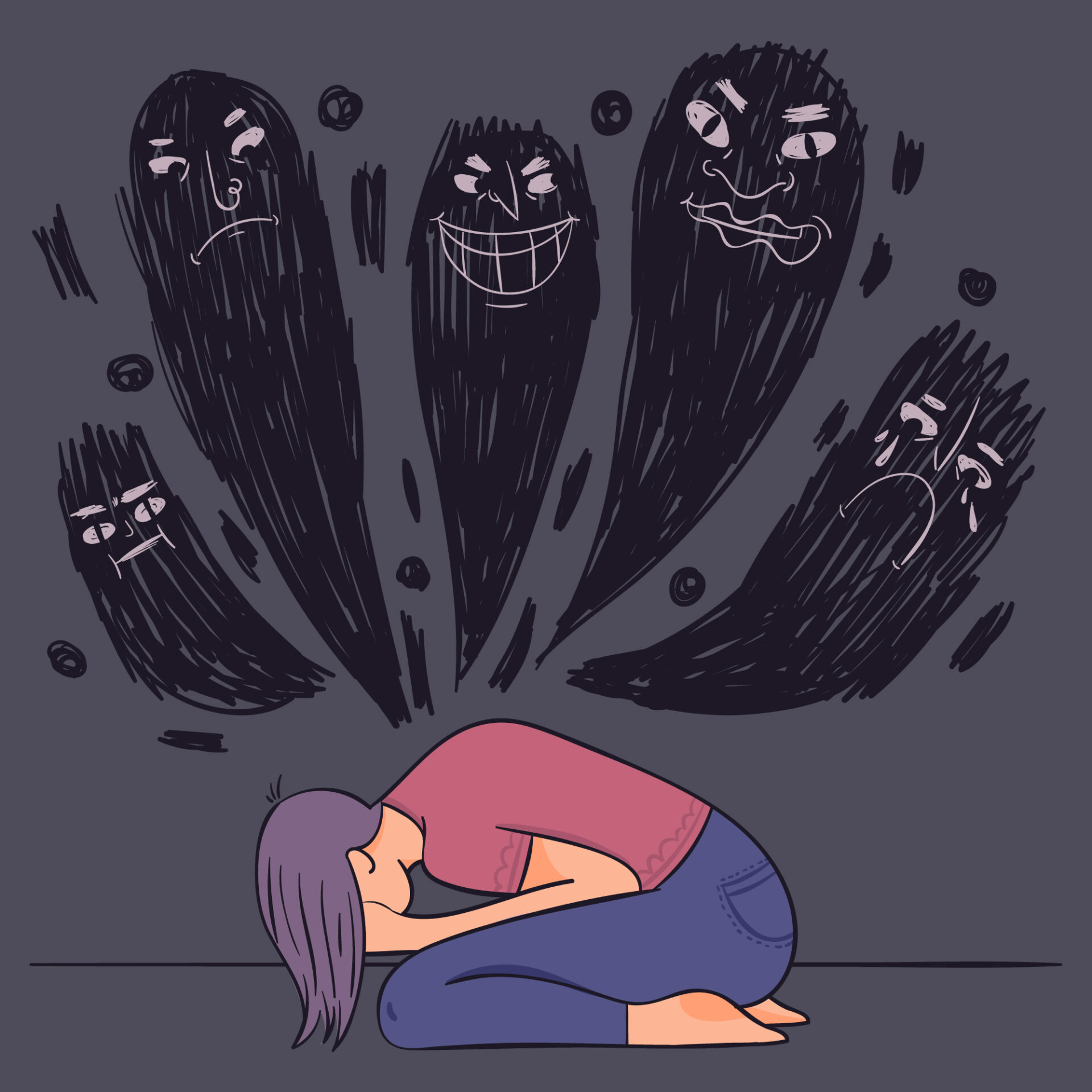
Statistics nowadays suggest that depression is the most common problem encountered in medical practice all around the world regardless of age and gender. The science of yoga explains that depression arises when you have no objectives in life, no aspirations or ambitions. We see this with people who have retired and have no interests or with people who have been unemployed for a long time, or even young people who have been disillusioned with their future.
Depression is insidious and does not appear from one day to the next, but is a build-up of symptoms and conditions. Most people do not know they are depressed. It can also be hard to diagnose by medical practitioners as it may present itself as a physical illness which is difficult to explain.
Dr Swami Karmananda Saraswati, (Dr. Lee Bradley MBBS) lists some of the most common symptoms of depressive illness:[1]
- The person feels completely disconnected from others and thinks no-one understands or cares about how they feel.
- There is a disturbance in sleep patterns, for example, difficulty falling asleep or waking up in the middle of the night and unable to get back to sleep again.
- Lack of energy. A depressed person has very little energy and gets tired very quickly.
- Loss of appetite and weight loss.
- Increased and constant irritability where little unimportant things annoy them or there is a great amount of negativity and criticism towards oneself and others.
- Loss of memory and concentration. The person appears to be a scatter-brain.
- Loss of interest and enthusiasm in life. The depressed person cannot derive pleasure in what they do. Sometimes they neglect their appearance and their home.
- A state of procrastination. Where things keep being put off and small tasks seem impossible to do.
- Excessive worrying and difficulty in making decisions.
- Anxious and agitated.
- Slowness to act, slowness of body movements and speech, known as psycho-motor retardation.
Feelings of self-pity, low-self-esteem and hopelessness may arise as the depression deepens. When there are thoughts of suicide, the person has entered a severe case of depression.
[1] http://www.yogamag.net/archives/1980s/1981/8111/8111depr.html
Why is early recognition of the signs of depression so important?
Early recognition of the signs of depression is critically important, as it can significantly improve outcomes and prevent the condition from escalating. Catching the signs early (see common symptoms above) can allow for intervention before the condition becomes severe and will prevent a person from entering a "downward spiral" of hopelessness and despair, which can make treatment more difficult and the recovery process longer.
How can yoga provide a natural treatment for depression?
“If the modern world does not embrace yoga it will go into civilizational depression.”
This is a quote by the great luminary, Sri Swami Satyananda, who also emphasized that “Serve, Love, Give is the Yoga of the 21st century.”[1] This echoes his guru Sri Swami Sivananda’s timeless message, adapted for the challenges of the 21st century[2].
In essence, Sri Swami Satyananda warned that without integrating yoga as a way of life—not just asana, pranayama and meditation that we do in a yoga class, but also selfless service—our collective civilization risks falling into a kind of deep malaise or “depression.”
What is the role of breathing practices in self-help for depression?
Pranayama, although defined as "breath control" is not really a breathing exercise aimed at bringing more oxygen into the lungs, but in essence, pranayama utilizes breathing to influence, enhance and balance the flow of prana (vital energy) in the nadis (energy channels).
Certain pranayama used to alleviate and manage symptoms
- Nadi shodhana (alternate nostril breathing) is a balancing pranayama, which brings about a calmer, more peaceful state of mind. This is a good pranayama to start with when working with depression.
- Brahmari (humming bee breath) relieves stress and cerebral tension, alleviating anger, anxiety and insomnia. Soothes the mind and nervous system.
- Ujjayi pranayama (psychic breath) is a tranquillizing pranayama. Although it may seem that people with depression do not need tranquillizing, it is often noted that they will experience agitated states, for example, panic attacks. Ujjayi can be practiced anywhere, at any time, whether you are standing, sitting or lying down and has an immediate effect on soothing and relaxing a person experiencing distress and anxiety.
- Bhastrika (bellows breath) and kapalbhati (frontal brain cleansing) are vitalizing pranayamas which raise your energy levels quickly and at will, eliminating lethargy, procrastination and inertia.
- Agnisara Kriya (cleansing with the essence of fire). Beginners may find this practice difficult at first and will get tired as they need to contract and expand the abdominal muscles rapidly. The benefits, however, are enormous once it is mastered. The energy level is raised significantly alleviating depression, dullness and lethargy.
[1] https://rikhiapeeth.in/satsang-rikhiapeeth/serve-love-give-the-yoga-of-the-21st-century/?utm_
[2] rikhiapeeth.incognitiveyogaacademy.com
What yoga poses are most effective in learning how to stop depression?
Like with any health condition, yoga science focuses on unblocking the flow of prana in the individual. Hatha yoga practices aim to balance the two energy flows (ida and pingala nadis) so that health and happiness can be restored. Here the pingala nadi or masculine energy (representing the sun and the physical body) and the ida nadi or the feminine energy (representing the moon and the mental body) are worked on through bodily detoxes and physical postures.
- shatkarmas (the cleansing practices) will increase energy in the body and the mind when removing toxins from the body.
- jihva dhautior jihva shodhan (tongue cleaning)
- jala neti (nasal cleansing). In the case of depression, using a cool saline solution, rather than the normal warm solution is recommended. The mild shock to the system of the cool saline water has an awakening effect on the brain.
- kunjal kriya(stomach cleansing). Here you drink six glasses of warm saline water and immediately regurgitate it. On a physical level, kunjal cleanses the stomach but on the energetic and emotional levels, it removes the energetic blocks which have formed because we have continued to repress painful emotions. Unexpressed anger over a long period of time can cause depression, and Swami Satyaprakash Saraswati states in an article on Yoga for the Management of Depression[1] that kunjal kriya works in a similar way to some psychotherapies such as the Gestalt therapy, which enables the individual to externalize previously unexpressed anger. She underlines that kunjal has the advantage of bypassing cognition, and is quite successful for people who resist (or cannot afford) psychotherapy.
- laghoo shankhaprakshalana (short intestinal wash) boosts healthy functioning of the intestines. Your gut and brain are linked through the vagus nerve, through hormones and neurotransmitters, which means that whatever is happening in the gut affects our mood and attitude, and vice versa. Also, interesting to note is that about 90–95% of the body’s serotonin (a mood-regulating neurotransmitter) is made in the gut, where it regulates bowel movements. Studies show that constipation is more frequent in depressed individuals than in the general population. Just as depression can slow the gut, chronic constipation can worsen depression. This is because an unhealthy gut microbiome and retained toxins can reduce serotonin production and increase inflammation, which feeds back into mood disorders. On top of this, many antidepressants (especially SSRIs, SNRIs, and tricyclics) can cause constipation as a side effect.
- Asana (physical postures). When dealing with depression, it is the dynamic asanas that will mitigate the depressed mood through working on the endocrine system, especially the adrenal glands which secrete cortisol, adrenaline and noradrenaline as well as DHEA and other steroids. As a result, energy is boosted, mood improves, and resilience is enhanced.
Appropriate asanas need to be chosen depending on the fitness and age of the person. Begin with gentle asanas and gradually build up to the more energetic ones.
- Pawanmuktasana part I releases blocked energy from joints and Pawanmuktasana part II eliminates energy blockages in the abdominal region strengthening will-power, self-esteem and vitality while the shakti bandha series improves energy flow throughout entire body and strengthens the
- Trikonasana (triangle pose) is a dynamic posture increasing flexibility and strength alleviating nervous depression. Vajrasana (thunderbolt pose) relieves depression symptoms by calming the nervous system, enhancing gut health, and creating a stable mental state. Shashankasana (moon pose) stimulates adrenal glands.
- Strong backward-bending asanas: bhujangasana (cobra pose), shashank-bhujangasana (striking cobra pose), ushtrasana (camel pose) and dhanurasana (bow pose), as well as
- deep forward bending poses: paschimottanasana (back stretching pose) and yoga mudra (attitude of psychic union), relieve anger and tension and awaken manipura chakra, boosting vitality, self-confidence and will-power.
- Inverted poses: sarvangasana (shoulder stand pose) balances the nervous system and relieves mental and emotional stress, halasana (plough pose), druta halasana (dynamic plough pose), matsyasana (fish pose) has similar effects.
- The sequence surya namaskara done at a fast pace is invigorating and balancing.
[1] http://www.yogamag.net/archives/2000s/2000/0009/0009ymd.html
How do bandhas mitigate depression?
Sri Swami Satyananda Saraswati called depression “psychic constipation”[1]; a blockage of energy flow and marked that the lower chakras hold most of this blockage. Feelings like dread of the future are tied to the mooladhara chakra. Other symptoms like dejection or loss of joy arise from underactive energy in lower chakras of swadhisthana or manipura.
He recommended:
- Moola bandha (perineum contraction) is central to mind and emotional wellbeing. Unmanaged feelings rooted in the mooladhara region can contribute significantly to depressive states.
- Uddiyana bandha (abdominal contraction) is a panacea for the abdomen as it stimulates and strengthens all the organs as well as balancing the adrenal glands which play a crucial role in depression. Lethargy is removed and anxiety and tension are alleviated.
Can meditation be an effective treatment for depression?
A depressed person might turn to meditation to help them deal with their condition, but ideally it is more effective if the person first does the hatha yoga practices (cleansing techniques, asana and pranayama) and then a systematic relaxation practice such as a 30-minute yoga nidra or shorter relaxation practices such as, a yoga nap or long shavasana, allowing the physical body and muscles to relax and the mind to rest. After a yoga nidra session one feels rejuvenated and refreshed. The next step is then to move into a meditation practice.
Some recommended practices are:
- antar mouna: the practitioner observes the activities of the mind giving them insight into the cause of their depression and enabling them to uproot it.
- tratak: (candle flame gazing). Because depression is often tied to overactivity of the “default mode network” (rumination and repetitive negative thinking) trataka trains in one-pointed concentration, reducing mental restlessness and intrusive thoughts. The steady flame acts as a “mind anchor,” shifting brain activity toward calm focus.
Can yoga be combined with medical treatment for depression?
While the above yogic practices can be very beneficial for mental health, it is important to remember that they are complementary therapies. They should not replace professional medical advice or treatment for clinical depression but they can be combined with medical treatment to enhance it.
What daily practices can you adopt as self-help for depression?
Since most people with depression lack motivation, it is, at first, challenging for them to begin a daily routine. One way of overcoming this is to join a yoga class where you come into contact with others. This will definitely increase motivation and support and have you experiencing the immediate benefits of yoga. Once you see the benefits, motivation to turn up to the class multiplies. It is a virtuous cycle.
Start with gentle practices beginner-level asanas and guided pranayama combining it with relaxation and yoga nidra for an integrated mind-body balance. Then gradually incorporate the above practices mentioned in the article. Ideally, learn under expert guidance, as these subtle-energy practices can be potent and require safe structuring.
You can also download the Bihar School app (https://www.biharyoga.net/apps.php) onto your mobile phone for free, and choose to do a yogic capsule (a small set of yoga practices) designed by Swami Niranjanananda Saraswati. The yogic capsules include:
- total wellbeing
- stress buster
- high blood pressure buster
- obsessions and anxiety
- insomnia