





The benefits of meditation practice  

Meditation practice is essential in our lives as it brings about numerous laudable benefits which doctors and researchers continue to tell us about. But from a spiritual perspective, and most importantly, meditation practice increases our self-awareness. In Satyananda Yoga awareness carries a special significance and is emphasized in all yogic practices. Awareness means the ability to witness and observe one’s mental, emotional and physical activities. If you are aware, then you are a spectator of what is going on both inside and outside of you.  This begins the art and practice of meditation.  


During meditation one observes the coming and going of thoughts and feelings without judging or analyzing them.  Implicit in this process is acceptance of whatever arises, even so called bad or negative thoughts and feelings.  All is accepted equally without judgement. In this state of awareness one is the observer, the act of observing, and the object of observation, simultaneously.  One transcends the limitations of the known mind, and experiences another dimension and comprehension of reality.  


As a consequence, we can develop a deeper understanding of ourselves and increase our ability to witness and detach ourselves from the stressors of life leading to a greater sense of peace and contentment. We can also begin to be aware of others and our essential relationship with all creation; and it is this sense of underlying unity which leads to a greater compassion and understanding of others and the purpose of life. In this article we will learn more about the benefits of meditation, as well as some tips on how to do meditation.  

The spiritual benefits of meditation include; 

  • Enhances self-awareness and introspection  
  • Supports personal growth and spiritual development, cultivates a deeper connection with oneself and the world around you. 

The psychological benefits of meditation include;

  • Increases positive emotions and reduces negative ones. Consequently, it boosts one’s mood and emotional well-being 
  • Helps calm the mind and body, thereby reducing stress and anxiety 
  • Increases feelings of kindness and understanding towards oneself and others, increasing ones’ compassion and empathy 
  • Regular meditation enhances concentration and mental clarity. 

The physical benefits of meditation include; 

  • Meditation is scientifically linked to lower blood pressure, reduced chronic pain, and a stronger immune system. 
  • Regular meditation improves sleep hygiene, thereby improving the quality of one’s sleep 
  • Meditation has been shown to stimulate changes in the brain known as neuroplasticity and it increases gray matter in areas of the brain associated with attention, emotion regulation, and memory.  
  • Meditation slows the aging process and has been linked to increased telomerase activity. Telomeres are strands of DNA that protect the ends of chromosomes from deterioration and play a vital role in helping to protect against cellular aging. 

How to do meditation: 5 easy tips for beginners  

If you are new to the meditation practice, here are some tips on meditation for beginners.
 

  1. Choose a clean quiet space where you won’t be interrupted, remember to put your phone on silent or airplane mode if you are using an app or guided meditation. 
  2. Don’t be hard on yourself and begin the practice with no expectations just ‘be’. One can start by grounding oneself in the physical body by practicing kaya sthairyam (body stillness), ensure the spine is upright and straight and the eyes are closed, this helps with introversion. Also , do not force yourself to sit cross-legged on the floor, but rather choose an armchair, use cushions and other props to ensure you feel as comfortable and supported as possible. 
  3. When distractions arise such as thoughts or feelings return your awareness back to the present moment. Becoming aware of ones’ breath is a very good way to return into the present moment.  When our breathing is slow and deep our mind becomes more relaxed whereas when our breathing is fast and shallow, our mind is agitated. In meditation we are trying to slow the breath down, deepen the breath, and ideally, breath with ujjayi pranayama (the psychic breath). This pranayama helps calm the mind and prepares one for meditation. 
  4. Remember, meditation is a practice, and consistency is the key. Start small and be patient with yourself as you develop this powerful habit. Start small, even  five minutes a day is beneficial. Then build up the time you meditate gradually. Better to meditate every day for a little time than for an hour one day, and then nothing the next week.
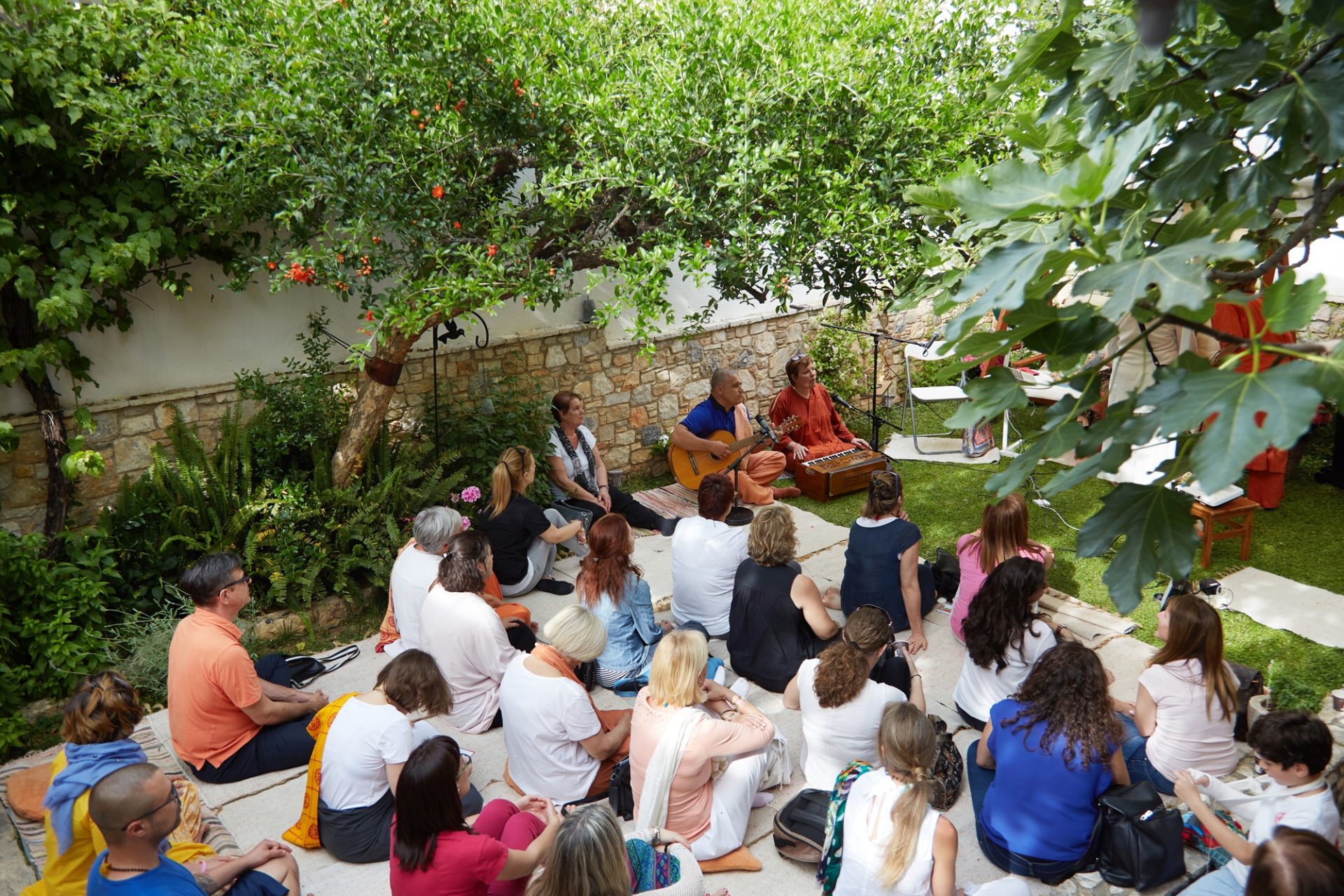
  5. Attend meditation classes. These can be either in a classroom or online. Meditating with others brings about a sense of union and being part of a community. In a class, you can discuss with your teacher whether you are ready to use guided meditation recordings at home.  

Where can you learn more about meditation practice? 

In an ashram you are able to learn how to apply meditation principles 24 hours a day. Meditation is a journey from the conscious mind into the subconscious mind and then into the unconscious mind, fully awakening your awareness as you go through the different areas of the mind until you are fully aware of the totality of the mind. This takes time and it is important that meditation practices are learnt from an experienced yoga instructor at the beginning if you truly would like to reap the many benefits it brings. 


Satyanandashram Hellas has a number of experienced Satyananda Yoga instructors at the ashram who are available to teach meditation practices. Please contact us at info@satyanandayoga.gr  for more information.

satyananda yoga logo

Satyanandashram Hellas

Alithias 1, 19002 Paiania, Greece

PO Box 22, 19002 Paiania, Greece

+306947009660

info@satyanandayoga.gr

Paiania Meditation Center

Dimarchou Iona Vore (former Diadochou Konstantinou) 32, 19002 Paiania

+30 210 6641545, 695 6482415

sycp@satyanandayoga.gr

Athens Meditation Center

Simetelou 2, 115 28, Athens

210 3311178, 694 2974467

syca@satyanandayoga.gr

Thessaloniki Meditation Center

Proxenou Koromila 1, 54623 Thessaloniki

+30 2310 283109

sycs@satyanandayoga.gr

The trademark Satyanandashram Hellas CENTER OF YOGA® is a trademark owned by Satyanandashram Hellas, Greece and used with permission.
The term SATYANANDA YOGA® is a trademark owned by IYFM and used with permission.
Satyananda Yoga Nidra® is a registered trademark of IYFM used with permission.

How you can be part of this beautiful community of service

You are welcome to come and unite in our efforts to help us accomplish our aims and goals. Our association needs people who are ready to offer their hearts, their skills and ideas as well as monetary contributions, and to integrate their ‘head, heart and hands’ in service.

If you consider the needs of others, we need you.
If you have a generous heart, we need you.
Ιf you have large hands, we need you.
If you have bright ideas, we need you.

Your contributions allow us to reach out to more and more people. Your contributions enable us to support and work towards the fulfilment of the vision of Swami Satyananda, Swami Niranjanananda and their lineage  that of peace and prosperity for all humankind.

X

Meditation for Beginners: 5 Easy Tips to Follow

The benefits of meditation practice  

Meditation practice is essential in our lives as it brings about numerous laudable benefits which doctors and researchers continue to tell us about. But from a spiritual perspective, and most importantly, meditation practice increases our self-awareness. In Satyananda Yoga awareness carries a special significance and is emphasized in all yogic practices. Awareness means the ability to witness and observe one’s mental, emotional and physical activities. If you are aware, then you are a spectator of what is going on both inside and outside of you.  This begins the art and practice of meditation.  


During meditation one observes the coming and going of thoughts and feelings without judging or analyzing them.  Implicit in this process is acceptance of whatever arises, even so called bad or negative thoughts and feelings.  All is accepted equally without judgement. In this state of awareness one is the observer, the act of observing, and the object of observation, simultaneously.  One transcends the limitations of the known mind, and experiences another dimension and comprehension of reality.  


As a consequence, we can develop a deeper understanding of ourselves and increase our ability to witness and detach ourselves from the stressors of life leading to a greater sense of peace and contentment. We can also begin to be aware of others and our essential relationship with all creation; and it is this sense of underlying unity which leads to a greater compassion and understanding of others and the purpose of life. In this article we will learn more about the benefits of meditation, as well as some tips on how to do meditation.  

The spiritual benefits of meditation include; 

  • Enhances self-awareness and introspection  
  • Supports personal growth and spiritual development, cultivates a deeper connection with oneself and the world around you. 

The psychological benefits of meditation include;

  • Increases positive emotions and reduces negative ones. Consequently, it boosts one's mood and emotional well-being 
  • Helps calm the mind and body, thereby reducing stress and anxiety 
  • Increases feelings of kindness and understanding towards oneself and others, increasing ones’ compassion and empathy 
  • Regular meditation enhances concentration and mental clarity. 

The physical benefits of meditation include; 

  • Meditation is scientifically linked to lower blood pressure, reduced chronic pain, and a stronger immune system. 
  • Regular meditation improves sleep hygiene, thereby improving the quality of one's sleep 
  • Meditation has been shown to stimulate changes in the brain known as neuroplasticity and it increases gray matter in areas of the brain associated with attention, emotion regulation, and memory.  
  • Meditation slows the aging process and has been linked to increased telomerase activity. Telomeres are strands of DNA that protect the ends of chromosomes from deterioration and play a vital role in helping to protect against cellular aging. 

How to do meditation: 5 easy tips for beginners  

If you are new to the meditation practice, here are some tips on meditation for beginners.
 

  1. Choose a clean quiet space where you won’t be interrupted, remember to put your phone on silent or airplane mode if you are using an app or guided meditation. 
  2. Don’t be hard on yourself and begin the practice with no expectations just ‘be’. One can start by grounding oneself in the physical body by practicing kaya sthairyam (body stillness), ensure the spine is upright and straight and the eyes are closed, this helps with introversion. Also , do not force yourself to sit cross-legged on the floor, but rather choose an armchair, use cushions and other props to ensure you feel as comfortable and supported as possible. 
  3. When distractions arise such as thoughts or feelings return your awareness back to the present moment. Becoming aware of ones’ breath is a very good way to return into the present moment.  When our breathing is slow and deep our mind becomes more relaxed whereas when our breathing is fast and shallow, our mind is agitated. In meditation we are trying to slow the breath down, deepen the breath, and ideally, breath with ujjayi pranayama (the psychic breath). This pranayama helps calm the mind and prepares one for meditation. 
  4. Remember, meditation is a practice, and consistency is the key. Start small and be patient with yourself as you develop this powerful habit. Start small, even  five minutes a day is beneficial. Then build up the time you meditate gradually. Better to meditate every day for a little time than for an hour one day, and then nothing the next week.
  5. Attend meditation classes. These can be either in a classroom or online. Meditating with others brings about a sense of union and being part of a community. In a class, you can discuss with your teacher whether you are ready to use guided meditation recordings at home.  

Where can you learn more about meditation practice? 

In an ashram you are able to learn how to apply meditation principles 24 hours a day. Meditation is a journey from the conscious mind into the subconscious mind and then into the unconscious mind, fully awakening your awareness as you go through the different areas of the mind until you are fully aware of the totality of the mind. This takes time and it is important that meditation practices are learnt from an experienced yoga instructor at the beginning if you truly would like to reap the many benefits it brings. 


Satyanandashram Hellas has a number of experienced Satyananda Yoga instructors at the ashram who are available to teach meditation practices. Please contact us at info@satyanandayoga.gr  for more information.