




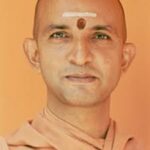




Living a yogic lifestyle enables us to expand our awareness in our daily life. We live more consciously. As our awareness increases, we can manage our thoughts and emotions and we become wiser, (not intelligent). We connect with the innate wisdom within, like our innate happiness. Living with awareness gives meaning and fulfilment to our lives. It spiritualises our life.
Swami Sivamurti Saraswati[1]
Satyananadashram Hellas is nestled at the foothills of Mount Hymettos in the prefecture of Paiania. The surrounding landscape is both diverse and attractive with green valleys, high cliffs and limestone caves. The area is steeped in history with Byzantine monasteries and remnants of ancient civilisation. In fact, it is thought that here was the birth place of the greatest philosopher of ancient Greece, Socrates [469-399BCE]. The ashram itself is said to once have been a sanctuary where the esoteric Dionysian mysteries were taught. Today we commonly associate the god Dionysus with wine and drunkenness, extreme rituals and frenzy, but this was not the association in ancient Greece. The Dionysian mysteries were teachings closely linked to yogic thought and esoteric knowledge. Dionysus' counterpart in yoga and tantra is Shiva and the energies, symbols and bhakti practices associated with both gods are very similar.
Swami Sivamurti Saraswati, Yoga Acharya(Master of Yoga),had brought the teachings of her guru to Greece in 1977, and after traveling all around the country she was instructed by Sri Swami Satyananda to establish an ashram near Athens. Having scoured the land to find the perfect spot, she came across an abandoned plot of land that had a dilapidated building on it and was in disarray with numerous peacocks roaming there. Today one sees the stunning transformation which is now Satyanandashram Hellas.
Inaugurated by Sri Swami Satyananda Saraswati in 1985, he named it the "True – Bliss Ashram, Satyanandashram.” Sri Swamiji said that he envisioned a place where, “People could work together and live together with a spirit of utter selflessness.”
Upon entering the large central gate of the ashram, one encounters a hidden paradise with gardens surrounded by tall pine, eucalyptus, and olive trees. Many of the stone buildings are covered with pink and fuchsia bougainvillea vines and white jasmine, reminiscent of an island in the Aegean Sea. All the areas have been built with love, care and attention to every detail, and the peacocks are still there roaming freely.
The Satyananda Yoga tradition aims to make yoga a world culture and for this reason ashrams play a vital role. Students of this tradition move gradually through four stages :
- yoga practice: This is when the student goes to their regular yoga class and practices asana, pranayama, mudra, bandha, relaxation techniques and meditation.
- yoga sadhana: Here, the student desires to go deeper into yoga and requests from the yoga master a specific practice they will do on a regular basis for a period of time to fulfill a certain goal (e.g restore health, improve mental clarity, manage emotions, boost confidence etc.)
- Yogic lifestyle: One begins to experience a yogic lifestyle by visiting the ashram and becomes part of a spiritual community where the teachings of yoga are imbibed. Living like a yogi, expanding one's awareness and cultivating yogic principles are the aims of the ashram life experience after which one takes these experiences home with them and implements them into their daily life.
- Yogic culture: At this final transitional stage, yoga flows through the practitioner as it has become an integral part of their life. Here one contributes to a global culture of peace and understanding, of unity and respect for all beings.
Satyanandashram Hellas is a non-profit organization whose aim is to spread Satyananda Yoga within Greece, as well as support the philanthropic work of Satyananda Math – Amba. Run by seva yogis (volunteers) in the spirit of seva yoga (offering one’s time and energy for the benefit of others), the ashram focuses on many branches of yoga ,with the main one being karma yoga (efficiency in action performed with self-awareness and without attachment or expectations to the activity or results from the actions). The ashram welcomes and unites all people regardless of age, race, gender, class or creed. Being part of an international Satyananda Yoga family, it hosts people from all over the world.

What is an ashram?
The ashram culture dates back to antiquity in India, and was developed to deal with the rajasic nature (being dynamic and creative with full ego involvement) and the tamasic nature (inertia, laziness, ignorance and mental darkness) of humans. Ashrams were managed by rishis and sages who were people of great vision, and who realized that these rajasic and tamasic natures needed to be contained and transformed in order to create an ideal society.
Even though one finds traces of ashram life in many other ancient civilizations, it was the Sannyasins that kept ashrams alive in India. Sannyasins are people who have dedicated themselves to a particular cause, completely renouncing the world, its possessions and attachments. But not everyone could become a renunciate. So, the ashram was a place that offered the experience of living a Sannyasin lifestyle for a short period of time. People from all walks of life, social status and religious beliefs came to live a very simple life and to live selflessly with a view to transforming their personality. Sri Swami Satyananda talks about his guru's ashram, the Sivananda ashram in Rishikesh, in the 1940's, when he resided there. He says that minimal possessions were kept, people slept on the floor, there was no money or valuables, and they ate only once a day. After a few weeks, they would return home to their normal life and find that they were able to see the world from a better perspective and manage their life more efficiently.[2]
So, the purpose of ashram life was to create an environment where everybody lived and worked together to accelerate their spiritual growth. The ashram continues to play this important role in the twenty first century and is more pertinent than ever, as our modern civilization is one where people tend to feel more and more isolated, disconnected and powerless. The ashram today offers one peace of mind, resilience, unity and connection to a spiritual source, and a chance to awaken one's dormant potential.
How does living in an ashram benefit your well-being?
Asham is made up of two syllables: a-, means 'towards' and
-shram which means 'to work hard'. Sri Swami Satyananda explained that
ashrams were developed as a place where one works hard on two fronts; externally and internally by practicing seva yoga (selfless service) and karma yoga which is action performed with meditative awareness for the welfare of others without attachment to the fruit of one's action.Externally, you are engaged in a physical activity; chopping vegetables in the kitchen, planting in the field, cleaning or gardening which keeps the mind engaged in an activity rather than be dissipated. The physical work helps relax tensions and minimize passions and addictions. Simultaneously, you are working internally. This means you are observing your inner world and as a result learning to manage the mind and certain emotions such as anxiety, anguish, depression, competition, jealousy, anger, fear, guilt, shame etc. Karma yoga purifies both the body and the mind, which then leads to spiritual evolution.
Sri Swamiji says that a person who has no control over his/her mind will not be able to handle daily events or relationships with others. "Mental control is not suppression. The mind has to be educated; it has to be properly enlightened. That is the role of the ashram in your life." [3]
Sri Swamiji had opened up many ashrams around the world and he had this to say about them:
" I think everyone who comes to the ashram is benefited. Even if one derives minimal benefits, it is worth it. There is no negative effect from approaching life in an ashram. There is, of course, only one point that we have to take care of. We must remember that the ashram and our home are two different situations."[4]
Improved mental clarity and focus
One of the main attributes you need to work on to acquire peace of mind and to progress spiritually is to cultivate anasakti described in the Bhagavad Gita. In English it is translated as non-attachment or dispassion. At first one might think that it means "not caring" or being "cold and distant". In fact, it brings about the exact opposite. Sri Swami Satyananda has said that
"…in the ashram you learn to love, serve, work and enjoy without any attachment. Love without attachment is a very difficult idea to understand, but when you live in the ashram in an atmosphere of peace, tranquility and friendliness, you know how to manage and live with people without involving yourself in complicated relationships."[5]
Through the practice of karma yoga, one cultivates anasakti as well as other disciplines such as absorbing oneself in the present moment, sharpening one's focus, expanding awareness of what is going on inside you and in your external environment which leads to higher states of consciousness and understanding.
Emotional benefits
Through the practice of seva yoga we discover the deep facets of our personality and learn how to deal with ourselves, other people and different situations whilst simultaneously being active and efficient in life. For example, samskaras (past impressions, memories, emotions, deep-rooted complexes that have been suppressed) will come to the surface, and it is at the ashram where one has the opportunity to confront and deal with them appropriately. In normal life this rarely happens because there are so many distractions, and objects of sensual pleasure which prevent us from distinguishing our fears, insecurities, negativity, greed, jealousies, arrogance and infatuations, and so they remain suppressed which then magnify causing us pain and suffering.
By working together with other people as a spiritual community, serving others in a selfless way and practicing non-attachment, one develops immunity to negativity, establishing a state of equilibrium and peace within oneself.
At the ashram, one is instructed to be aware of their negative thoughts and emotions and to consciously and regularly transform them into positive ones by practicing an ancient technique mentioned in Patanjali's Yoga Sutras known as Pratipaksha Bhavana[6]. The results are indeed impressive as a person begins to notice the negative programing of their mind and change it willfully.
Swami Sivamurti explains that at an ashram , we have to work with others which brings us face to face with questions such as : "Why don't I like this person? Is there something inside me which disturbs me and I see it in the other person? Is that person's behaviour reflected in me?" Working with others is a training ground at the ashram, where you are guided to observe the obstacles the mind brings up. If you can attain a state of being non- reactive to a person or situation (without suppressing any emotion), then you have become the master of your mind."[7]

How to choose the right ashram in Europe?
There are a great number of ashrams in Europe that offer a variety of yoga courses some of which are connected to traditional ashrams in India while others are quite modern and run by organizations ranging from total luxury to plain and simple.
Key factors to consider:
Sri Swami Satyananda talked extensively about the importance of ashrams and what they ought to offer. He mentioned specifically that;
- An ashram is not a hotel or spa where one comes to relax and be looked after nor is it a monastery where one adheres to very strict religious rules.
- Ashrams should not be too big, where one feels lost but rather there needs to be direct contact between the teacher and the student.
- In ashram life, everybody is a participant, and not a guest. An ashram is not just an institution run by a board of directors. Anybody who wants to participate in the ashram belongs to the ashram, and the ashram belongs to him. Participation in ashram life is without a selfish motive. Therefore, whatever you do in the ashram in the form of participation needs to be selfless service. [8]
Choosing an ashram that is right for you will depend on your personal goals and your intention. However, it is important to listen to the wise words of great yogis who know the true essence of an ashram. One such great master is Sri Swami Sivananda Saraswati (1887-1963), who trained hundreds of the world's greatest yogis and left an invaluable legacy of yogic teachings. He says,
"An ashram is a glorious centre to ensure world peace. Spiritual organizations with high aims and objectives should be started only by self-realized persons who are absolutely free, perfect and unselfish. If they are started by selfish people, they become fighting centres and a menace to society and bring ruin to those who are associated with them..…Many enthusiastic people start ashrams with a fine letterhead. That is not enough. It needs special faculties to run an ashram successfully. The founders must have an extraordinary capacity to serve mankind. Then and then alone can real service be done at all times. The head of the ashram and the inmates should lead a life of vairagya, absolute renunciation. The ashram run by such people stands as a centre, a nucleus of perennial peace, bliss and joy. It attracts everyone. Millions all over the world derive inspiration. The world is always in need of such ashrams. People come with many motives (such as attaining material and spiritual benefits) and they are all stunned to have their wishes fulfilled in large measure. "[9]
What to expect from an ashram experience?
The running of an ashram is based on various types of discipline, whereby one foregoes the comforts of everyday life. In this way, the ashram creates situations for personal growth and accelerates one’s spiritual evolution.
An ashram is not an escape from one’s reality. On the contrary, it is a spiritually charged environment where one comes face to face with their own nature. Personal sadhana is practiced as it is the way to connect with the inner self and begin to gain a better understanding of who we truly are.
In an ashram, mouna (remaining silent for a specified period of time) is commonly practiced. Through externalizing less, and internalizing more, we become more in tune with how we feel and think in an effort to understand ourselves better.
Here, one wakes up before sunrise and rests by sunset. In this way, one becomes aligned with the rhythms of nature, which help to keep the body and mind healthy.
Ashram food is simple, fresh and sattwic. Sattvic foods are light on the body, but provide energy, vitality and have a calming effect on our minds.
The daily routine, disciplines and practices within the ashram help to free one from what is unnecessary and restrictive in one's own inner and outer life. As a result, the experience of contentment, balance and harmony dawns. One connects to the strengths and the happiness that lie within, and as these qualities are enhanced, one is able to live a life full of purpose, with clarity, creativity and positivity.
Ashram Programs at Satyanandashram Hellas
Programs in the ashram are varied and include core practices of the Satyananda System of Yoga such as, Satyananda Yoga Nidra®, Ajapa Japa, Antar Mouna, Chidakasha Dharana, Tattwa Shuddhi, Kriya yoga and Antar Darshan. Emphasis is on learning and living yoga on a daily basis, and putting into practice the principles, disciplines, techniques and philosophy found in the various branches of yoga (hatha, bhakti, nada ,raja and gurukul for children and adolescents).
Structured courses are also available ranging from weekend to weekly, monthly, three- monthly and nine-monthly stays. Traditional celebrations such as Guru Poornima, Maha Shivaratri, Navaratri, Diwali, as well as Christmas, New Year and Easter are all very much part of ashram life together with kirtan, havan and chanting, shatkarmas, Seva and Karma Yoga.
The ashram also caters for those simply wishing to come and join in the various activities and experience a yogic lifestyle in an ashram.
The programs are conducted by the Acharya (Swami Sivamurti) and resident teachers, some of whom have been teaching and living in the ashram for over 25 years, as well as by outside teachers and guest Acharyas from abroad.
The current focus on ashram programs is the Ashram Culture programs (in cooperation with the Hellenic Teachers Union) whose vision is to inspire and deepen the connection of the teachers with the Parampara as well as deepen both students’ and teachers’ experience in living a yogic lifestyle.
[1] Online Women's Yoga Seminar, 6th November,2021
[2] Swami Satyananda Saraswati, Ashram Life, November 1985, Ganga Darshan
http://www.yogamag.net/archives/2000s/2008/0802/0802asli.html
[3] Swami Satyananda Saraswati, Ashram Life, November 1985, Ganga Darshan
http://www.yogamag.net/archives/2000s/2008/0802/0802asli.html
[4]Swami Satyananda Saraswati, Ashram Life, September 1980, Switzerland
http://www.yogamag.net/archives/2000s/2008/0802/0802asli.html
[5] Swami Satyananda Saraswati, Ashram Life, Switzerland, September 1981
http://www.yogamag.net/archives/2000s/2008/0802/0802asli.html
[6] Swami Satyananda Saraswati,Four Chapters on Freedom,Commentary on the Yoga Sutras of Patanjali, Yoga Publications Trust, Munger, India, 2000, pp.96-97
[7] Swami Sivamurti Saraswati, lecture at Satyanandashram Hellas, Teacher Training Course, August, 2010
[8] Swami Satyananda Saraswati - Yoga Today , Satsang given at Satyananda Ashram, Paris, on 17th September
http://www.yogamag.net/archives/1980s/1980/8004/8004ygtd.html
[9] Swami Sivananda Saraswati, The Essence of the Ashram From the teachings of Swami Sivananda Saraswati
http://www.yogamag.net/archives/2000s/2008/0802/0802essa.html