
The simplest definition of pranayama is breath control. Naturally this definition does not really expound on the depth of the meaning of pranayama. When practicing pranayama, you regulate the  prana (vital force) within you and distribute it to different levels of your being.  The various techniques of pranayama involve influencing the breath and directing the flow of prana along the nadis or energy circuits of the pranamaya kosha otherwise known as the energy body  which pervades our entire physical body. Pranayama enhances and strengthens our energy body which in turn is responsible for the health and well-being of our physical body and all its systems. 

Pre-pranayama practices:  Breath awareness 

Before beginning pranayama breathing techniques, you need to first observe and become familiar with the way you breath. For example, do you usually breathe with your mouth open or closed? Is your breath shallow and fast or do you breathe deeply and more rhythmically? Do you breathe gently or is it intense? Do you have difficulty exhaling? It is surprising how so many people are not at all aware of how they breathe. Understanding the entire breathing process is also necessary. Feeling the breath move in and out of the nostrils, through the trachea down into the lungs and then being expelled will create a deeper connection with our breath.  Then certain practices are to strengthen the different groups of muscles involved in breathing more efficiently such as the abdominal muscles, the diaphragm muscle, the intercoastal muscles (located in the rib cage). So, before moving into pranayama, we need to prepare ourselves and recognise all these aspects of the breath and the breathing process.

Why is breathing important for mental and physical well-being?

Slow conscious breathing has an emotionally calming and soothing effect on the mind. The rhythm of the breath is very important and has a direct effect on both the mind and our emotions. For example, a smooth, slow rhythm usually indicates a relaxed state of body and mind. Irregular breathing usually indicates tension. When someone is experiencing anxiety, the breath is shallow and rapid; in anger the breath is short, punctuated and forceful; in grief the breath is arrhythmic and gasping for air and in depression heavy sighing is a feature of one’s breath. Regular and relaxed breathing induces calmness and integration of the body’s natural rhythms and biological processes so that they work in unison.

1. Bhramari pranayama: the humming of the black bee

This is a beautiful tranquilizing technique which has many stages and variations. It soothes the mind and the nervous system, relieves stress, anxiety and insomnia, enhances memory and concentration. As you focus on the humming sound in different parts of the body it induces a meditative state by harmonizing the mind and directing the awareness inwards. It is also used to speed up healing of body tissue after surgery and is helpful during pregnancy and child birth.

How to practice Bhramari

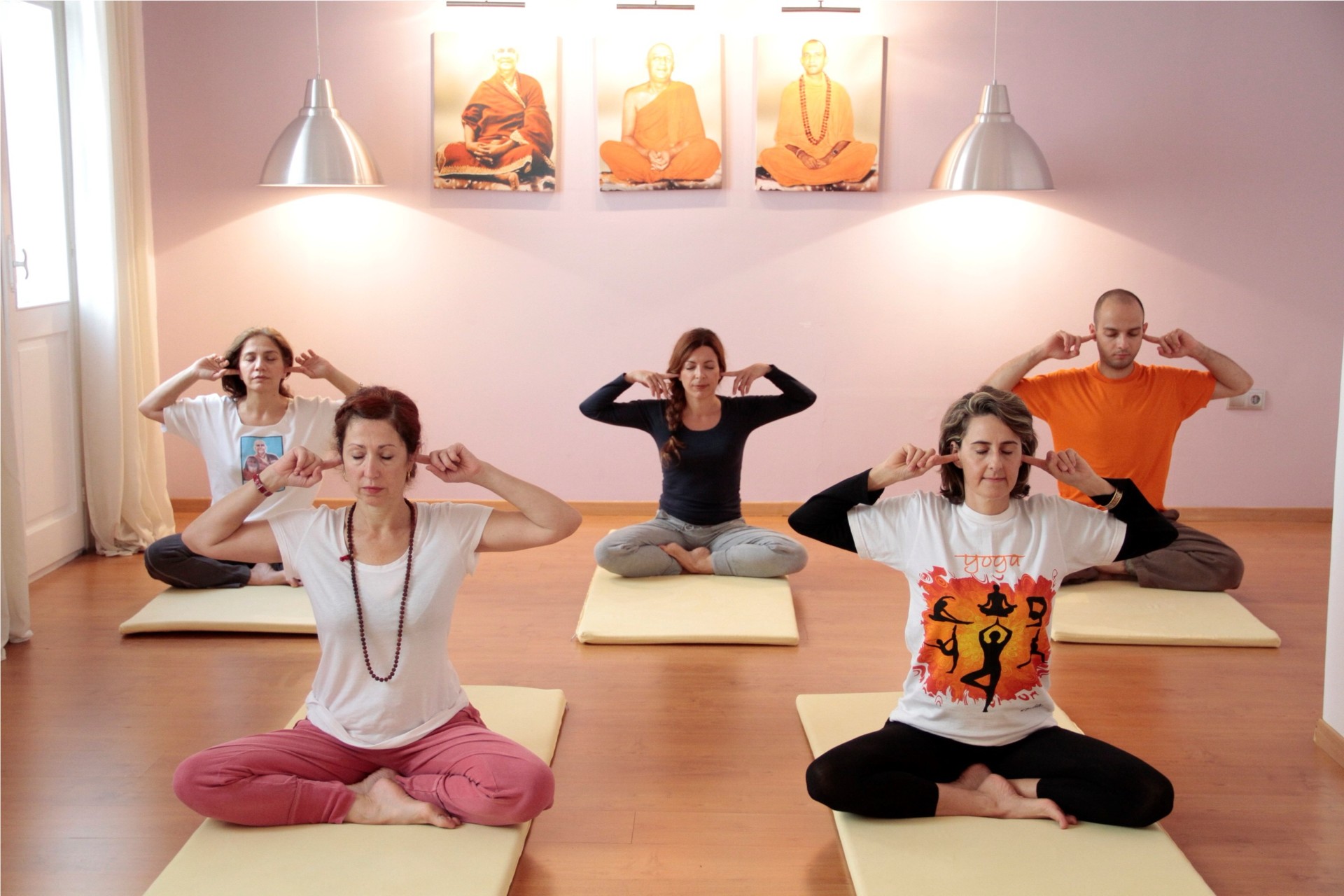
Sit in a comfortable meditative position. Close the eyes and relax the whole body. Raise the arms sideways bending the elbows and plug the ears by pressing the index fingers on the earflaps. Inhale deeply. Exhale slowly making the sound of a humming bee trying to extend the sound and exhalation for as long as is comfortably possible. The sound made should be smooth, soft, harmonious and continuous with no jerks or stops. 

The lips are gently closed and the teeth slightly open throughout the practice. Notice the sound reverberations in the head. Practice for 5 to 10 rounds. One complete round is one cycle of inhalation and exhalation. The hands can be kept steady or returned to the knee and then raised again for the next round. 

Other benefits:  Brahmari is used in nada yoga to awaken awareness of the inner psychic sounds. It strengthens and improves the voice.


2. Bhastrika pranayama: bellows breath

An activating pranayama, bhastrika in sanskrit means the bellows used to pump fire. In this practice, the diaphragm imitates a pair of bellows which fan the internal fire creating physical, pranic and psychic heat. This practice stimulates the metabolic rate producing heat and flushing out wastes and toxins while at the same time massaging and stimulating the visceral organs, toning the digestive system. It helps alleviate inflammation in the throat and any accumulation of phlegm and reduces the amount of carbon dioxide in the blood. As well as all this, it balances and strengthens the nervous system inducing peace, tranquillity and one-pointedness of mind in preparation for meditation. From an Ayurvedic perspective, it balances the doshas (humours in the body); kapha phlegm, pitta  bile and vata wind. 


How to practice Bhastrika pranayama 

  • Sit in a comfortable meditation pose with the head, neck and spine straight.
  • Allow the hands to rest on the knees in chin or jnana mudra.
  • Bring the  body into stillness and calmness .
  • Inhale deeply and exhale with a forceful exhalation. Next, inhale with the same force and exhale forcefully.
  • While inhaling and exhaling the abdomen should rapidly rise and fall with the breath.
  • The chest and the rest of the body should be still, only the abdomen moves.
  • Practice 20 rapid abdominal contractions and expulsions (20 breaths). This is one round.
  • Practice 3 to 5 rounds. Between each round take a few normal breaths.


Contra-indications

People with high blood pressure, heart disease, hernia, gastric ulcer, stroke, epilepsy, galucoma or retinal problems should not practice bhastrika pranayama. 

Those in the first trimester of pregnancy, asthma or the elderly should practice under strict guidance of a yoga teacher. 


3. Ujjayi pranayama (the psychic breath)

‘Ujjayi’ means victorious. Ujjayi is also known as the psychic breath as it leads to very subtle states of mind. Consequently, it has a tranquillizing effect on the mind and may be practiced in any position – standing, sitting or lying down. One imitates the gentle sound of a snoring baby by contracting the glottis(the part of the larynx which has to do with the vocal cords and the opening between them) at the throat region otherwise known as the voice box.  

How to practice Ujjayi 

Sit in a comfortable meditative pose or lie down comfortably in shavasana. Close the eyes and relax the whole body.

Move the awareness to the natural breath at the nostrils and allow the breath to become easy, calm and rhythmic. Direct your awareness to the throat, image and feel, that the breath is being drawn in and out through a tiny point at the throat. Once a regular rhythm of the breath  is slow and deep, gently contract the glottis  so that the sound of the breath resembles the soft sound of a baby snoring. When we contract the glottis it is a similar sensation as when we whisper. 

The contraction of the glottis should be slight and applied continuously throughout the practice. Practice for 3 to 10 minutes.


It is important that all the above pranayama practices be learnt from an experienced yoga instructor at the beginning if you truly would like to reap the many benefits. 

Satyanandashram Hellas has a number of experienced Satyananda Yoga instructors at the ashram who are available to teach pranayama practices. Please contact us at info@satyanandayoga.gr  for more information.

satyananda yoga logo

Satyanandashram Hellas

Alithias 1, 19002 Paiania, Greece

PO Box 22, 19002 Paiania, Greece

+306947009660

info@satyanandayoga.gr

Paiania Meditation Center

Dimarchou Iona Vore (former Diadochou Konstantinou) 32, 19002 Paiania

+30 210 6641545, 695 6482415

sycp@satyanandayoga.gr

Athens Meditation Center

Simetelou 2, 115 28, Athens

210 3311178, 694 2974467

syca@satyanandayoga.gr

Thessaloniki Meditation Center

Proxenou Koromila 1, 54623 Thessaloniki

+30 2310 283109

sycs@satyanandayoga.gr

The trademark Satyanandashram Hellas CENTER OF YOGA® is a trademark owned by Satyanandashram Hellas, Greece and used with permission.
The term SATYANANDA YOGA® is a trademark owned by IYFM and used with permission.
Satyananda Yoga Nidra® is a registered trademark of IYFM used with permission.

How you can be part of this beautiful community of service

You are welcome to come and unite in our efforts to help us accomplish our aims and goals. Our association needs people who are ready to offer their hearts, their skills and ideas as well as monetary contributions, and to integrate their ‘head, heart and hands’ in service.

If you consider the needs of others, we need you.
If you have a generous heart, we need you.
Ιf you have large hands, we need you.
If you have bright ideas, we need you.

Your contributions allow us to reach out to more and more people. Your contributions enable us to support and work towards the fulfilment of the vision of Swami Satyananda, Swami Niranjanananda and their lineage  that of peace and prosperity for all humankind.

X

Top 3 Pranayama Breathing Techniques You Should Try

The simplest definition of pranayama is breath control. Naturally this definition does not really expound on the depth of the meaning of pranayama. When practicing pranayama, you regulate the  prana (vital force) within you and distribute it to different levels of your being.  The various techniques of pranayama involve influencing the breath and directing the flow of prana along the nadis or energy circuits of the pranamaya kosha otherwise known as the energy body  which pervades our entire physical body. Pranayama enhances and strengthens our energy body which in turn is responsible for the health and well-being of our physical body and all its systems. 

Pre-pranayama practices:  Breath awareness 

Before beginning pranayama breathing techniques, you need to first observe and become familiar with the way you breath. For example, do you usually breathe with your mouth open or closed? Is your breath shallow and fast or do you breathe deeply and more rhythmically? Do you breathe gently or is it intense? Do you have difficulty exhaling? It is surprising how so many people are not at all aware of how they breathe. Understanding the entire breathing process is also necessary. Feeling the breath move in and out of the nostrils, through the trachea down into the lungs and then being expelled will create a deeper connection with our breath.  Then certain practices are to strengthen the different groups of muscles involved in breathing more efficiently such as the abdominal muscles, the diaphragm muscle, the intercoastal muscles (located in the rib cage). So, before moving into pranayama, we need to prepare ourselves and recognise all these aspects of the breath and the breathing process.

Why is breathing important for mental and physical well-being?

Slow conscious breathing has an emotionally calming and soothing effect on the mind. The rhythm of the breath is very important and has a direct effect on both the mind and our emotions. For example, a smooth, slow rhythm usually indicates a relaxed state of body and mind. Irregular breathing usually indicates tension. When someone is experiencing anxiety, the breath is shallow and rapid; in anger the breath is short, punctuated and forceful; in grief the breath is arrhythmic and gasping for air and in depression heavy sighing is a feature of one's breath. Regular and relaxed breathing induces calmness and integration of the body’s natural rhythms and biological processes so that they work in unison.

1. Bhramari pranayama: the humming of the black bee

This is a beautiful tranquilizing technique which has many stages and variations. It soothes the mind and the nervous system, relieves stress, anxiety and insomnia, enhances memory and concentration. As you focus on the humming sound in different parts of the body it induces a meditative state by harmonizing the mind and directing the awareness inwards. It is also used to speed up healing of body tissue after surgery and is helpful during pregnancy and child birth.

How to practice Bhramari

Sit in a comfortable meditative position. Close the eyes and relax the whole body. Raise the arms sideways bending the elbows and plug the ears by pressing the index fingers on the earflaps. Inhale deeply. Exhale slowly making the sound of a humming bee trying to extend the sound and exhalation for as long as is comfortably possible. The sound made should be smooth, soft, harmonious and continuous with no jerks or stops. 

The lips are gently closed and the teeth slightly open throughout the practice. Notice the sound reverberations in the head. Practice for 5 to 10 rounds. One complete round is one cycle of inhalation and exhalation. The hands can be kept steady or returned to the knee and then raised again for the next round. 

Other benefits:  Brahmari is used in nada yoga to awaken awareness of the inner psychic sounds. It strengthens and improves the voice.


2. Bhastrika pranayama: bellows breath

An activating pranayama, bhastrika in sanskrit means the bellows used to pump fire. In this practice, the diaphragm imitates a pair of bellows which fan the internal fire creating physical, pranic and psychic heat. This practice stimulates the metabolic rate producing heat and flushing out wastes and toxins while at the same time massaging and stimulating the visceral organs, toning the digestive system. It helps alleviate inflammation in the throat and any accumulation of phlegm and reduces the amount of carbon dioxide in the blood. As well as all this, it balances and strengthens the nervous system inducing peace, tranquillity and one-pointedness of mind in preparation for meditation. From an Ayurvedic perspective, it balances the doshas (humours in the body); kapha phlegm, pitta  bile and vata wind. 


How to practice Bhastrika pranayama 

  • Sit in a comfortable meditation pose with the head, neck and spine straight.
  • Allow the hands to rest on the knees in chin or jnana mudra.
  • Bring the  body into stillness and calmness .
  • Inhale deeply and exhale with a forceful exhalation. Next, inhale with the same force and exhale forcefully.
  • While inhaling and exhaling the abdomen should rapidly rise and fall with the breath.
  • The chest and the rest of the body should be still, only the abdomen moves.
  • Practice 20 rapid abdominal contractions and expulsions (20 breaths). This is one round.
  • Practice 3 to 5 rounds. Between each round take a few normal breaths.


Contra-indications

People with high blood pressure, heart disease, hernia, gastric ulcer, stroke, epilepsy, galucoma or retinal problems should not practice bhastrika pranayama. 

Those in the first trimester of pregnancy, asthma or the elderly should practice under strict guidance of a yoga teacher. 


3. Ujjayi pranayama (the psychic breath)

‘Ujjayi’ means victorious. Ujjayi is also known as the psychic breath as it leads to very subtle states of mind. Consequently, it has a tranquillizing effect on the mind and may be practiced in any position – standing, sitting or lying down. One imitates the gentle sound of a snoring baby by contracting the glottis(the part of the larynx which has to do with the vocal cords and the opening between them) at the throat region otherwise known as the voice box.  

How to practice Ujjayi 

Sit in a comfortable meditative pose or lie down comfortably in shavasana. Close the eyes and relax the whole body.

Move the awareness to the natural breath at the nostrils and allow the breath to become easy, calm and rhythmic. Direct your awareness to the throat, image and feel, that the breath is being drawn in and out through a tiny point at the throat. Once a regular rhythm of the breath  is slow and deep, gently contract the glottis  so that the sound of the breath resembles the soft sound of a baby snoring. When we contract the glottis it is a similar sensation as when we whisper. 

The contraction of the glottis should be slight and applied continuously throughout the practice. Practice for 3 to 10 minutes.


It is important that all the above pranayama practices be learnt from an experienced yoga instructor at the beginning if you truly would like to reap the many benefits. 

Satyanandashram Hellas has a number of experienced Satyananda Yoga instructors at the ashram who are available to teach pranayama practices. Please contact us at info@satyanandayoga.gr  for more information.